
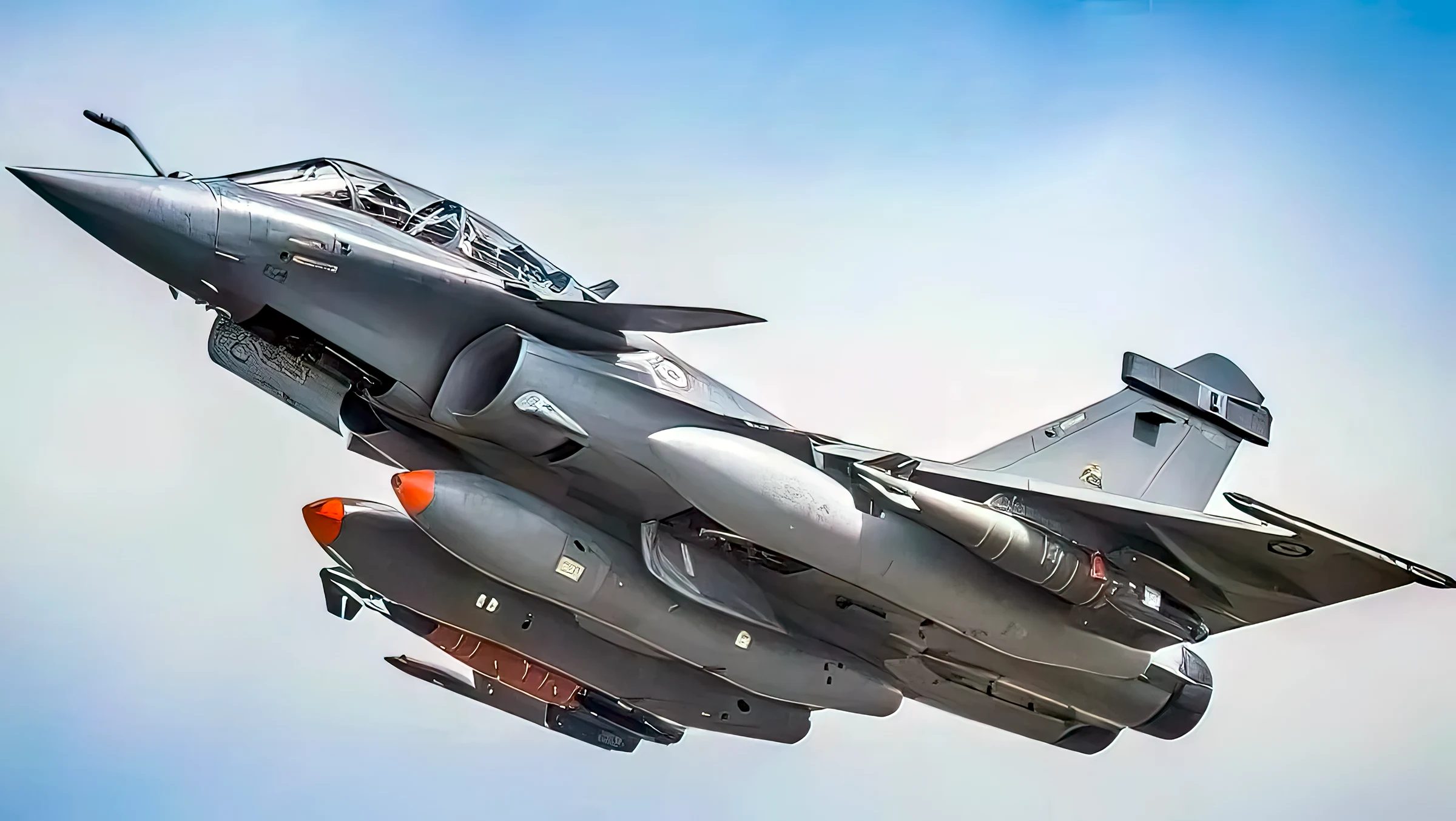
Patrick Pailloux, the head of France's armaments directorate, told a parliamentary hearing in April that his agency wants a new air-to-air missile flying by 2030. Called COMET, it's meant to fly further than the Meteor, the ramjet-powered missile that's been the Rafale's premier long-range weapon for over a decade. Pailloux was candid about how compressed the timeline is: "It's a new way of working," he said, calling the 2030 target "very ambitious." The brief he gave engineers was almost comically blunt for a weapons program: the missile needs to "work and go far."
The urgency traces back to a specific battle. In the May 2025 clash between India and Pakistan, jets on both sides reportedly exchanged fire at ranges around 180 to 200 kilometers, Pakistani J-10CEs and JF-17s carrying Chinese PL-15E missiles against Indian Rafales armed with the Meteor. Pakistan claimed multiple Indian aircraft downed, Rafales included; credible evidence, including remarks from France's own Air Force chief, supports at least one such loss, though India has never officially confirmed the aircraft type and the exact count remains disputed between the two governments' accounts. What isn't in dispute is that both sides fired at genuinely long range, and that outcome landed inside French defense planning as proof the Meteor's roughly 200-kilometer reach is no longer automatically decisive.
The bigger problem sitting behind Pakistan's PL-15E is China's PL-17, credited with a 400-kilometer range, roughly double the Meteor's and enough to threaten not just fighters but the tankers, AWACS aircraft, and other support planes a fighter force depends on to operate at all. Every major air power seems to have converged on the same insight this year: the fighter jet isn't really the target worth prioritizing anymore, the slow, unstealthy, hard-to-replace support aircraft behind it are. Chinese doctrine reportedly has a name for this, "kill the eyes and ears first." The American AIM-174B Gunslinger, the newer AIM-424 Malice pushing past 460 kilometers, and Russia's hypersonic R-37M are all built around variations of the same logic.
COMET, as currently described, is a deliberately modest answer to that pressure rather than a Meteor-beating flagship. French think-tank analyst Etienne Marcuz's own assessment is that a missile design brief this stripped-down, "works and goes far," on a four-year timeline probably rules out anything as sophisticated as the Meteor's ramjet propulsion. More likely, he suggests, is a cheaper dual-pulse solid rocket booster bolted onto extended range, an interim fix rather than the "successeur du missile METEOR" some French planning documents apparently label it. Reported range sits around 300 kilometers, further than the Meteor, short of the PL-17 or America's newest entries.
Marcuz flags the harder problem COMET's speed doesn't solve: the Rafale's own radar. A missile that can fly 300 kilometers is only useful if something can actually detect and designate a target at that range in the first place, and the Rafale's radar aperture is comparatively small, likely unable to pick out a low-signature target at true COMET range on its own. That points toward a dependency the missile's rushed timeline hasn't addressed, relying on external cueing from France's future SCAF-linked sensors or the Global Eye AEW&C aircraft this blog covered as part of the UK-Canada AWACS story, rather than the Rafale finding its own targets. France is also running a parallel 12-month study with the UK to scope what actually comes after COMET, alongside Britain's own Future Air Superiority Effectors program, suggesting Paris knows this fast-tracked missile is a stopgap rather than the real answer.

No comments:
Post a Comment