
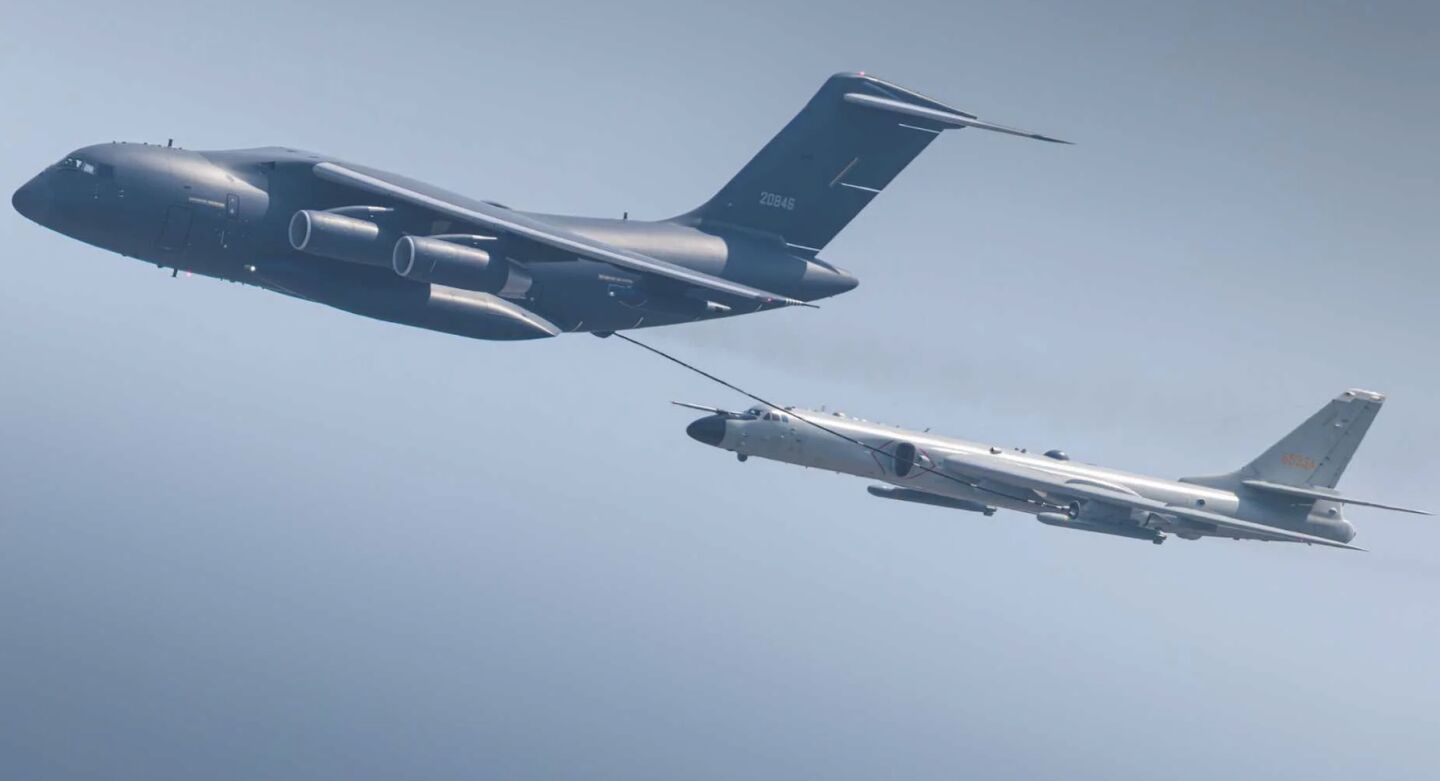
China's heavy military transport aviation is undergoing a massive evolutionary leap, a strategic development recently analyzed by Military Watch Magazine, centered around the expanding production and operational flexibility of the Y-20B strategic airlifter.
The driving force behind this enhanced operational capability is the successful integration of domestically developed WS-20 high-bypass turbofan engines, which have replaced the legacy Russian D-30KP-2 powerplants used on early production models.
Military analysts point out that the ability to convert transport airframes into tactical tankers—designated as the YY-20 configuration—offers unprecedented strategic flexibility during periods of heightened operational tempo. Rather than maintaining entirely segregated fleets of specialized refueling aircraft, the People’s Liberation Army Air Force can reconfigure transport airframes to support deep-penetration fighter escorts and bombers during crisis scenarios, and quickly pivot them back to standard logistics roles during peacetime.
This industrial expansion was recently underscored by a major show of force featuring a ten-ship "elephant walk" of Y-20B heavy transports, demonstrating the growing numerical strength and high state of readiness within the active fleet.
Ultimately, the maturation of the Y-20B program highlights China's growing self-sufficiency in high-end aerospace engineering. By pairing indigenous propulsion technology with a highly adaptable, multi-role airframe architecture, Beijing is building an agile and resilient strategic transport ecosystem capable of supporting global military operations for decades to come.

No comments:
Post a Comment