
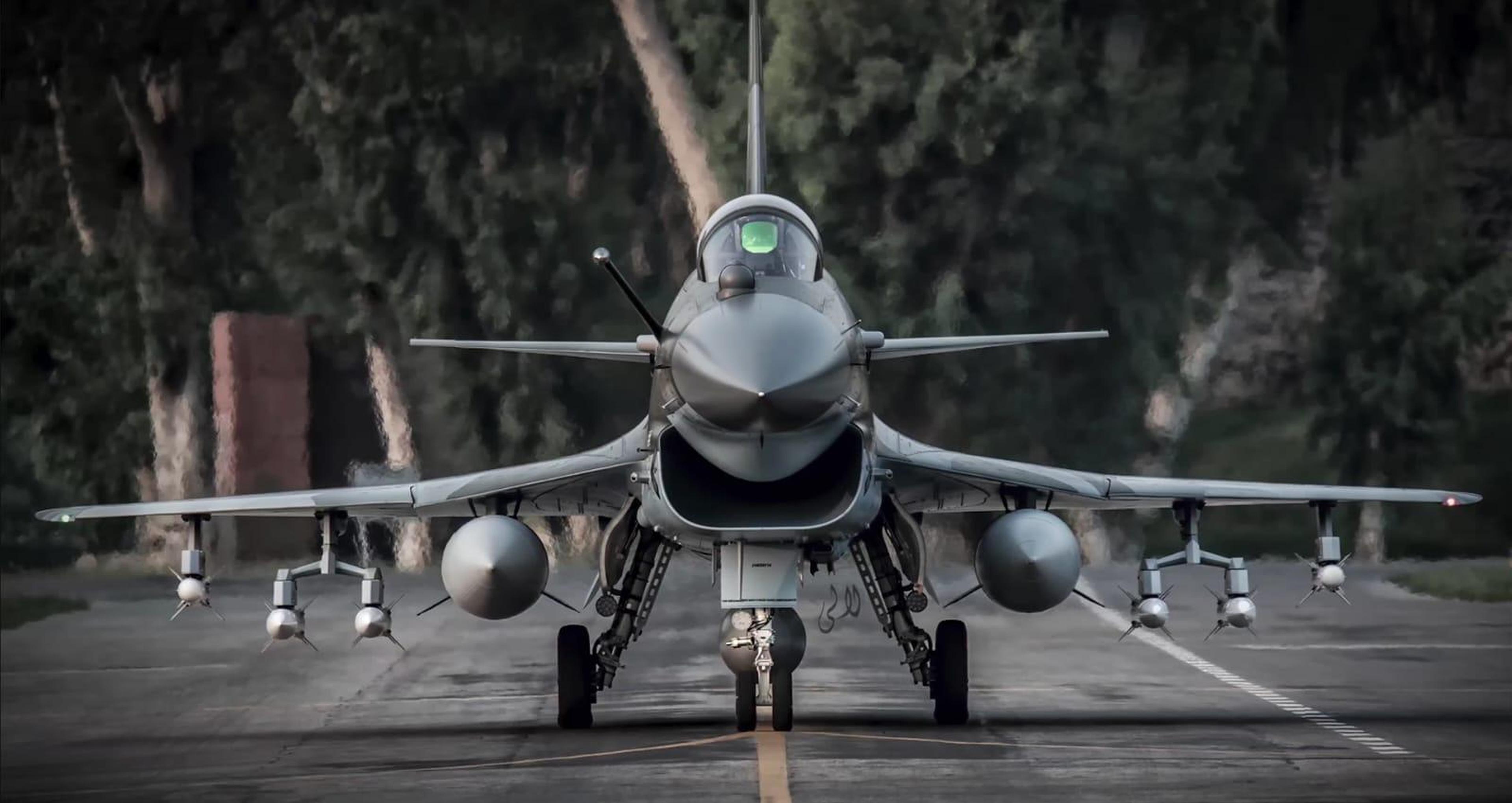
"The J-10C leads the F-16 by a generation. In terms of radar, avionics, electronic warfare systems, and especially the weapon systems using PL-15 missiles, the F-16 is completely incomparable to it." That's a Pakistan Air Force pilot, in a recent interview, ranking his own service's two frontline fighter types against each other. For most of the past four decades, saying anything close to that about the F-16 inside PAF would have been unthinkable. The aircraft was the crown jewel of Pakistan's air arm for so long that Washington's on-and-off willingness to sell it, and later to sanction Islamabad and freeze deliveries entirely, became one of the defining diplomatic flashpoints of the US-Pakistan relationship. Now a serving pilot is saying it's simply outclassed by a jet Pakistan didn't build and doesn't fully control the supply chain for either, just a different country's supply chain.
The comparison itself is fair on paper. Both aircraft are single-engine, lightweight, broadly comparable in size and role, which is exactly what makes a head-to-head assessment meaningful rather than apples to oranges. The J-10C carries an AESA radar and the PL-15 beyond-visual-range missile, both genuine generational upgrades over the mechanically scanned radars and older missile types equipping Pakistan's Cold War-era F-16 variants. Even the newer F-16 Block 50/52s in PAF service, delivered decades after the originals, don't close that specific gap; PAF's own force structure puts the J-10C ahead of essentially the entire F-16 fleet regardless of which sub-variant is being flown.
There's a slower-moving story behind this single quote that makes it less surprising than it might first appear. The F-16 was actually overtaken inside PAF's own fleet years before the J-10C arrived, first by the JF-17 in the 2000s, then decisively by the JF-17 Block III in the early 2020s, an aircraft built domestically at the Pakistan Aeronautical Complex in Kamra using a mix of Chinese and Pakistani technology. The J-10C's arrival, with roughly 36 delivered by early 2026 under two separate Chinese contracts, is really just the latest and most dramatic step in a fleet-wide shift that's been underway for two decades: PAF steadily building its combat power around Chinese-origin airframes and homegrown assembly lines, rather than remaining dependent on the American aircraft it once treated as irreplaceable.
The practical constraints still attached to the F-16 make this shift look less like preference and more like necessity. Pakistan's F-16 fleet operates under US end-use restrictions that limit how and where it can actually be employed, a legacy of decades of on-and-off American sanctions tied to Pakistan's nuclear program and broader foreign policy disputes. A fighter jet a country can't freely deploy however its own military judges necessary is a fighter jet with a permanently capped ceiling on its usefulness, regardless of how capable its avionics might otherwise be. The J-10C, whatever geopolitical strings come attached to a Chinese-sourced weapons relationship instead, doesn't carry that specific baggage.
None of this means PAF is walking away from the F-16 anytime soon, roughly 57 to 75 of them, depending on which recent count you use, remain in active service, and the US State Department has approved continued sustainment support for the fleet. But PAF's own officers are now saying openly what the fleet's actual force structure has implied for a while: the F-16 is no longer the aircraft PAF builds its air-superiority doctrine around. That role now belongs to a Chinese jet, flying Chinese missiles, guided by a Chinese-designed radar, in an air force that spent the better part of fifty years fighting to keep American fighters in its inventory at all.

No comments:
Post a Comment