
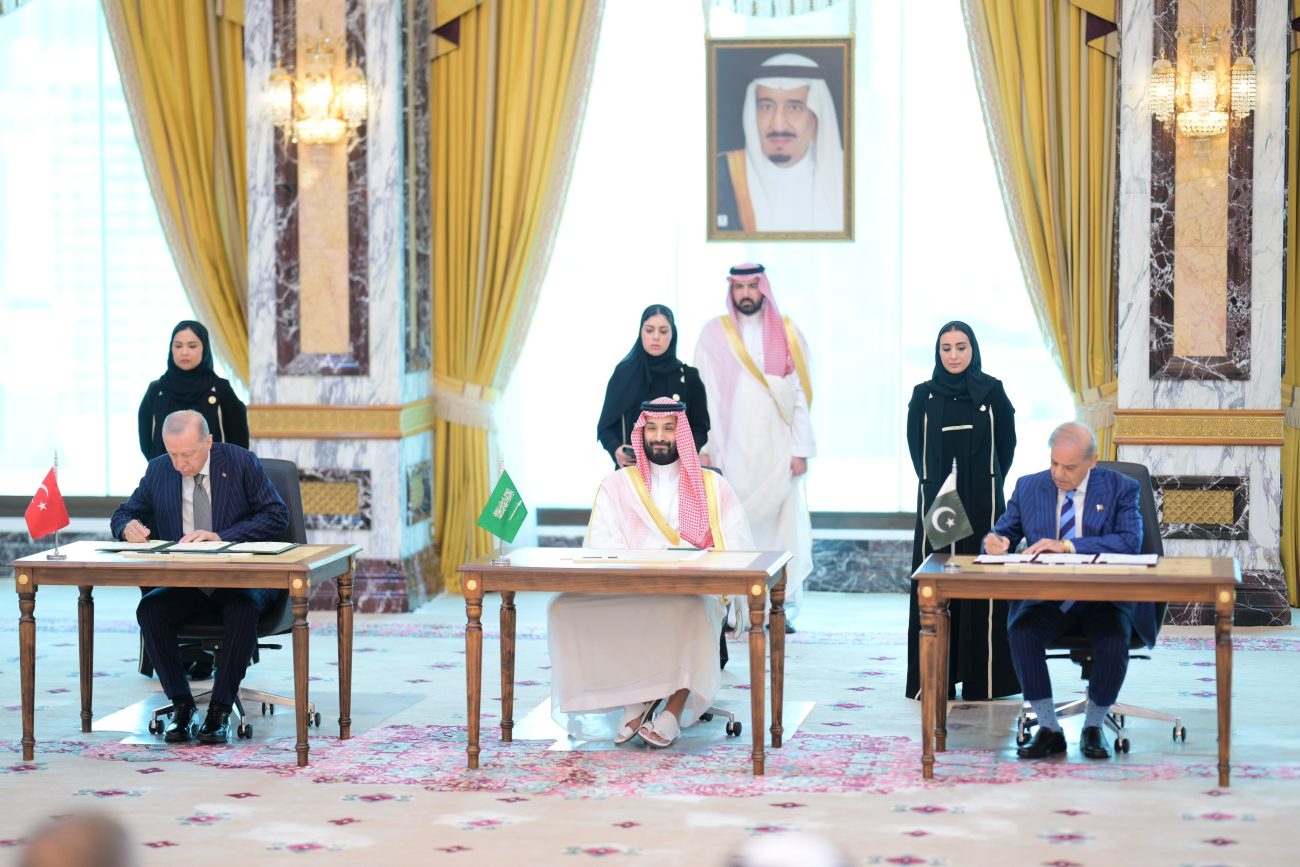
Following the high-profile signing of the Mecca Joint Defence Agreement between Saudi Arabia, Turkey, and Pakistan, Turkish Foreign Minister Hakan Fidan has revealed that Egypt is a primary candidate to join the alliance.
The newly forged trilateral pact—structured technically around a mutual defense commitment similar to NATO's Article 5—stipulates that an armed attack against any single signatory will be treated as an act of aggression against all.
Fidan moved to temper regional anxieties regarding the true intent of the coalition, reiterating that the collective defense pact is not explicitly directed against Iran or any other specific state.
The potential incorporation of Egypt would profoundly alter the geopolitical weight of the alliance, bridging the security architectures of the Persian Gulf, the Levant, and North Africa. By drawing Cairo into a cooperative security matrix that already links a NATO military heavyweight (Turkey), a nuclear-armed power (Pakistan), and an economic financial leader (Saudi Arabia), the bloc would represent one of the most formidable indigenous defense coalitions in the modern history of the Muslim world.
As regional capitals navigate the fallout of recent U.S.-Iran military confrontations and persistent asymmetric threats, the push to expand the Mecca Agreement underscores a growing appetite for home-grown security umbrellas. While operational details, command integration, and formal accession timelines for Cairo remain to be finalized by the newly established ministerial committee, the diplomatic signaling confirms that the architecture of Middle Eastern defense is undergoing a rapid and expansive evolution.

No comments:
Post a Comment