In a major development concerning international military assistance, Turkey has initiated formal procedures to transfer a substantial package of U.S.-origin long-range strike weapons and artillery ammunition to Ukraine. Newly surfaced U.S. congressional documents reveal that Ankara is seeking re-export authorization to supply Kyiv with 70 M39 Army Tactical Missile Systems (ATACMS) ballistic missiles alongside 12 M270 Multiple Launch Rocket System (MLRS) launchers. The proposed military package aims to significantly reinforce Ukrainian deep-strike capabilities as ongoing regional friction severely strains traditional Western supply lines.
The planned transfer addresses an acute capability crunch for the Ukrainian armed forces, whose existing stockpiles of tactical ballistic missiles have been heavily depleted through sustained frontline operations against Russian positions. Because the United States has faced severe inventory constraints following heavy missile expenditures in recent Middle Eastern engagements, third-party transfers from allied nations have become a critical lifeline for Kyiv. By offloading older defense articles from its active inventory, Ankara is simultaneously fulfilling modernization goals while ensuring that Ukrainian forces maintain access to heavy mobile strike assets.
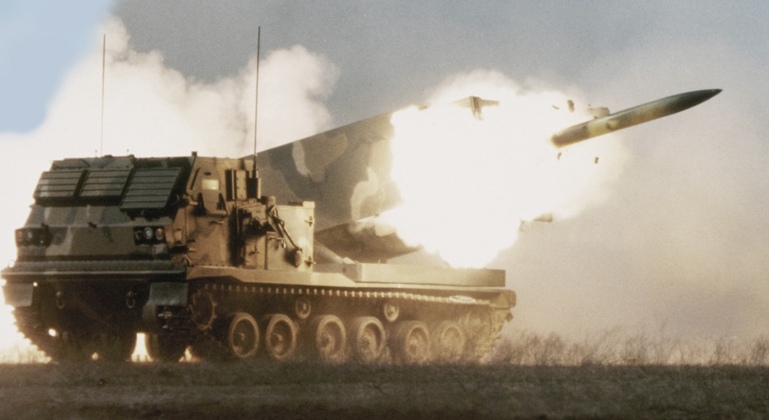
The inclusion of 12 tracked M270 MLRS launchers represents a tactical upgrade for Ukrainian artillery units. Unlike the wheeled HIMARS systems more commonly deployed across the theater, the tracked M270 configuration carries two complete launch pods, allowing it to transport and fire two ATACMS missiles simultaneously—double the immediate heavy-fire capacity. This configuration provides enhanced cross-country mobility and allows Ukrainian forces to distribute long-range assets across a wider array of dispersed firing positions, complicating counter-battery targeting by Russian forces.
Alongside the ballistic missiles and launchers, the comprehensive transfer package encompasses over 2,500 M26 227mm rockets and 47,000 M509A1 203mm cluster-munition artillery rounds. While the inclusion of cluster munitions remains controversial among several European states bound by international conventions, the provisions are valued by military planners for their wide-area suppression effects against entrenched infantry and armored columns. With major Western defense contractors struggling to rapidly scale up standard production lines, Turkey’s extensive stockpiles have positioned it as a key provider of heavy ordnance.
The impending delivery highlights Ankara's complex, multi-faceted balancing act within NATO. While maintaining robust economic and political ties with Moscow and positioning itself as a diplomatic mediator, Turkey continues to provide vital military hardware to Ukraine, including licensed local production initiatives. As the U.S. Congress reviews the third-party transfer request under the Arms Export Control Act, the introduction of 70 additional ATACMS missiles threatens to inject renewed friction into diplomatic relations while intensifying long-range missile exchanges across the Eastern European theater.


No comments:
Post a Comment