
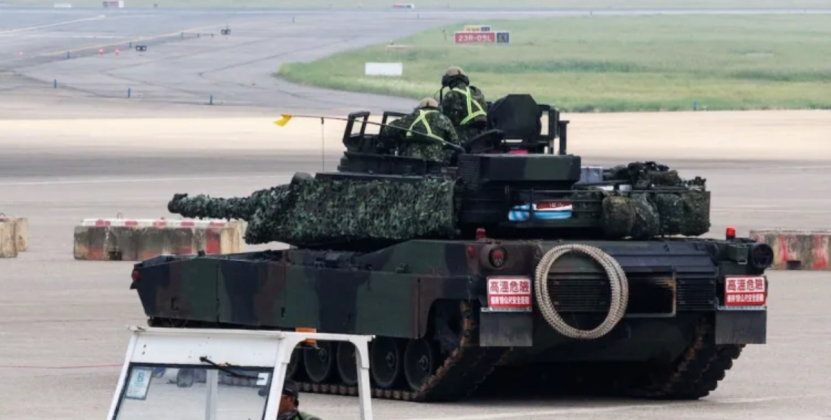
A strategic defense assessment published by Military Watch Magazine (compiled by their editorial staff) examines the landmark integration and combat readiness deployment of the Republic of China Army’s newly procured M1A2T Abrams main battle tanks.
The deployment saw armored units move out of permanent garrisons to occupy concealed firing positions, secure critical infrastructure like major transportation hubs and airports, and coordinate with combat engineers establishing layered anti-vehicle obstacles.
However, the integration of 74-ton heavy armor has also sparked intense debate among defense analysts regarding utility and survivability. Given the mountainous and heavily urbanized terrain of the island, critics argue that heavy main battle tanks face severe maneuver constraints and heavy logistical burdens, particularly regarding fuel consumption and bridge-load limits.
To address vulnerabilities highlighted by modern conflicts—such as ubiquitous drone surveillance and AI-assisted aerial targeting—recent exercises revealed that forces are heavily utilizing irregular camouflage nets.
Ultimately, the incorporation of the Abrams fleet highlights a transitional phase for the Republic of China Army as it attempts to balance traditional heavy armor doctrines with the realities of asymmetric, high-tech warfare. As operational testing and tactical evaluations continue, military commanders are actively refining how heavy armored reserves can be preserved, concealed, and deployed effectively to counter rapid amphibious breakthroughs in any future Strait conflict.

No comments:
Post a Comment