
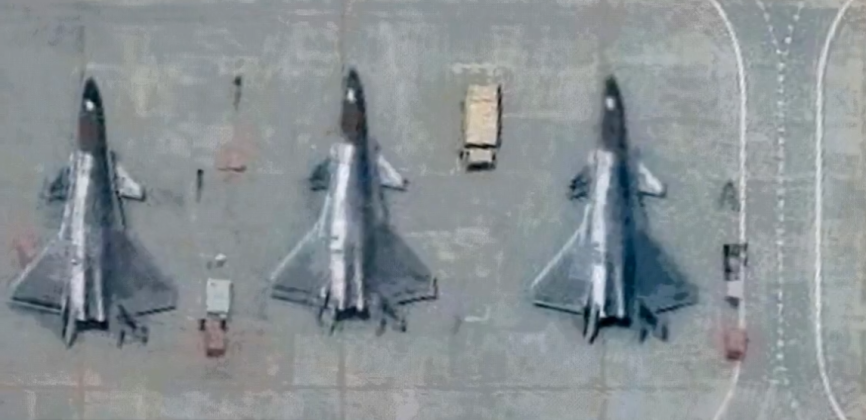
The Chinese People’s Liberation Army Air Force (PLAAF) has officially reassigned its unique, early production Chengdu J-20 fifth-generation fighter aircraft to the 99th Air Brigade. Operating from a strategically critical high-altitude theater, this specialized air defense unit is tasked with reinforcing sovereign airspace along rugged border regions. The relocation highlights how the Chinese military systematically cascades older baseline stealth airframes to secondary and high-priority frontier commands as advanced, highly upgraded variants enter service in core coastal brigades.
The newly transferred aircraft originate from the initial low-rate initial production batches of the J-20 program, which relied on interim engine configurations and earlier avionics suites before manufacturing lines transitioned to mass-producing advanced variants. While newer frontline units closer to the Taiwan Strait and East China Sea have been re-equipped with heavily enhanced J-20A variants featuring indigenous next-generation powerplants, these early production jets still provide an exponential leap in combat capability. Integrating fifth-generation stealth assets into high-altitude sectors grants regional commanders unprecedented situational awareness and dominant radar capabilities.
Stationed along the Himalayan frontier, the 99th Air Brigade faces unique operational challenges characterized by extreme weather, rugged terrain, and complex geopolitical friction points with neighboring nuclear-armed states. Operating advanced stealth fighters in these elevated environments places severe demands on life-support systems, maintenance protocols, and sensor calibration. However, the J-20's powerful active electronically scanned array radar and expansive internal weapons bays allow the unit to project formidable air dominance across difficult mountainous corridors.
This strategic reallocation reflects the maturation and vast expansion of China’s domestic fifth-generation fighter ecosystem. With the J-20 now being procured on a scale far surpassing any other heavy fighter program globally, the PLAAF can afford to distribute its pioneering airframes outward to harden secondary strategic directions. Older legacy fourth-generation platforms previously assigned to these frontier sectors are concurrently being phased out or pushed further down the chain to modernize training and reserve units.
Ultimately, integrating early production J-20s into Himalayan air defense operations underscores the comprehensive nature of China's aerial modernization strategy. By ensuring that every operational theater benefits from low-observable technology, Beijing continues to close capability gaps across all regional frontiers. As these stealth units settle into their new high-altitude bases, they will serve as an unyielding deterrent against any potential aerial incursions along the border.

No comments:
Post a Comment