
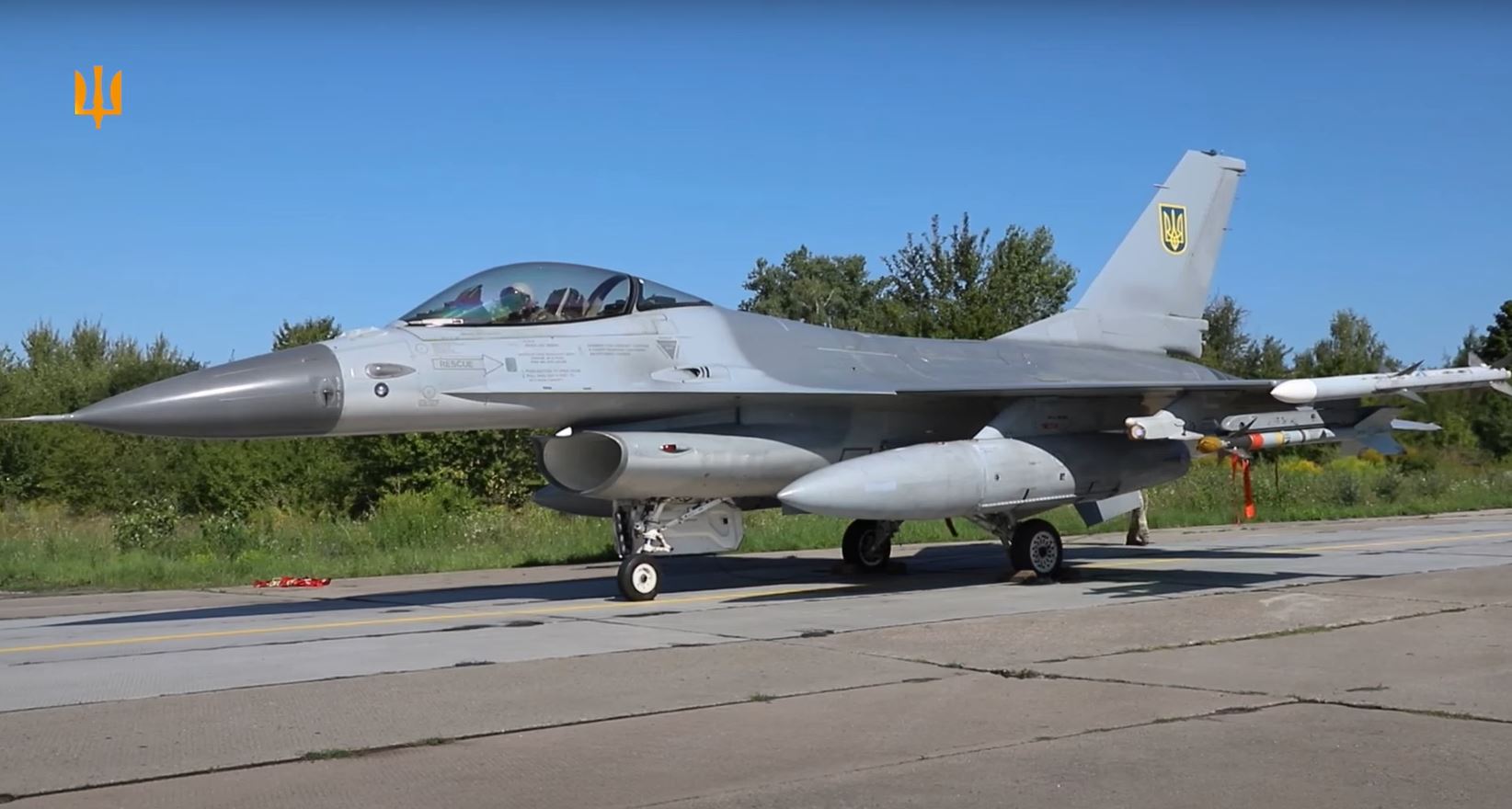
Ukrainian personnel are reportedly tracking new air-to-air missile shipments the moment they cross the border, "counting not just the hours but the minutes" until they arrive. That detail, relayed by a journalist who spoke with a senior Ukrainian Air Force commander, says more about the state of Kyiv's F-16 fleet than any single statistic could. When missiles run out, and Reuters separately reported Ukraine went more than three weeks with only "a handful" of AIM-9 Sidewinders available, pilots on some daytime sorties go up with nothing but the jet's built-in cannon.
The officer who confirmed this, callsign "Phantom," commands Ukraine's 107th Wing, and his response when asked directly about the shortage was unambiguous: "any aircraft without weapons is useless." His F-16s spend most of their time on a specific, unglamorous mission, hunting Russian drones and cruise missiles before they reach Ukrainian cities and infrastructure, work that eats through missile stocks fast precisely because it's defensive and constant rather than the occasional dogfight most people picture when they think of fighter jets in combat.
Using the M61A1 Vulcan cannon instead of a missile isn't a like-for-like substitute, it's a considerably more dangerous fallback. A gun requires the F-16 to close to much shorter range than a missile would, which means more exposure to whatever else might be in the area, enemy fighters, ground-based air defenses, other threats a pilot would rather engage from a safe distance. It's also genuinely harder to hit anything with, particularly a small or slow target, and considerably riskier at night. Ukraine's own pilots have already shown this works under pressure, in May 2025 one pilot reportedly destroyed three aerial targets with the cannon and was engaging a fourth before an emergency forced him to eject, proof the tactic can succeed but also a reminder of exactly how close to the edge that kind of engagement runs.
Part of what's changed is the plumbing behind how these missiles actually reach Ukraine in the first place. The Trump administration replaced the Biden-era system of direct US military aid with something called PURL, the Prioritized Ukraine Requirements List, and it's not clear from public reporting how much of the current shortage traces back to that transition specifically versus simple wartime demand outstripping supply. What is clear is that Ukraine is now competing for the same finite pool of American-made munitions that the US military and its Gulf allies are also drawing down fast, amid sustained Iranian drone and missile pressure in the Middle East. A limited global supply chain doesn't get bigger just because two different conflicts need it at the same time.
Ukraine's own stopgap has been APKWS II, a laser-guided rocket originally built for ground-attack work that's since been adapted for air-to-air use against slow-moving drones, with the first known footage of an F-16 downing a Shahed-type drone using one surfacing in February. It's a genuinely clever workaround, cheaper and more available than a proper air-to-air missile, but it's not a full replacement, and nothing in current reporting suggests it was rushed to Ukraine specifically to cover the Sidewinder shortfall rather than developed on its own separate track. Phantom's own ask, delivered plainly in his interview, was for more than just faster resupply: he wants Ukraine to localize missile production domestically or somewhere else in Europe, so the country isn't stuck depending entirely on a supply chain it doesn't control and can't speed up on its own, watching shipments cross the border minute by minute because the alternative is pilots flying combat missions unarmed in every way that matters.

No comments:
Post a Comment