
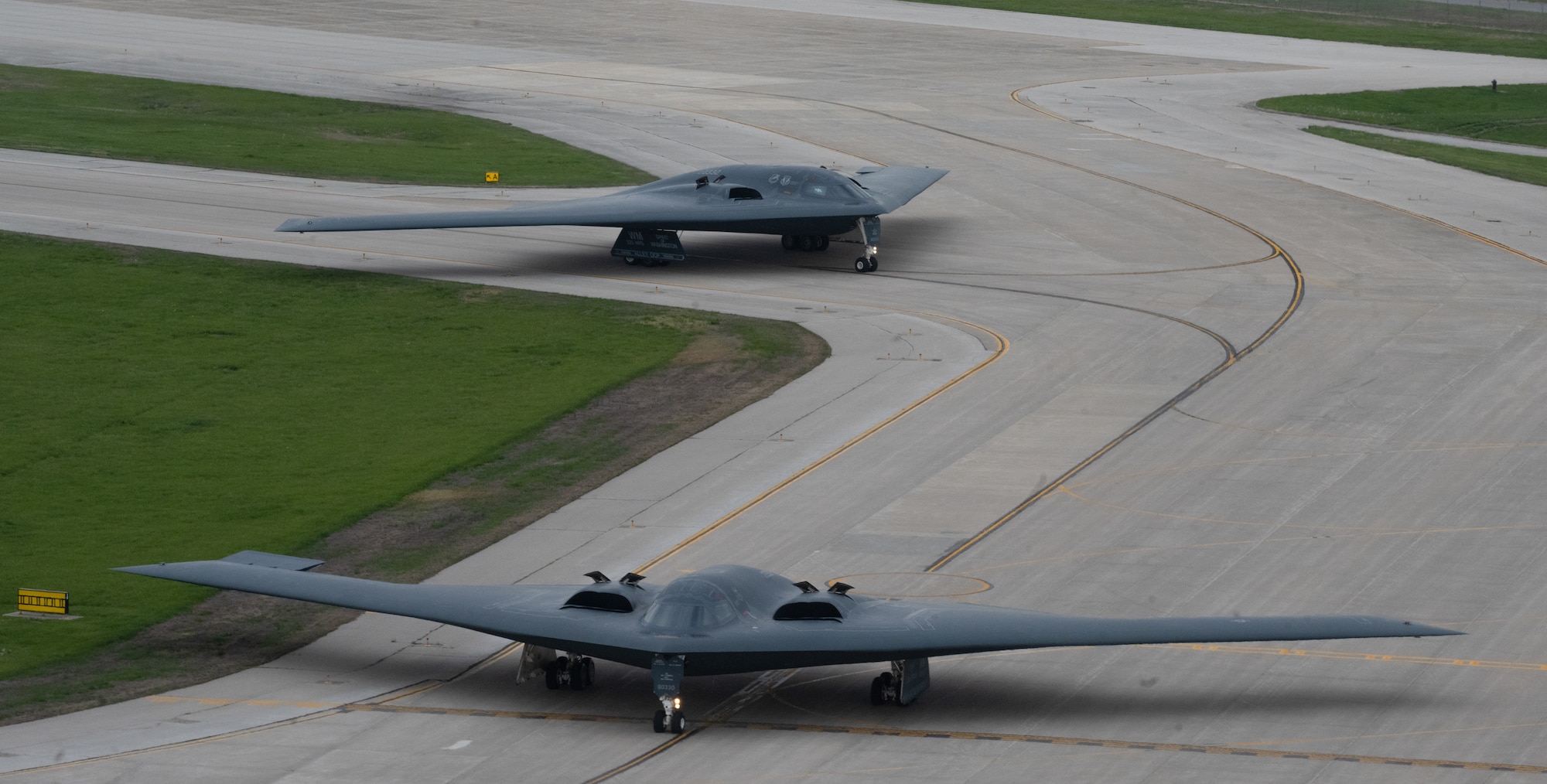
A U.S. Magistrate Judge in Kansas City sentenced Chinese national Qilin Wu to six months in federal custody on August 13, closing a case that began nearly nine months earlier when members of the 509th Security Forces Squadron found Wu in a minivan with Massachusetts plates near the perimeter of Whiteman Air Force Base, Missouri, home to the entire B-2 Spirit stealth bomber fleet. What distinguished Wu's case from the routine plane-spotting the Air Force Office of Special Investigations was careful to note is generally lawful, according to its own press release, was his conduct after being warned: told on December 2, 2025 not to photograph the base, Wu returned the next day and kept shooting, ultimately capturing 18 images and videos covering not just the aircraft but base infrastructure and equipment, going well beyond what AFOSI described as ordinary aviation photography. He'd previously entered the U.S. illegally near Nogales, Arizona in June 2023, was briefly detained by ICE and released due to a lack of detention space, and admitted to photographing additional, unspecified locations in Florida and Virginia as well.
Prosecutors leaned on a genuinely unusual legal foundation to secure the conviction: Executive Order 10104, signed by Harry Truman in February 1950 to designate military installations subject to photography restrictions, paired with Section 795 of Title 18 of the U.S. Code, which criminalizes unauthorized photographs of vital military equipment. That a Cold War-era framework built for a very different intelligence environment is now the operative tool against a 2020s-era case says something about how far behind current statute has fallen relative to the actual threat picture, a gap AFOSI Region 8 commander Col. David Bethel addressed directly: "it's about recognizing that the operating environment has changed," he said, describing a shift from clear-cut overseas threats to "more ambiguous activity around military installations inside the United States."
What Bethel's quote undersells, though, is just how un-isolated Wu's case actually is. Within the same twelve-month window, federal prosecutors charged Tianrui Liang, a 21-year-old Chinese national, with photographing Air Force planes at Offutt Air Force Base, Nebraska, home to U.S. Strategic Command, after he had also visited Ellsworth Air Force Base, South Dakota, in the days beforehand, crossing from Canada on a valid visa and later attempting to flee to New York before his arrest at JFK Airport. Separately, the Justice Department charged Yuance Chen, a Chinese national, and Liren "Ryan" Lai, a U.S. legal permanent resident, in 2025 with acting as agents for China's Ministry of State Security, allegedly tasked specifically with collecting intelligence on U.S. Navy service members and military installations. That's at least four documented cases targeting distinct, strategically significant American bases, Whiteman's nuclear-capable stealth bombers, Offutt's strategic command function, and Navy personnel more broadly, inside roughly a single year, a pattern considerably harder to dismiss as coincidental individual curiosity than any one case examined alone.
This connects directly to the same institutional gap this blog has already tracked through retired Gen. Glen VanHerck's remarks at the SMD Symposium regarding the Langley AFB drone incursions and the reported Iranian F-5 raid on Camp Buehring: authority and detection frameworks built around a fence-line boundary and a clear foreign-versus-domestic threat distinction are visibly struggling against activity that's neither clearly criminal trespass nor clearly foreign military action, but something ambiguous in between, individuals with no formal military or diplomatic status conducting apparently deliberate, repeated intelligence-gathering-adjacent activity around sensitive American installations. Bethel's own framing of the "operating environment" having changed is functionally the same diagnosis VanHerck offered for drone incursions and base-defense authority, just applied to human intelligence collection rather than unmanned aerial systems.
None of the four cases cited here has been publicly tied to a broader, centrally coordinated Chinese intelligence operation, and Wu's own conduct, illegal entry followed by fixated, repeated photography after an explicit warning, reads as consistent with an individual acting largely on his own initiative rather than as confirmed evidence of state direction. But whether any single case reflects formal tasking or independent behavior matters less than the aggregate pattern federal prosecutors have now documented across multiple states and multiple sensitive installations in rapid succession, and it's that pattern, not any one six-month sentence, that represents the actual story Wu's case is one data point within.

No comments:
Post a Comment