
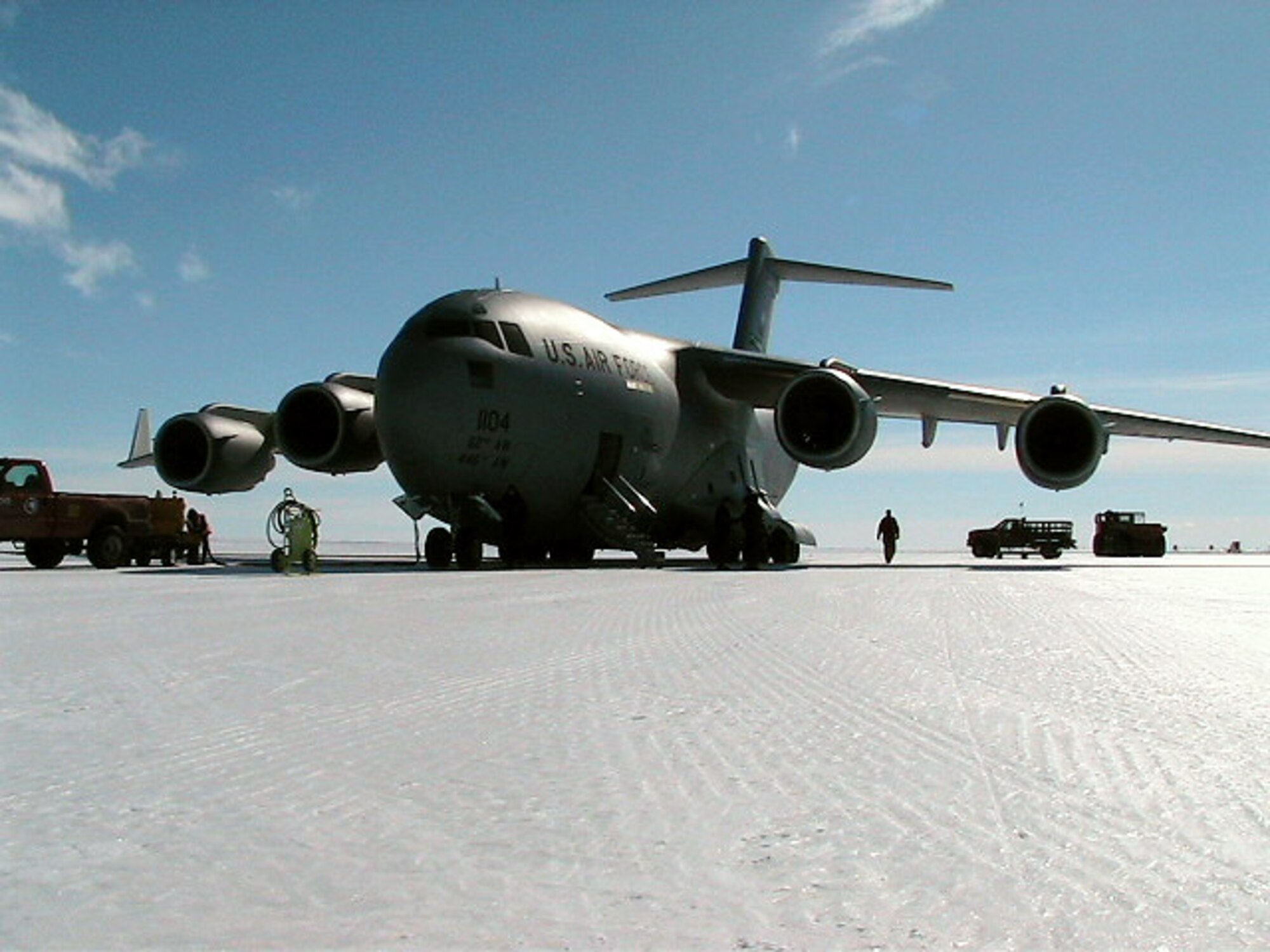
A U.S. Air Force C-17A Globemaster III took off from Christchurch, New Zealand on a routine Antarctic resupply mission this week and turned back to the airport roughly two and a half hours later, after New Zealand's Civil Aviation Authority issued a Notice to Airmen warning of "potentially hazardous" space activity. The chain of events, laid out plainly by a CAA spokesperson, is considerably less dramatic than the headline framing suggests: the Russian Air Traffic Management Corporation notified New Zealand's aviation authority of a planned missile launch creating a potential hazard within New Zealand's Oceanic Flight Information Region, the CAA issued a standard danger-area NOTAM in response, exactly the kind of alert that "does not prevent aircraft from flying through the area" but exists purely to inform operators making their own flight-planning decisions. The flight, callsign ICE28, was part of the Air Force's annual WinFly period, delivering advance teams and cargo to McMurdo Station ahead of Antarctica's main research season under Operation Deep Freeze.
It's worth being precise about what actually happened here versus what a headline pairing "Russian" and "hazardous space activity" invites readers to assume. This wasn't a hostile act, a deliberate provocation, or even an unusual occurrence, it was routine, mutually recognized international airspace coordination of the kind Russia, the U.S., and every other spacefaring nation conduct constantly as a matter of standard practice, notifying civil aviation authorities ahead of missile and rocket launches so aircraft operators can route around temporary hazard zones. New Zealand's own CAA was explicit on this point, describing the notification-and-NOTAM process as "normal practice for Airspace Authorities and Air Traffic Service Providers." The roughly 30 million square kilometers of international waters and airspace New Zealand's Oceanic FIR covers, spanning the South Pacific, Southern Ocean, and Tasman Sea, sits directly beneath the kind of high-inclination, polar-orbit trajectories Russia's Plesetsk Cosmodrome regularly launches into for military satellite and GLONASS navigation missions, making an occasional overlap between a Russian launch window and this specific flight corridor a mechanical inevitability rather than a targeted signal.
That said, dismissing this as a total non-story would miss the genuinely interesting operational detail buried in an otherwise procedural news item: a routine, unclassified civil aviation notification from Russia was enough to divert a U.S. military logistics flight, at real cost in fuel, crew time, and schedule disruption to an already tightly timed Antarctic resupply window. That's not evidence of hostile intent, but it is evidence of how thoroughly interconnected international airspace management remains even during a period of genuinely heightened U.S.-Russia friction, this blog's own coverage of the EA-37B's Kaliningrad-border flight and Russian state media's Poseidon threats against Britain both documenting real escalatory signaling elsewhere this same month. A Russian ATC notification routing a PACAF C-17 back to Christchurch is the ordinary, cooperative infrastructure of international flight safety continuing to function normally even as the two countries' military postures toward each other sharpen in nearly every other domain this blog has tracked this summer.
The Pacific Air Forces spokesperson's own comment, calling Christchurch "the gateway to Antarctica" for both U.S. and New Zealand operations, is a useful reminder that this entire story sits inside a genuinely cooperative, decades-old scientific and logistics partnership, one this brief disruption didn't meaningfully threaten. The flight landed back in Christchurch a little over two hours after departing and presumably resumed its WinFly mission on a revised schedule, exactly the kind of minor, apolitical friction international airspace coordination is specifically designed to absorb without incident.
The more accurate headline for this story isn't "Russia threatens U.S. Antarctic flight," it's "routine Russian launch notification briefly delayed a U.S. cargo flight, exactly as the system is supposed to work," a genuinely less exciting framing, but a considerably more honest one, particularly in a summer where this blog has documented plenty of actual, deliberate U.S.-Russia signaling that deserves the "escalation" label far more than a NOTAM-triggered flight diversion does.

No comments:
Post a Comment