
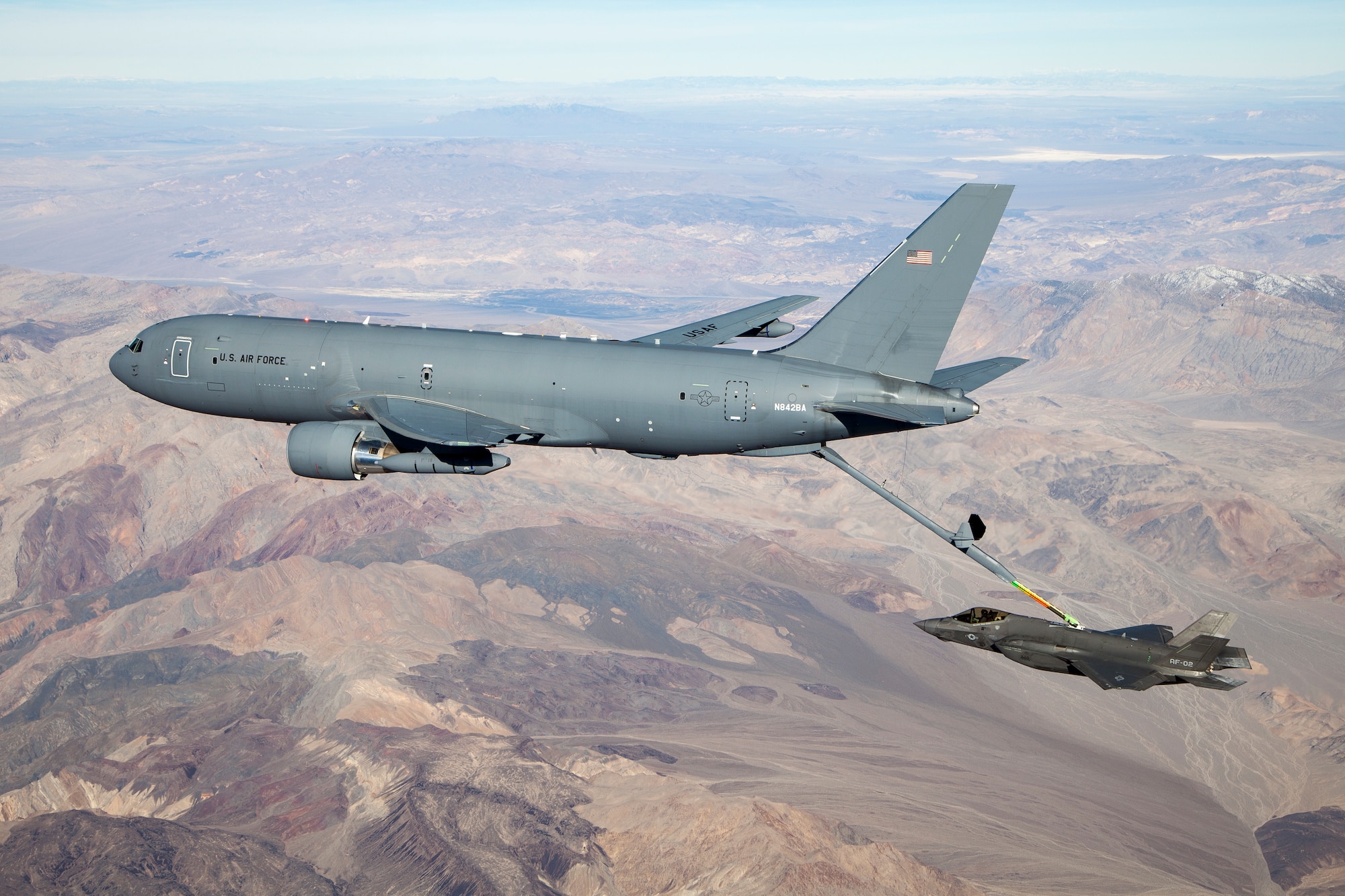
The U.S. State Department approved a possible $4.5 billion Foreign Military Sale to Qatar this week for up to four KC-46A Pegasus aerial refueling aircraft, eight Pratt & Whitney PW4062 engines, radar warning receivers, and infrared countermeasure systems, with Boeing, RTX, and Northrop Grumman as principal contractors. The State Department's own framing leans entirely on standard alliance-management language, enhancing Qatar's "capability to meet current and future threats," strengthening interoperability with American forces, and reinforcing Doha's role as a "strategic regional partner." That framing isn't wrong, but it's also notably bloodless given what's actually driving Qatar's urgency to expand exactly this kind of capability right now.
Al Udeid Air Base, the facility this sale is fundamentally meant to support, isn't a hypothetical target this deal is hedging against, it's a base Iran has already struck twice in the past fourteen months. On June 23, 2025, Iran launched roughly 14 ballistic missiles at Al Udeid in direct retaliation for the U.S. strikes on its nuclear facilities, and while Qatari and American officials reported no casualties, satellite imagery later confirmed one missile penetrated air defenses and destroyed a sensitive communications hub, a Modernization Enterprise Terminal installed in 2016, deep inside the base. A second, less-publicized strike hit Al Udeid again in March 2026, with Qatar's own Defense Ministry confirming one of two missiles fired "got through air defense systems" before impacting the base. This is the largest U.S. military installation in the Middle East, hosting the headquarters of the 9th Expeditionary Task Force and the Combined Air Operations Center, and it has now demonstrated twice that Iranian ballistic missiles can, at least partially, get through its defenses.
That history connects directly to this blog's coverage of Iranian contingency planning to expand strikes toward European bases in Bulgaria and Cyprus should the conflict escalate further. If Tehran is genuinely weighing strikes on NATO members' facilities in Europe, a base it has already hit twice in the Gulf remains, by any reasonable threat assessment, a considerably more proven and immediate target than anywhere in Europe currently under discussion. Qatar expanding its own tanker fleet and associated defensive systems, radar warning receivers and Large Aircraft Infrared Countermeasures among the specific equipment named in this sale, reads less like routine capability modernization and more like a country whose primary American-hosting facility has a demonstrated, repeated vulnerability making concrete investments in resilience.
The sale's broader significance also fits the interoperability logic this blog has tracked through the NSPO SeaSparrow consortium program covered days earlier, American willingness to deepen allied partners' access to frontline U.S. platforms as part of an integrated regional defense posture rather than treating capability-sharing purely as a one-way export transaction. The KC-46A specifically extends fighter and bomber range and sortie generation across exactly the kind of dispersed, contested Gulf operating environment this blog's coverage of Task Force Falcon Strike and the broader Iran conflict has already established as increasingly hard to sustain with existing infrastructure, Al Udeid included.
The Air Force One footnote buried at the end of the State Department's own announcement is worth flagging as a separate, if related, thread: Qatar's earlier donation of a modified jet for U.S. presidential use remains under active security review, with Trump announcing plans to have it "maxed out" for upgrades. Two very different Qatar-U.S. transactions, a $4.5 billion tanker sale addressing a real, twice-demonstrated regional threat, and a politically fraught aircraft gift still working through its own security concerns, are both unfolding on parallel tracks this same week, a reminder that the U.S.-Qatar relationship currently spans genuine strategic necessity and considerably messier diplomatic optics simultaneously.

No comments:
Post a Comment