
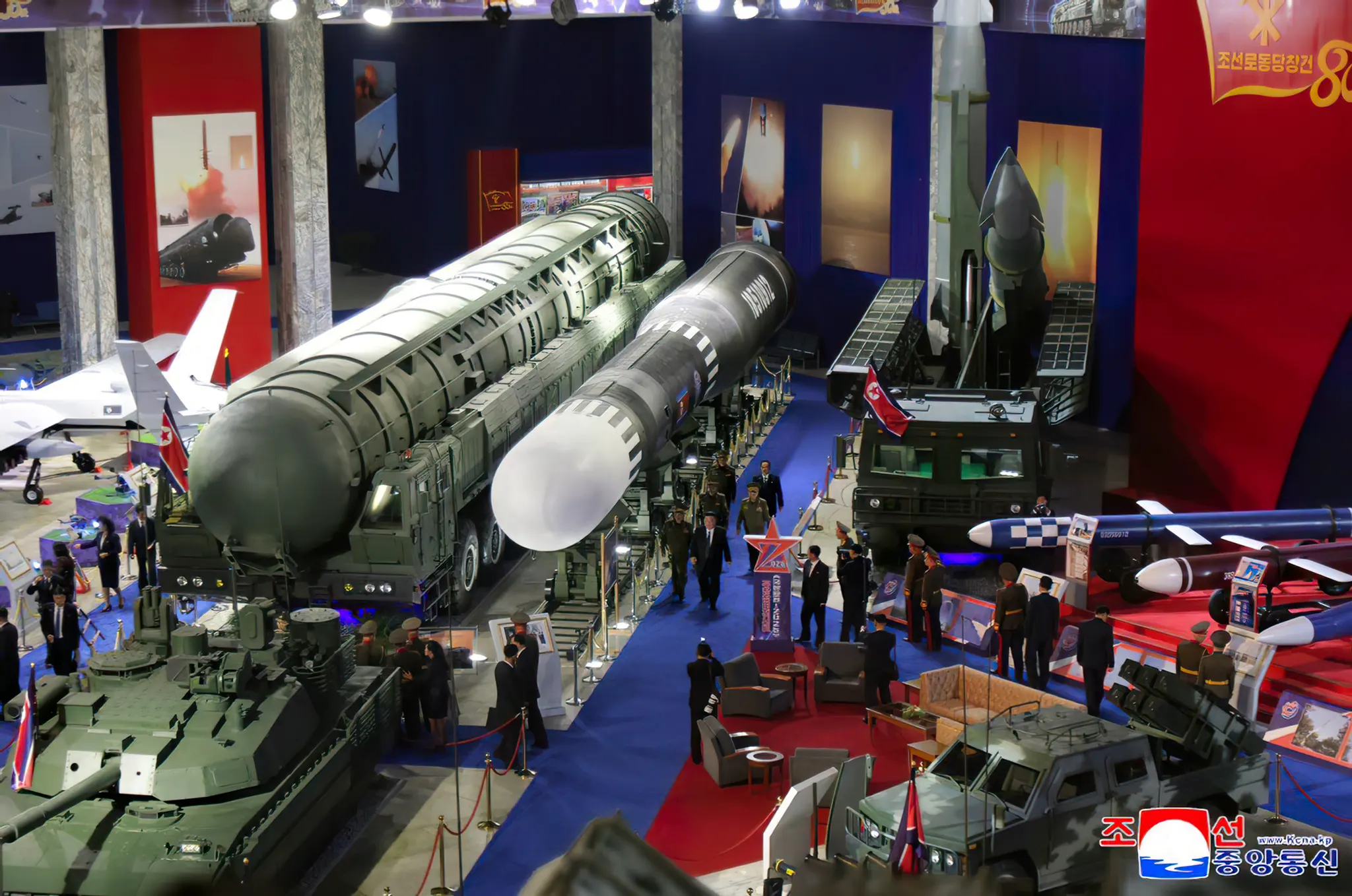
Ukraine's Defense Intelligence agency reported this week that Russia has received KN-30 ballistic missiles from North Korea for the first time, a heavier, previously untransferred variant known domestically as the Hwasong-11C, carrying a claimed 2.5-tonne warhead over a roughly 600-kilometer range from a dedicated 10x10 wheeled transporter-erector-launcher. As of July, Russia's inventory of North Korean-supplied ballistic missiles across three variants, KN-23, KN-24, and now KN-30, stood at roughly 50 total, alongside a comparable stockpile of Kinzhal aeroballistic missiles. Ukrainian intelligence separately confirmed something more operationally significant than the hardware transfer itself: approximately 90 North Korean military personnel and technical specialists have been deployed to Russia's Voronezh Oblast specifically to operate up to six of the new launchers, meaning this isn't simply a weapons sale, it's North Korea directly crewing systems now capable of striking Ukrainian territory.
That combination, new hardware paired with the personnel to actually operate it, connects directly to the 200-missile salvo warning this blog covered just days ago, where Maj. Robert "Magyar" Brovdi described Russia racing to nearly triple its largest simultaneous missile barrage specifically to overwhelm Ukrainian air defenses in a single strike rather than spreading pressure across multiple attacks. A heavier-payload North Korean missile entering that same salvo calculus adds real mass to exactly the kind of barrage this blog's earlier coverage already established Ukraine's own interceptor stocks, at "1%" of what Zelenskyy says is actually needed, cannot adequately counter. Whether the KN-30's claimed 2.5-tonne warhead figure holds up, Ukrainian intelligence itself flagged North Korean payload claims as likely overstated, the missile's mere presence in Russia's arsenal expands the total volume of ballistic threats Ukraine's already-depleted Patriot batteries have to account for.
The detail worth sitting with longer than the missile specifications themselves is the parallel Russian decision this same reporting surfaces: Moscow has reportedly suspended production of its own Kh-47 Kinzhal aeroballistic missiles and Kh-32 anti-ship missiles, redirecting that manufacturing capacity elsewhere, even as it imports North Korean ballistic missiles to fill the resulting gap. That's a genuinely interesting mirror of the production-capacity story this blog has tracked on the American and European side all summer, PAC-3, SM-3, Tomahawk, and GMLRS all representing surge attempts to match wartime consumption. Russia appears to be managing an analogous capacity constraint through the opposite mechanism, outsourcing production to North Korea rather than surging its own domestic lines, a strategy only available to Moscow because it has a willing, sanctions-immune supplier next door that the U.S. and its NATO partners simply don't have an equivalent to.
This also extends the North Korea-Russia military relationship well past the artillery and infantry contributions this blog has referenced only briefly through earlier Korea coverage. Ukrainian intelligence has previously documented North Korea supplying more than 100 KN-23 and KN-24 missiles as early as late 2024, alongside hundreds of M1989 and M-1991 artillery systems and, per past reporting from Ukraine's DIU chief, North Korean infantry deployed into Kursk Oblast, described in that earlier reporting in notably dehumanizing terms as expendable manpower rather than a genuine strategic partner's contribution. The KN-30 transfer and its accompanying technical personnel represent a qualitative escalation past that earlier pattern, this isn't just munitions and disposable infantry anymore, it's specialized crews operating increasingly sophisticated hardware directly on Russian soil, a level of technical integration considerably closer to a genuine military alliance than a simple arms-for-cash or arms-for-diplomatic-cover transaction.
Whether this specific transfer meaningfully shifts the underlying interceptor math this blog has tracked all summer is a separate question from whether it represents a significant escalation in the North Korea-Russia relationship, and the honest answer on the numbers is that roughly 50 additional North Korean-origin missiles, even a heavier-payload variant among them, is a marginal addition against the hundreds of missiles Russia is already firing monthly per this blog's own recent coverage. But the personnel detail, North Korean soldiers now directly crewing strike systems aimed at Ukraine rather than simply supplying the hardware from a distance, is the piece of this story most likely to compound over time, and it's a considerably harder trend to reverse through sanctions or diplomatic pressure than a one-time weapons shipment would be.

No comments:
Post a Comment