
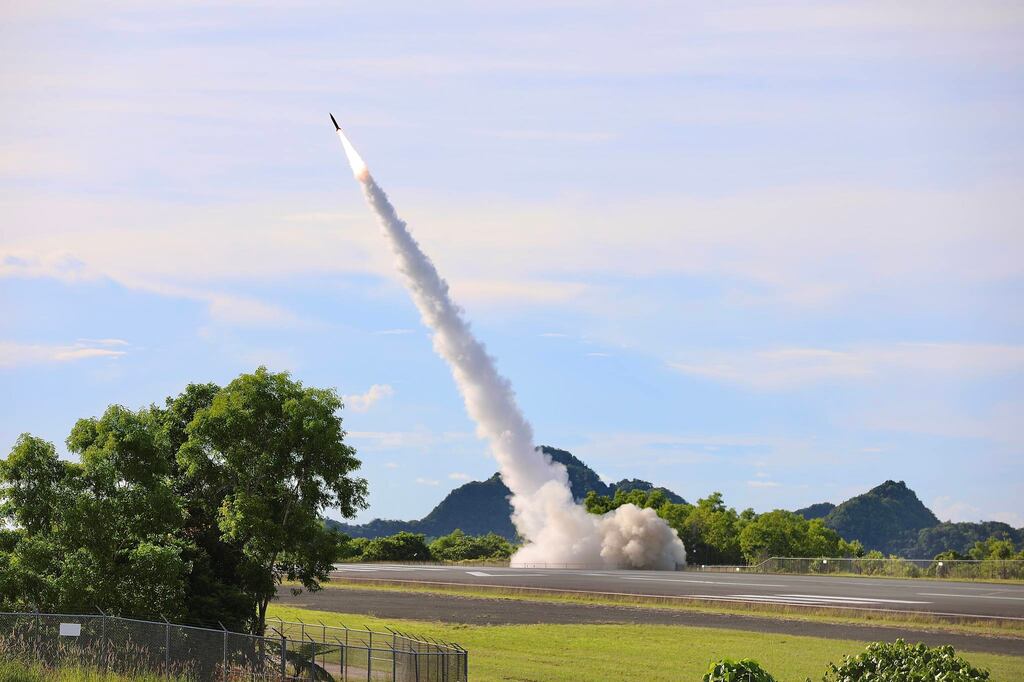
A sweeping intelligence and defense data assessment has revealed that the U.S. military has expended virtually all of its global inventory of premier surface-to-surface long-range precision missiles during the five-month conflict with Iran. According to multiple sources familiar with internal Pentagon tracking, the heavy combat expenditures have severely drained stockpiles of the Army Tactical Missile Systems (ATACMS) and the newer, advanced Precision Strike Missiles (PrSM).
The unprecedented consumption rate highlights the steep industrial and strategic toll of Operation Epic Fury. To minimize pilot exposure and avoid risking manned aircraft in heavily defended airspace across the Persian Gulf, military planners leaned heavily on these surface-to-surface weapons, which cost in excess of $1 million per unit. The heavy reliance on ATACMS and PrSM allowed U.S. forces to strike high-value Iranian infrastructure from safe standoff distances, but it has left domestic arsenals precariously depleted.
The exhaustion of these key missile inventories has sparked intense internal debate within the administration and defense circles regarding overall military readiness for potential future conflicts against peer adversaries like China or Russia. Because the newer PrSM inventory is still ramping up through initial production phases and ATACMS production is winding down, military analysts warn that rebuilding the nation's surface-to-surface strike depth will take years, even with emergency industrial acceleration.
Compounding the problem are sharp declines across other critical defensive and offensive munitions lines. Recent independent watchdog assessments, including reports from the Center for Strategic and International Studies (CSIS), indicate that the military has burned through roughly 65% of its Patriot interceptors and at least 38% of its THAAD missile inventory between February and July. Furthermore, naval forces have expended slightly less than half of the global inventory of Tomahawk cruise missiles.
While the White House and Pentagon leadership have downplayed the shortages—insisting that domestic defense contractors are expanding production at record rates and that U.S. Central Command can manage regional deterrence—the stockpile crisis underscores the widening chasm between high-intensity conventional conflict consumption and the industrial base's current manufacturing velocity.

No comments:
Post a Comment