
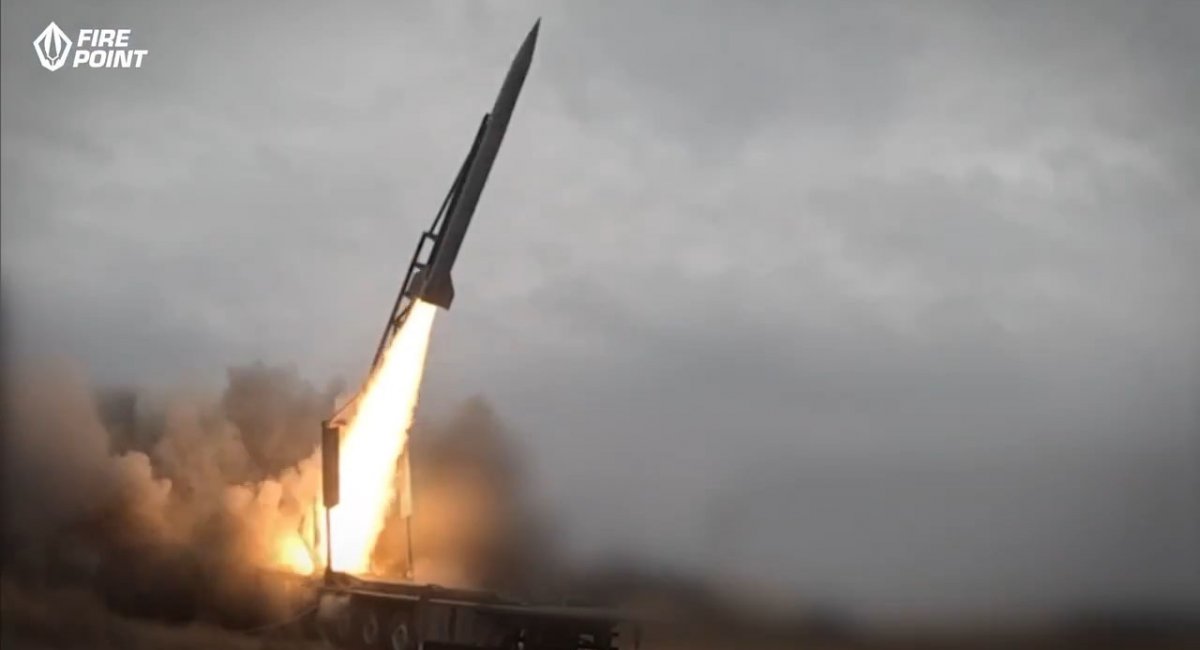
Fire Point, Ukraine's largest defense company, confirmed its FP-7 ballistic missile will be combat-ready by the end of September, months ahead of its original late-2026 timeline, CEO Iryna Terekh announced at DALO Industry Days in Denmark. The FP-7, a lower-cost analogue to the American ATACMS, can strike targets up to 300 kilometers away carrying a warhead up to 150 kilograms. Zelenskyy tied the missile's acceleration directly to what he called Putin's "ballistic terror" in his Independence Day address, repeating his call for allies to help close Ukraine's air-defense and weapons-production gap, the same appeal this blog's coverage of his "I have 1%" interceptor framing already documented in stark detail.
The strategic logic Defense News lays out here, "shoot the archer, not the arrow," is the clearest articulation this blog has encountered of an alternative to the interceptor math dominating nearly every post this blog has published this summer. Rather than trying to out-produce Russia's missile salvos with more Patriot and THAAD interceptors, a race this blog's coverage of the 200-missile salvo warning already established Ukraine is losing badly, destroying Russian launchers and production sites on the ground converts the problem from intercepting a small, fast-moving target racing through contested airspace into destroying a truck-sized, stationary one before it ever fires. That's a genuine paradigm shift rather than an incremental fix, and it directly addresses the interceptor scarcity this blog has documented as the defining constraint of Ukraine's entire air-defense posture this year.
This connects to the "extraterritorial MIC" offshoring pattern this blog covered through Russia's own state-aligned characterization of Ukraine's Western-partner production relocation, and through the independently confirmed onshoring deals with Germany, the UK, and now Finland's Patria-General Cherry partnership. Fire Point's own accelerated FP-7 timeline and its next-generation FP-9, an 855-kilometer-range missile capable of reaching Moscow itself according to United24's reporting, this blog hasn't previously covered, represent the domestic-production half of that same broader strategy, indigenous Ukrainian long-range strike capability developing in parallel with the NATO-territory drone manufacturing this blog has already documented. Between offshored drone production and accelerated domestic ballistic missile development, Ukraine's defense-industrial strategy increasingly looks like a genuinely diversified portfolio rather than a single bet on any one capability or supply chain.
The three-part rationale Defense News attributes to Ukrainian officials and strategists, striking launchers Ukraine can no longer reliably intercept, holding Russian cities at the same risk Ukrainian ones face, and generating leverage for any eventual negotiation, deserves to be read against this blog's own coverage of the UK's SCALP technology transfer to Ukraine and France, covered just one day earlier. Both stories point toward the same underlying strategic pivot: Western and Ukrainian planners increasingly treating offensive, deep-strike capability, rather than purely defensive interception, as the more sustainable long-term answer to Russia's missile campaign. This blog's coverage of Britain's SCALP localization and now Fire Point's accelerated ballistic missile timeline both represent the same bet, that degrading Russia's capacity to launch strikes in the first place is a more achievable and cost-effective goal than matching Russia's launch volume interceptor-for-interceptor indefinitely.
The negotiating-leverage dimension is worth taking seriously as a distinct rationale from the purely military one, and it connects to the broader diplomatic throughline this blog has tracked through Iran's own missile reconstitution and the pattern of strikes continuing around nearly every diplomatic milestone this year. Zelenskyy's own framing, that Russia "must be brought to the negotiating table" through pressure serious enough to make Moscow "howl," suggests Ukrainian officials view the FP-7 and FP-9 programs as much as instruments of coercive diplomacy as battlefield tools, mirroring the exact logic this blog's Su-57 Odessa coverage already identified in Russia's own standoff-strike campaign against Ukrainian infrastructure, sustained pressure calibrated to shape an eventual settlement rather than purely to achieve battlefield victory in isolation. Whether Ukraine's own version of that strategy proves more effective than Russia's remains to be tested once the FP-7 actually reaches combat use next month, but the accelerated timeline itself signals how urgently Kyiv now views offensive deterrence as the answer the interceptor shortage this blog has documented all summer cannot provide on its own.

No comments:
Post a Comment