
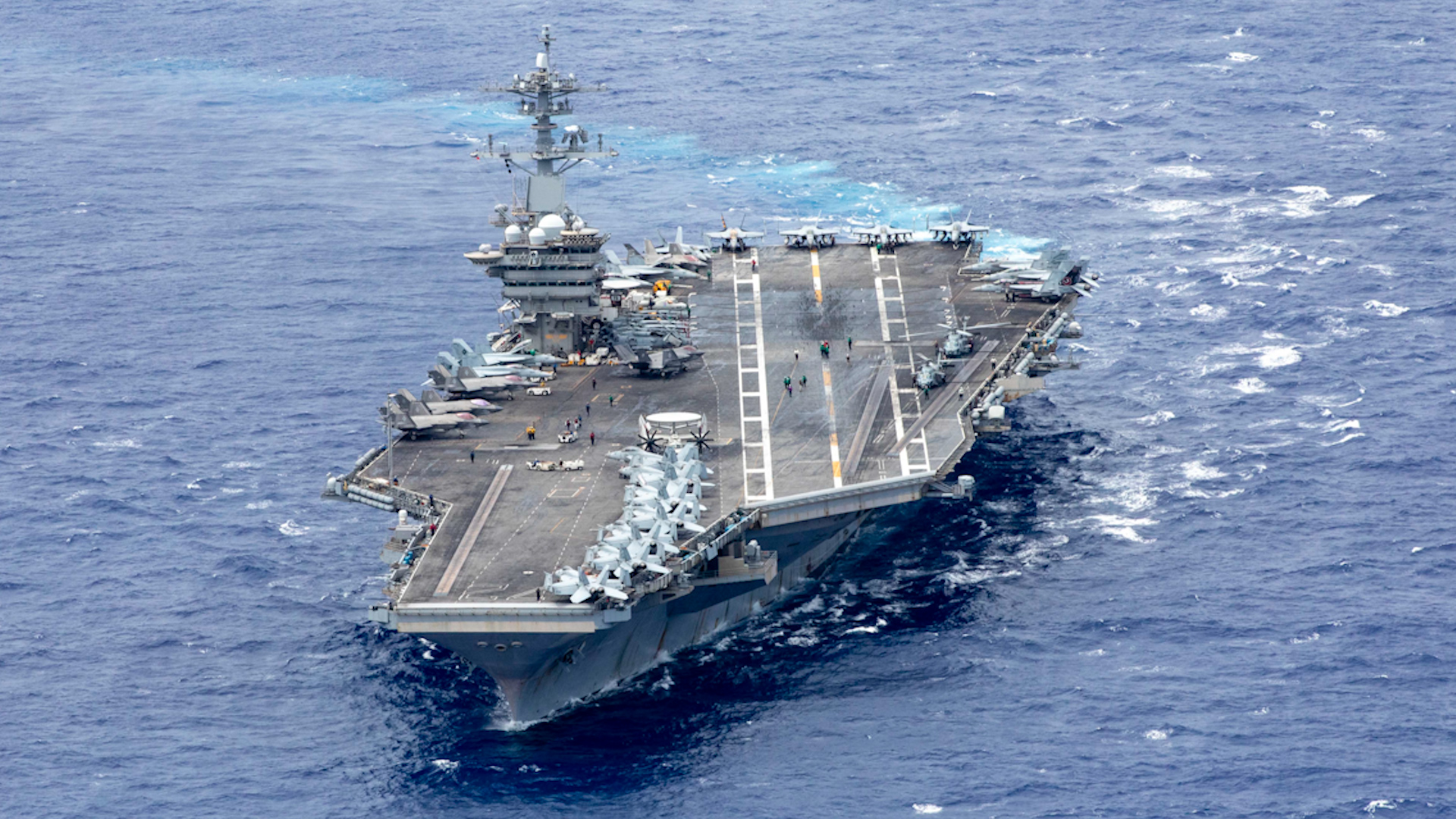
USS Abraham Lincoln will dock in eastern Thailand next week for what Thai officials describe as a routine rest and recuperation stop, according to a Thai Navy spokesperson, following the carrier's departure from the Middle East on August 22 after a deployment that left it without a single port visit for more than 200 consecutive days, a modern-day record according to Democratic lawmakers. The roughly 5,000 sailors and Marines aboard will receive what the Thai Navy called logistical support and rest, with no exercises planned during the visit and neither the specific date nor the accompanying strike group's vessel names disclosed, citing security concerns.
This is the resolution, or at least the next chapter, of a story this blog has tracked in real depth this summer. This blog's coverage of the joint Military Times and Defense News investigation into Navy operational tempo documented Lincoln's extended deployment in detail, and family members told Military Times this month that multiple sailors had attempted to go overboard amid declining morale aboard the ship, reporting Defense Secretary Hegseth publicly described as having "completely misrepresented" actual shipboard conditions. This blog's separate coverage of the Pacific carrier gap traced the direct operational consequence of Lincoln's extended deployment, USS George Washington being pulled from the Pacific specifically to relieve Lincoln, leaving the western Pacific without a single American carrier for the first time during this stretch of the Iran conflict, a gap this blog's reporting connected directly to the same resource strain driving Lincoln's own prolonged time at sea.
The uncomfortable question this port call doesn't fully resolve is which account of Lincoln's condition Thailand's routine, security-conscious framing actually supports. A "rest and recreation" stop after 200-plus days at sea is precisely the kind of relief this blog's Navy tempo coverage suggested the crew badly needed, and the fact that it's happening at all is a genuinely positive development regardless of how the underlying dispute over shipboard conditions is eventually resolved. But the framing itself, brief, security-restricted, details withheld, sits somewhat awkwardly next to Hegseth's public insistence that reports of the ship's condition were overstated; a genuinely routine port call wouldn't typically need this level of information control, and the gap between "this is standard logistics" and "sailors reportedly attempted to go overboard" remains as unresolved after this announcement as it was before it, this reporting simply confirms the ship is finally making a stop, not which account of why that stop is needed is more accurate.
Thailand's own position as host carries strategic weight worth setting against this blog's broader Indo-Pacific coverage this summer. As the only U.S. treaty ally in mainland Southeast Asia, a status dating to 1954 and reinforced by major non-NATO ally designation in 2003, Thailand's willingness to host a carrier strike group whose deployment has become a genuine domestic political controversy in Washington is itself a modest vote of confidence in the broader alliance relationship, even as the visit's low-profile, no-exercises framing suggests Bangkok is deliberately avoiding the kind of high-visibility engagement that might otherwise accompany a carrier port call. That restraint fits a pattern this blog's coverage of stretched American Pacific posture, the Korea exercise cutback, the reduced Taiwan Strait transit frequency, has documented all summer, allies and the U.S. military alike appearing to manage an increasingly resource-constrained relationship with lower-key gestures rather than the more prominent displays a less strained posture might otherwise produce.
If there's a throughline connecting every piece of this blog's carrier-strain coverage this summer to this single port call, it's this: Lincoln's crew getting genuine rest after 200-plus days at sea is unambiguously good news, and this blog is glad to report it as such. Whether that relief arrived because the fleet's operational tempo crisis is easing, or simply because a single ship finally reached the end of an unsustainable deployment cycle documented in exhaustive, uncomfortable detail this summer, remains the open question this blog's continued Navy coverage will need to keep answering as the broader fleet-strain story this port call is only one chapter of continues to unfold.

No comments:
Post a Comment