
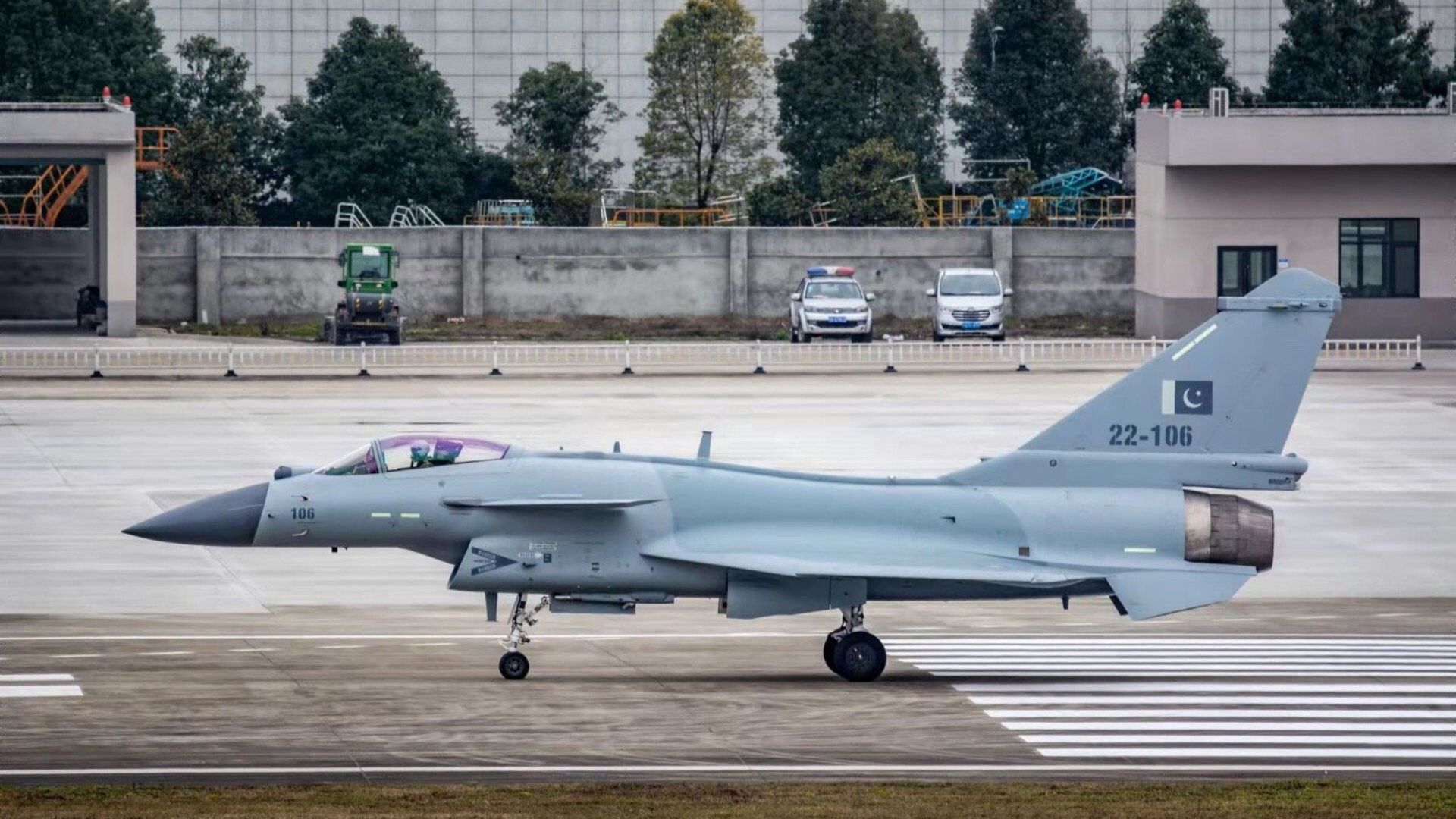
On October 5, 2026, Indonesian outlet Republika reported, citing sources, that Indonesia expects to receive its first Chengdu J-10CE fighters in roughly six months, which would make it the third foreign operator of the aircraft after Pakistan and Uzbekistan. Military Watch Magazine and the South China Morning Post picked up the story. Asked about the arrival at military headquarters in East Jakarta, Air Chief Marshal Mohamad Tonny Harjono declined to give details and told the public to “just wait”. The report did not say how many aircraft would arrive first, and a delivery around April 2027 would fit the six-month window.
What is on the public record is more solid than in many export stories. Defence Minister Sjafrie Sjamsoeddin said in October 2025 that Indonesia would acquire Chinese fighters and that they would soon fly over Jakarta, and the finance minister has reportedly approved a budget of about $9 billion for 42 aircraft. China’s Ministry of National Defense confirmed the broader procurement discussion without giving a quantity or schedule. Even so, no contract text or official delivery timetable has been published, and the six-month figure comes from a media report rather than a government schedule. Military Watch adds that local sources in June reported the order had been doubled to 84 aircraft. I found no corroboration for that, so treat it as unconfirmed.
The J-10 purchase fits Indonesia’s pattern of buying from everywhere. It ordered 42 Dassault Rafales in 2022 in a deal reported at $8.1 billion, with the first aircraft arriving in January 2026. It also signed for 48 Turkish KAAN fifth-generation fighters in 2025, remains a reduced partner in South Korea’s KF-21 programme and has reportedly held talks on the U.S. F-15EX. Its current fleet includes American F-16s and Russian Su-27s and Su-30s, and a 2018 contract for Su-35s remains suspended amid Western pressure. The J-10CE would be the first Chinese combat aircraft to enter service with a Southeast Asian air force, which is why analysts read the deal as a statement of strategic independence as much as a procurement decision.
The J-10C’s rise as an export fighter owes a great deal to May 2025. Pakistan Air Force J-10Cs armed with PL-15 missiles brought down at least one Indian Rafale, a loss that US officials told Reuters about and that France’s air chief said he had seen evidence of. India has never publicly acknowledged the Rafale loss, and Pakistan’s higher claims remain unverified, but the result handed the J-10C and PL-15 pairing a combat reputation no other Chinese export fighter can match, and prospective buyers noticed. Indonesia’s decision came months later, though its officials have not said the combat record drove the choice. Military Watch also argues that the J-10C costs under a third as much as a Rafale, and by some estimates closer to a sixth, without citing a source. The reported figures point the other way: Indonesia’s 42 Rafales were reported at $8.1 billion, while the budget approved for 42 J-10CEs is about $9 billion. Those are not like-for-like numbers, since packages differ in weapons, support and training, but it suggests the headline unit-cost gap may shrink once everything needed to operate the aircraft is included.
There is also a practical question that headlines rarely cover. If Indonesia ends up flying Rafales, KAAN, F-16s, Su-27/30s and J-10CEs, it will need to manage training, spare parts, munitions and data links across very different supply chains. That is my own analysis rather than anything in the reports, but fleets this varied usually raise sustainment costs and complicate integration. It is also not yet clear whether the package includes weapons such as the PL-15 missile, or where pilots and technicians will be trained.
Ultimately, the Indonesia deal looks real, but its details are not yet public. Three markers will show how far it goes: an official statement on the delivery date and number of aircraft, the arrival of the first J-10CEs at an Indonesian base, and whether the reported expansion beyond 42 aircraft materialises. Until then, “within six months” is an expectation, and the interesting part is how a country that buys from everywhere plans to keep it all flying.

No comments:
Post a Comment