
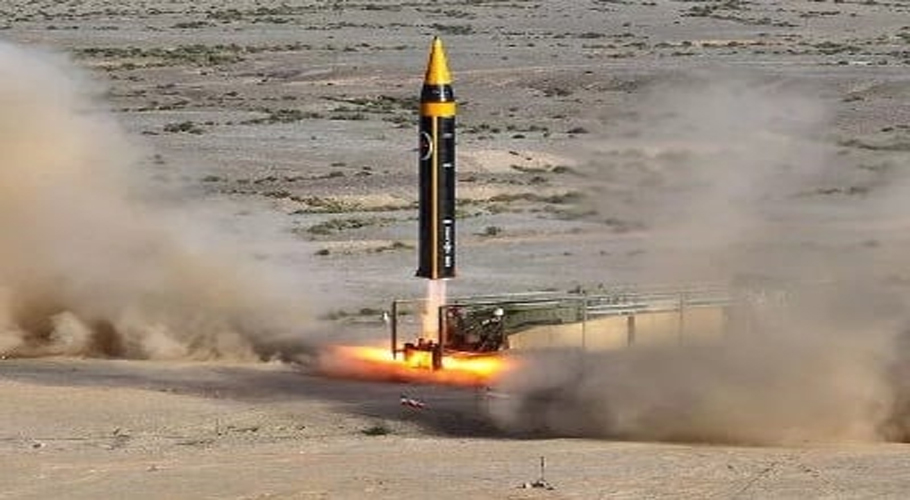
Israeli defense and intelligence officials, including IDF and Mossad assessors, have been described by The Jerusalem Post as genuinely shocked by how quickly Iran has restored ballistic missile production capacity following the roughly 40-day war earlier this year, a conflict in which the U.S. and Israel struck more than 2,600 missile and military-industrial targets across approximately 30,000 airstrikes. Current assessments reportedly put Iran's potential rebuild rate at 100 to 300 missiles a month, a pace that could restore its full pre-war arsenal within a year or less. That arsenal itself had already demonstrated remarkable resilience through two prior rounds of strikes, growing from roughly 1,300 missiles after Israeli strikes in June 2025 to 2,500 by February 2026, despite Israel initially projecting each round of strikes had set Iranian production back by a year or more.
The pattern here is the actual story, not any single production figure. This is now the third consecutive instance in which Israeli intelligence significantly underestimated Iran's reconstitution speed, October 2024's strikes were projected to delay production by over a year and were reversed within months, June 2025's more extensive strikes against roughly 100 targets were supposed to set Iran back by multiple years and instead saw the arsenal nearly double, and now the considerably larger 40-day war's 2,600-target campaign is producing the same surprised reaction from the same intelligence apparatus. A reasonable read of that pattern is less about any specific miscalculation and more about a structural blind spot in how outside observers assess underground, hardened missile production infrastructure, reportedly including rapid bulldozer-based debris clearance at damaged subterranean facilities that let production resume faster than surface damage assessments alone would predict.
This connects directly to the interceptor cost-exchange throughline this blog has documented obsessively all summer. FDD analyst Behnam Ben Taleblue's own cautious framing, cited in RealClearDefense's coverage of this same story, is worth taking seriously as the more measured counterweight to the Jerusalem Post's more dramatic framing: there's "no significant publicly available evidence" definitively confirming the rebuild claims, and the actual constraint that limited Iran's rate of fire during both prior conflicts wasn't missile production alone, it was a finite number of transporter-erector launchers that persistent U.S. and Israeli ISR kept targeting even as underground stockpiles remained harder to fully destroy. That's a genuinely important distinction this blog's own interceptor-depletion coverage should incorporate: even a fully restocked missile arsenal doesn't automatically translate into the kind of sustained, large-volume barrages this blog covered in the 200-missile Russian salvo story, launcher availability and sortie-generation capacity may remain the tighter bottleneck regardless of how many missiles sit in reconstituted underground depots.
If the higher-end rebuild estimates hold up, though, the strategic math this blog has tracked through CSIS's Patriot and THAAD depletion figures gets considerably worse. This blog's coverage already established that the Iran war drained roughly two-thirds of America's combined Patriot and THAAD stockpile, a shortage serious enough that Zelenskyy's own "I have 1%" framing described a parallel Ukrainian crisis this summer. A reconstituted Iranian arsenal capable of firing 100 to 300 missiles monthly would be rebuilding at a pace that could outstrip the multi-year interceptor replenishment timelines this blog has documented across the PAC-3, SM-3, Tomahawk, and GMLRS production surges, precisely the scenario RealClearDefense's own analysis flags as the reason U.S. officials need a supply-side strategy targeting the North Korean, Chinese, and Russian components feeding Iranian reconstitution, not just repeated strikes against the same above-ground facilities that keep proving insufficient.
The cost economics worth flagging directly: Iran's Kheibar Shekan medium-range ballistic missile reportedly costs roughly $1 million to build, meaning even 100 missiles a month represents a production value dramatically smaller than a single Patriot battery's interceptor reload, the same asymmetric math this blog's coverage of Ukraine's own missile crisis has tracked all summer, just now applied to the theater where this blog's interceptor-shortage story actually originated. Whether Iran's rebuild ultimately reaches the higher end of these estimates or proves as overstated as some earlier Israeli assessments turned out to be inaccurate in the opposite direction, the pattern this blog has now documented three times running, hardened, underground production capacity proving more resilient to strikes than outside intelligence consistently expects, is the more durable lesson, and it applies with real force to this blog's own broader coverage of whether strike campaigns alone, without addressing the supply chains and production infrastructure enabling reconstitution, can permanently degrade capability this determined an adversary keeps proving able to rebuild.

No comments:
Post a Comment