
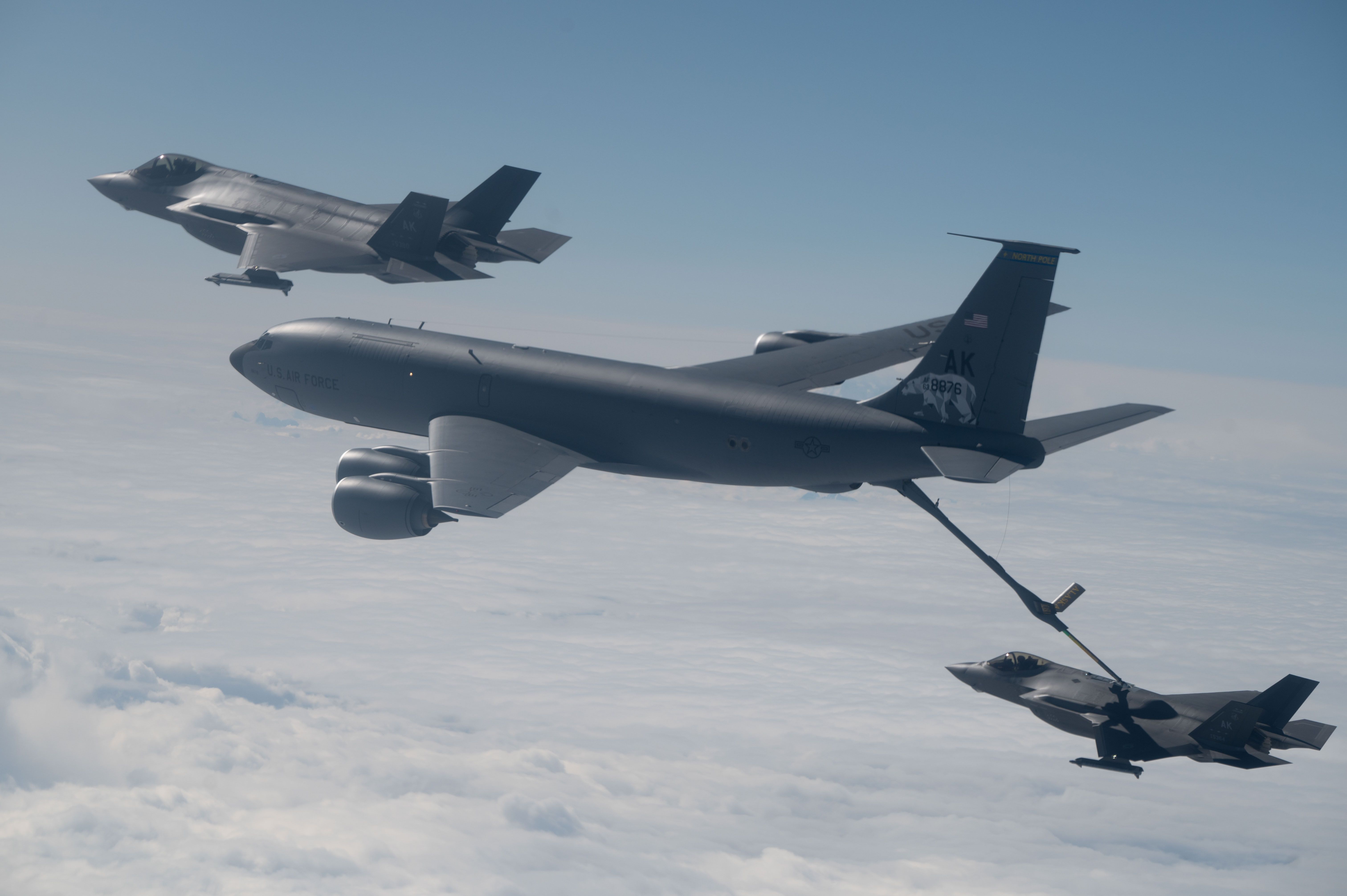
Two U.S. Air Force KC-135 refueling tankers departed Bulgaria's Bezmer air base on August 21, roughly a month after their arrival prompted Iran to warn that hosting the aircraft would constitute complicity in "aggression and war crimes." Bulgarian Defense Minister Dimitar Stoyanov confirmed the withdrawal to reporters, characterizing all flights during the deployment as training missions over allied countries and stating Sofia had "no information about direct threats to our national security." The original deployment, approved by Bulgaria's parliament on July 22, drew genuine local protests from residents near Bezmer who feared exactly the kind of Iranian retaliation this blog's coverage of Iran's contingency planning against European bases has already documented as a credible, if unconfirmed, threat category.
This connects directly to this blog's earlier reporting on Iranian assessments of potential strikes against Bulgaria and Cyprus, where sources close to the Iranian regime told the Financial Times that Sofia's approval of U.S. refueling operations from Bezmer specifically elevated the base's strategic relevance, and by extension its exposure, to any escalation. That earlier piece treated the Bulgaria threat as a live, unresolved data point in a broader pattern of Iranian signaling; this withdrawal is the first concrete update to that story, and it's genuinely ambiguous which way it cuts. Read one way, quiet departure after roughly a month of routine training missions with no reported incident looks like the threat simply didn't materialize, and Bulgaria's own calm, matter-of-fact framing supports that reading. Read another way, a temporary deployment reaching its natural end on a normal rotational timeline is exactly what you'd expect regardless of whether Iranian threats had any influence at all, meaning this withdrawal may not actually resolve the underlying question of whether Sofia's calculus about hosting U.S. assets has shifted.
Stoyanov's own statement, that Bulgaria "had prior information, which is why all our decisions were well-founded," is worth reading carefully rather than taking entirely at face value. That's the kind of confident retrospective framing any government would offer whether or not genuine security concerns factored into the deployment's actual duration, and the report offers no independent confirmation of what "prior information" specifically means or whether it changed between the July 22 approval and this August 21 departure. What is verifiable is simpler and more useful: the deployment lasted roughly a month, involved training missions rather than combat operations, and ended without incident, a genuinely unremarkable outcome that neither confirms nor refutes the broader Iranian threat assessment this blog's earlier coverage took seriously as a contingency worth tracking.
The base itself remains strategically significant regardless of this specific withdrawal, and that's the detail worth carrying forward rather than treating this story as closed. This blog's earlier coverage established Bezmer's elevated relevance came specifically from its refueling-aircraft-hosting role supporting broader American strike operations, a function that doesn't disappear simply because these particular two tankers have left. Bulgaria's parliament approved the arrangement under a standing agreement governing joint use of military facilities, meaning future deployments, of tankers or other assets, remain a live possibility rather than a one-time event now concluded. If Iran's contingency planning genuinely extends to Bulgarian targets as this blog's earlier reporting suggested, that calculus likely persists independent of which specific aircraft happen to be parked at Bezmer on any given week.
The more honest takeaway from this update is that it doesn't actually resolve much. Two tankers left a Bulgarian base after a month, nothing happened to them while they were there, and the local government characterizes the whole episode as routine and well-managed. That's genuinely good news in the narrow sense that no attack materialized, but it's also too thin a data point to confirm whether Iran's own contingency planning against Bulgaria this blog previously reported has been abandoned, deferred, or simply never advanced past the assessment stage this blog's earlier coverage was careful to describe it as. The next deployment to Bezmer, whenever it happens, will be the more informative test of whether Sofia's calm framing this time reflects genuine confidence or simply the fact that this particular rotation happened to pass without testing it.

No comments:
Post a Comment