
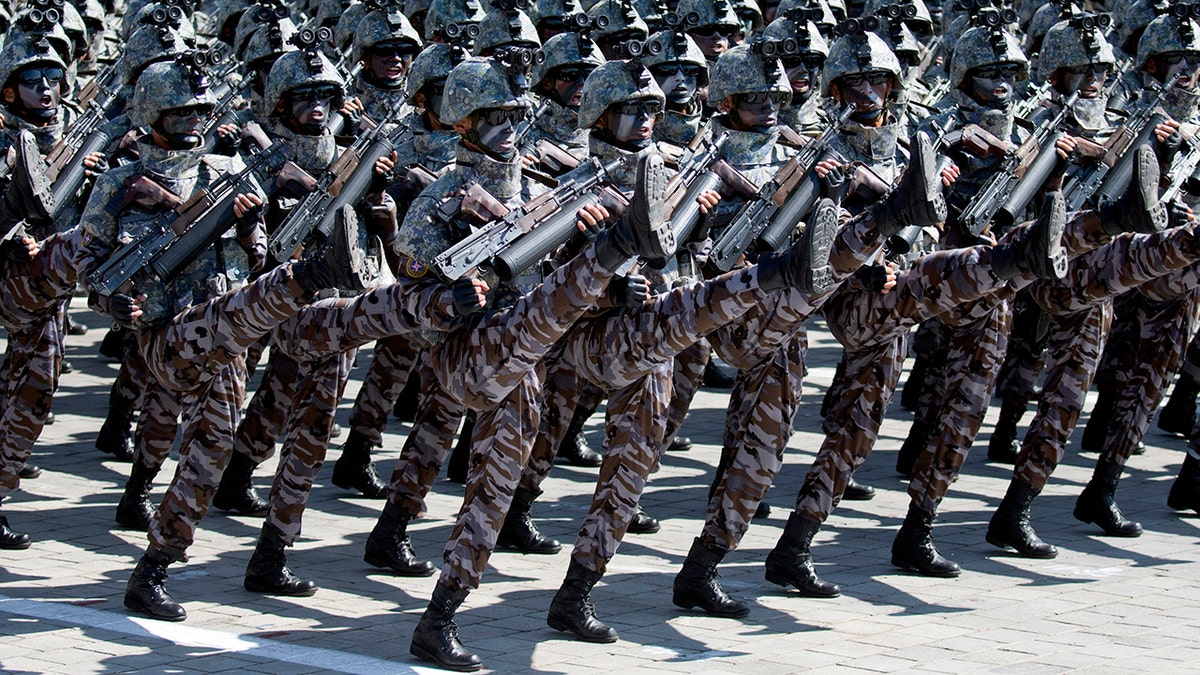
A new wave of North Korean troops in Russia, already totaling 8,500, includes roughly 400 drone operators according to Ukrainian Defense Intelligence deputy head Maj. Gen. Vadym Skibitskiy, with many of those operators having gained direct combat experience either during or as a result of North Korea's earlier deployments. CNN's reporting on Skibitskiy's briefing indicates their drones will likely be used both for reconnaissance and to strike targets inside Ukraine directly, and the current deployment, concentrated mostly in Russia's Kursk region alongside roughly 1,000 engineers and sappers, could grow by as much as 50,000 additional personnel if requested when Putin meets Kim Jong Un in September.
This connects directly to the KN-30 missile transfer this blog covered days earlier, where roughly 90 North Korean personnel were confirmed operating heavier ballistic missile launchers on Russian soil in Voronezh Oblast. That story already established a qualitative escalation past North Korea's earlier role as a munitions and expendable-infantry supplier, specialized crews now directly operating increasingly sophisticated Russian-based hardware rather than simply shipping weapons or committing troops as frontline manpower. This drone-operator deployment extends that same trajectory into a third distinct capability category within the space of a single week's reporting: North Korean personnel are now confirmed contributing missile-launcher crews, engineering and sapper units, and dedicated drone operators simultaneously, a genuinely broader technical integration into Russia's war effort than the earlier infantry-and-artillery framing this blog's prior Korea coverage captured.
The origin story behind these drone operators deserves particular attention, because it reveals something this blog's Ukraine coverage hasn't previously documented explicitly: North Korea's earlier, costlier deployments are now functioning as a training pipeline rather than simply a one-off manpower contribution. CNN's reporting notes many of the new drone operators gained their relevant experience from North Korea's initial October 2024 Kursk deployment, where an estimated 10,000 troops suffered significant casualties using mass-assault tactics against Ukrainian positions, and that wounded soldiers who returned home have since been teaching their colleagues about drone warfare and the broader tech-dominated character of the modern front line. That's a genuinely different institutional dynamic than simply sending more troops, it's North Korea converting combat losses into a domestic training curriculum, then exporting that newly built expertise back to Russia in a more specialized, technically capable form.
Skibitskiy's own characterization of what this deployment pattern reveals about Russia's underlying position is worth taking seriously as informed Ukrainian intelligence assessment, with the appropriate caveat that any single country's intelligence services have their own incentives in how they frame an adversary's capacity. His read, that repeated reliance on North Korean manpower and technical personnel is "another sign that Russia's resources are stretched thin," despite Moscow's public statements about economic resilience and military-industrial capacity, is consistent with the broader interceptor and munitions-production strain this blog has documented on the American and European side all summer, just applied to Russia's own manpower and technical-specialist pipeline instead of missile stockpiles. A country confident in its own domestic capacity doesn't typically need to import drone operators, however experienced, from a nominally junior treaty partner.
The scale question hanging over the September Putin-Kim meeting is the detail worth watching most closely going forward. A request for up to 50,000 additional North Korean personnel, on top of the 8,500 already confirmed present, would represent a genuinely different order of military integration between the two countries than anything documented to date, and Kim Jong Un's own April decision to open a domestic memorial honoring North Korea's Ukraine war dead suggests Pyongyang is treating this relationship as a durable, publicly acknowledged commitment rather than a deniable, arm's-length arrangement. Whether that scale of expansion actually materializes, or whether September's meeting produces a more modest continuation of the current pattern, this blog's own tracking of the North Korea-Russia relationship across missiles, personnel, and now drone operators suggests the trajectory, if not yet the final scale, is already reasonably clear.

No comments:
Post a Comment