
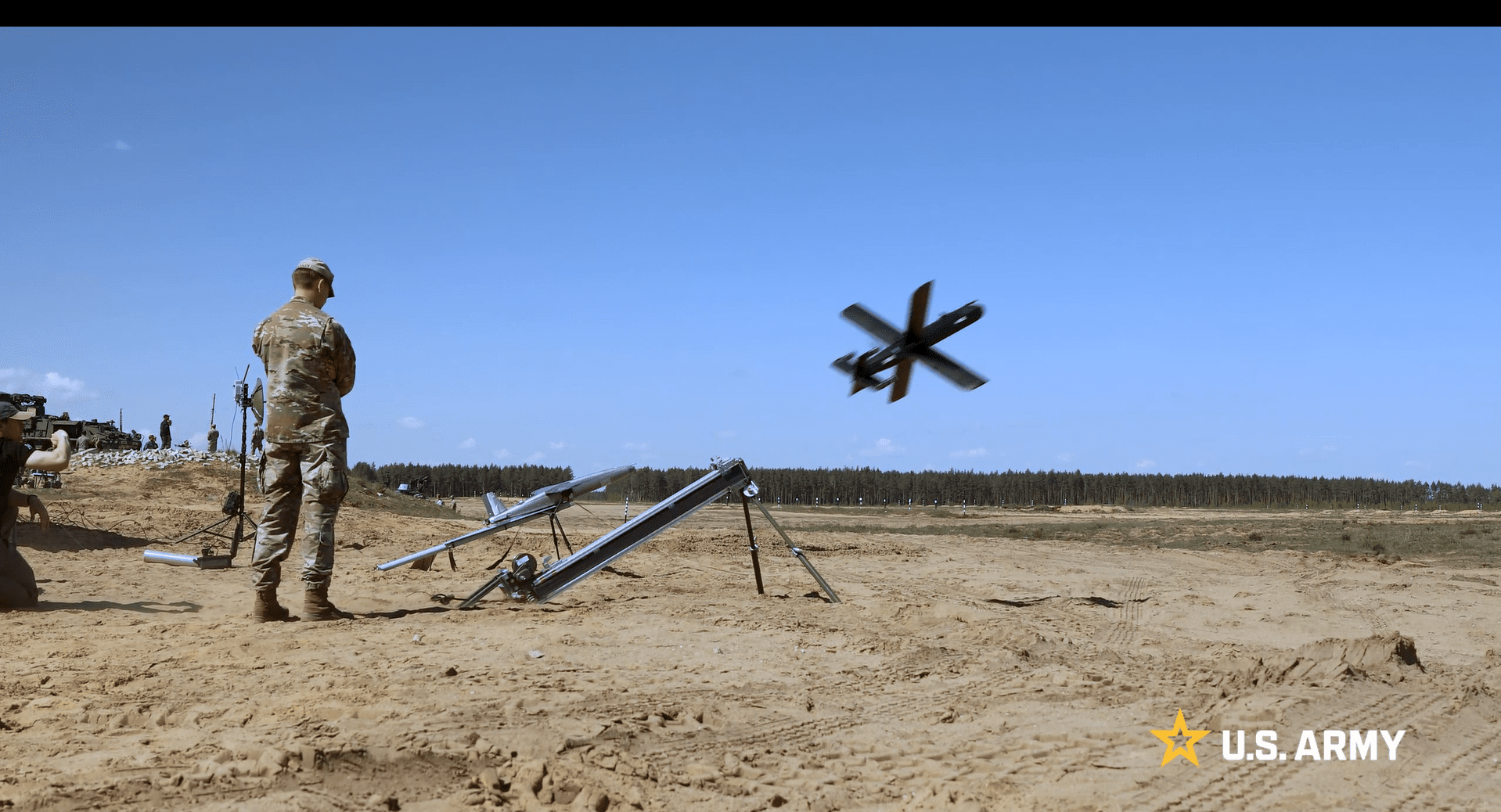
Munich-based Helsing has enlisted Rakuten, the Japanese e-commerce and finance conglomerate, to help finalize a deal selling its unmanned systems to Japan's Ground Self-Defense Forces, a Rakuten spokesperson confirmed August 18, first reported by Nikkei. Japan's GSDF is currently field-testing Helsing's HX-2 strike drone through the end of September, building on an "initial agreement" the German firm struck with Tokyo earlier this year through what Helsing described only as an unnamed "local brokerage partner." Rakuten has limited defense experience of its own, but its involvement isn't a one-off, the company separately organized a demonstration this spring for Ukrainian drone-software maker Swarmer, coordinating an AI-driven drone swarm for a Japanese military unit, and Rakuten's billionaire founder Hiroshi Mikitani has been one of Japan's most visible Ukraine supporters, helping other Ukrainian defense firms exhibit at Japanese arms fairs.
The genuinely interesting question this story raises, and the one Defense News's brief report doesn't fully unpack, is why a European drone maker with $1.8 billion in fresh funding and combat-honed technology needs an e-commerce company to broker a sale to a G7 military in the first place. The answer lies in something CSIS has flagged as structurally unique among industrialized nations: Japan has no true defense "primes." Even its largest defense-adjacent companies, Mitsubishi Heavy Industries and Kawasaki Heavy Industries, treat defense as a relatively modest slice of much larger civilian industrial businesses, shipbuilding, aerospace, heavy machinery, rather than operating as dedicated defense contractors the way Lockheed or Rheinmetall do. That structure historically made sense for a country that spent seven decades confined to domestic-only procurement under a pacifist constitutional framework, but it leaves genuinely limited institutional infrastructure for a foreign startup to navigate Japan's Ministry of Defense and Acquisition, Technology & Logistics Agency without an established local partner smoothing the relationship-building process, which is precisely the gap Rakuten's chief of staff Hideaki Mukai described in his statement, "complex procurement systems, difficulties communicating with government agencies and challenging procurement cycles."
That structural gap is opening at exactly the moment it matters most, because Japan's defense-export posture just underwent its most significant liberalization in decades. The Takaichi cabinet abolished, in April 2026, the five categories that had confined Japan's finished defense exports to strictly non-lethal roles, rescue, transport, warning, surveillance, and minesweeping, since a 2014 policy shift, reclassifying equipment simply as weapons or non-weapons and clearing the way for outright sales of warships, missiles, and fighters to the 17 countries holding defense technology-transfer agreements with Tokyo. That's the same liberalization this blog's earlier coverage flagged as enabling Japan's own Mogami-class frigate sale to Australia, and it cuts both directions simultaneously, Japan can now export more freely, and the same buildup, roughly ¥43 trillion committed through fiscal 2027 with defense-related order backlogs at Japan's three major heavy industry groups up 15 percent year-on-year, is pulling in foreign firms like Helsing who see Tokyo's swelling procurement budget as a market finally worth the effort of breaking into.
Helsing's specific pitch carries added weight given where its technology has actually been tested. Founded in 2021 and now Europe's best-funded defense technology startup after its July funding round, the company has spent the past several years supplying drones for Ukraine backed by German government funding, meaning the HX-2 undergoing GSDF field trials arrives with genuine combat-relevant credibility rather than untested lab specifications, a distinction that matters considerably to a Japanese military establishment increasingly focused on counter-drone and unmanned systems as core capability gaps. This also mirrors a pattern already visible across Japan's broader defense-industrial opening this blog has tracked, American firms like Anduril establishing Tokyo offices and beginning JMSDF sensor-fusion integration trials, and now a German startup using a domestic e-commerce conglomerate as its entry vehicle, all converging on the same underlying reality: Japan's defense budget has grown faster than its institutional capacity to absorb new suppliers efficiently, creating real demand for brokers, whether trading houses, conglomerates, or, in this case, Rakuten, to bridge a gap that pure capital and combat-tested hardware alone can't close on their own.
Whether this specific deal closes on the timeline GSDF's September test window suggests is almost secondary to what it demonstrates about the shape of Japan's rearmament moving forward. A defense-industrial base built for seventy years around domestic-only procurement and diversified industrial conglomerates rather than dedicated primes doesn't restructure itself overnight simply because the export laws changed and the budget tripled, and stories like Helsing's reliance on Rakuten are likely to keep recurring as more foreign firms, drawn by the same budget and liberalization this blog has covered from multiple angles this summer, discover that winning a Japanese defense contract requires nearly as much local relationship-navigation as it does actual product performance.

No comments:
Post a Comment