
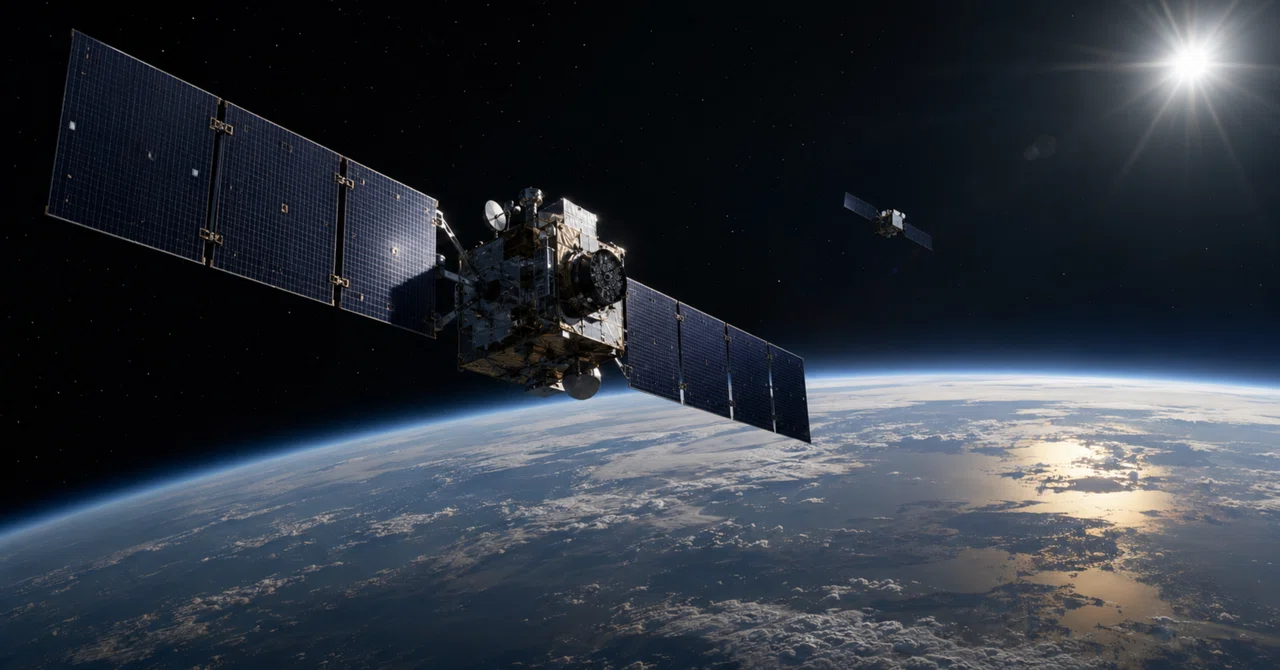
A U.S. Space Force Space Domain Awareness payload rode into orbit on August 10 aboard Japan's Quasi-Zenith Satellite 7, launched on a Japanese H3 rocket from Tanegashima Space Center, completing the second and final sensor in the Quasi-Zenith Satellite System-Hosted Payload program, the first national security space partnership of its kind between the two countries. The payload will feed near-real-time data into the Space Surveillance Network, sharpening the Space Force's picture of activity in geosynchronous orbit above the Indo-Pacific, roughly 22,000 miles up, where satellites match Earth's rotation and hold position over a fixed point on the ground. Combat Forces Command's Mission Delta 2 will operate the sensor, and MIT's Lincoln Laboratory, which designed and built both U.S. payloads in the program, spent two years integrating this second sensor with its Japanese host satellite before launch. The first sensor flew on QZS-6 back in February 2025, meaning this quiet bilateral program has now been building toward full capability for well over a year without much public attention until this milestone.
The "why geosynchronous orbit specifically, and why now" question is where the announcement's brief, celebratory framing understates the actual stakes. GEO is uniquely valuable surveillance real estate precisely because a satellite there stays fixed over one location rather than sweeping past every 90 minutes the way low-Earth-orbit satellites do, and China has spent the past several years building exactly the kind of persistent GEO surveillance architecture that makes American coverage of the same orbital band a genuine strategic necessity rather than a nice-to-have. CSIS has documented China's Yaogan-41 optical reconnaissance satellite reaching GEO in December 2023 specifically positioned to maintain continuous surveillance over the Pacific and Indian Oceans, Taiwan, and mainland China, part of a broader Yaogan constellation that has placed 144 surveillance satellites into orbit since 2006. China has separately fielded Ludi Tance 4-01, the world's first geosynchronous synthetic aperture radar satellite, providing all-weather, day-and-night imaging from an altitude current U.S. radar satellites don't operate at, and SpaceNews has documented Chinese spacecraft conducting deliberate proximity maneuvers and shadowing techniques against other nations' GEO satellites, timed specifically to complicate ground-based detection.
The military relevance of that Chinese buildup isn't abstract. Defence Security Asia's analysis warns that a small constellation of Chinese geosynchronous satellites positioned over the Pacific, Atlantic, and Indian Oceans could theoretically provide persistent, uninterrupted tracking of U.S. carrier groups leaving Guam, logistics vessels crossing the Philippine Sea, and amphibious forces operating near Taiwan or the South China Sea, a capability the analysis frames starkly as challenging the naval stealth and dispersed-positioning advantages the U.S. Navy has traditionally relied on. Against that backdrop, hosting American sensors on Japanese satellites isn't primarily about watching Chinese ground activity, it's about the U.S. building its own persistent eyes on the same GEO band China is already using to watch American and allied forces, a genuinely defensive necessity given how exposed naval and air assets become if an adversary achieves uncontested space-based tracking over an entire operating theater.
This connects directly to Gen. Stephen Whiting's remarks at this year's SMD Symposium, already covered on this blog, where the head of U.S. Space Command warned that American satellites currently have no way to defend themselves and described a "psychology of scarcity" limiting how aggressively the Space Force can maneuver assets it does have. Space domain awareness is the necessary precondition for everything Whiting argued SPACECOM needs next, you cannot defend, jam, or maneuver against a threat you cannot first detect and track with confidence, and China's GEO shadowing techniques are specifically designed to undermine exactly that detection confidence. The QZS-7 payload doesn't give the U.S. any offensive space weapon Whiting called for, but it does address the more foundational layer his speech assumed as a starting point: knowing what's actually happening in the contested orbital neighborhood before deciding what, if anything, to do about it.
The bilateral structure of this program also fits neatly into the broader U.S.-Japan alliance-deepening pattern this blog tracked through Japan's 2026 Defense White Paper, hosting sensitive American sensors on a Japanese navigation satellite is a considerably deeper form of technical integration than simply buying American hardware, requiring years of joint design and testing work that presumes a level of trust and shared threat perception between the two militaries that didn't exist in this form even a decade ago. Brig. Gen. Brian Denaro's characterization of the alliance as one of America's "greatest strategic advantages in the Pacific" reads as standard alliance-management language on its own, but set against China's own documented GEO surveillance buildup and the genuine gap in American situational awareness Whiting flagged at SMD, this modest-sounding hosted-payload launch is a real, concrete piece of the broader Indo-Pacific space competition this blog has been tracking across nearly every domain this summer, not just another routine allied cooperation announcement.

No comments:
Post a Comment