
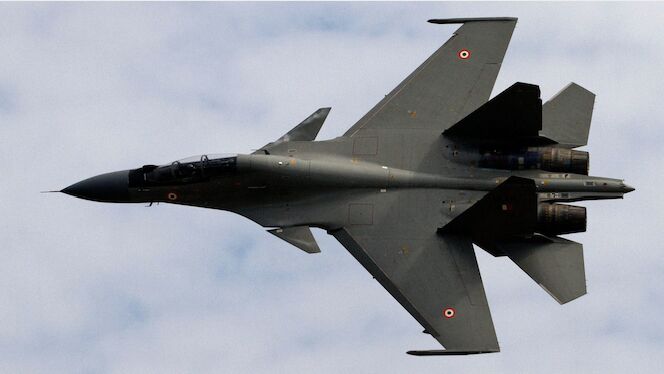
The Indian Air Force is breathing new life into its primary heavy fighter architecture, a significant industrial development recently analyzed by Military Watch Magazine, by officially restarting domestic production lines for the Sukhoi Su-30MKI. Under a multi-billion-dollar contract cleared by New Delhi, state-run Hindustan Aeronautics Limited (HAL) is bringing its idle Nashik manufacturing facility back online to build a fresh batch of 12 aircraft.
The newly commissioned airframes will represent a major evolutionary step over older legacy models by incorporating a significantly higher threshold of indigenous subsystems. According to project parameters, the upcoming batch will feature over 50 percent local content, integrating advanced Indian-developed avionics, mission computers, and electronic warfare suites.
This production restart runs parallel to the ambitious "Super Sukhoi" modernization roadmap, which targets an initial fleet-wide overhaul of 84 existing Su-30MKIs.
The timing of this industrial revival underscores a calculated balancing act within Indian military planning. Even as New Delhi invests heavily in indigenous platforms like the Advanced Medium Combat Aircraft (AMCA) and diversifies into Western defense partnerships, heavy multirole fighters remain the absolute bedrock of the nation's tactical air power. The proven combat integration of heavy strike packages—highlighted by the operational deployment of air-launched supersonic cruise missiles like the BrahMos—demonstrates that the Su-30MKI framework retains immense strategic utility for decades to come.
Ultimately, restarting the Su-30MKI production lines highlights a pragmatic approach to modern defense industrial policy. By combining licensed Russian technical expertise with domestic component fabrication, India is successfully bridging the gap between current fleet requirements and future generation readiness. This dual-track strategy ensures that the Indian Air Force maintains its quantitative mass and qualitative edge without compromising its long-term vision of complete defense technological autonomy.

No comments:
Post a Comment