
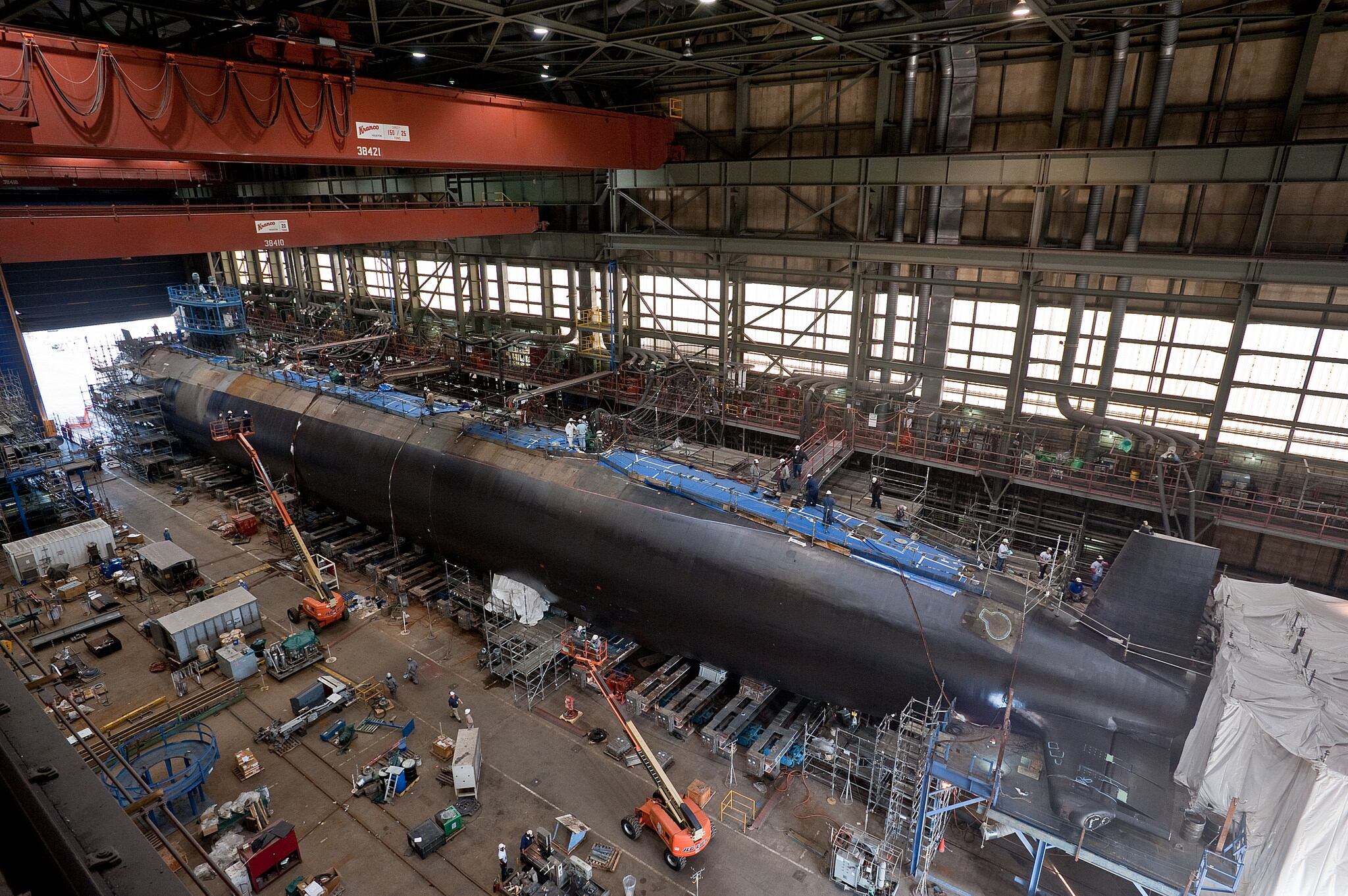
A newly declassified GAO report finds U.S. attack submarine maintenance delays have cost the Navy more than 15,000 lost operational days and roughly $3.4 billion since 2016, with submarines and their fully crewed sailors forced to sit pier-side, no longer certified for normal operations, unable to enter the maintenance queue that would actually fix them. The cost breakdown GAO provides is genuinely striking: active idle time runs almost $220,000 per day for the Los Angeles-class fleet and more than $237,000 per day for Virginia-class boats, meaning the Navy is paying full crew and support costs for submarines that cannot deploy, cannot train, and cannot contribute to readiness in any meaningful way. GAO's own forward-looking projection is worse still, without mitigation, 15 attack submarines will enter a separate category, inactive idle time awaiting decommissioning, between fiscal 2026 and 2030, costing an additional $3.1 billion as the Navy's four public shipyards lack sufficient capacity to even begin processing boats out of service.
This connects directly to the AUKUS Pillar I submarine production shortfall this blog has covered in detail this summer, and reading the two reports together clarifies something neither on its own fully captured: America's submarine crisis isn't confined to production, it runs through the entire lifecycle. This blog's coverage of Adm. Daryl Caudle's own congressional testimony established Virginia-class new construction stuck at 1.1 to 1.2 boats annually against a two-boat target, a production-side shortfall; this GAO report confirms the existing fleet faces an equally severe maintenance-side shortfall, submarines that were successfully built now sitting idle because the same constrained shipyard capacity, GAO explicitly names Portsmouth, Norfolk, Puget Sound, and Pearl Harbor as chronically insufficient, can't process them through overhaul on any predictable schedule. A Navy simultaneously unable to build new submarines fast enough and unable to maintain its existing fleet efficiently is facing a genuinely compounding readiness crisis rather than two separate, unrelated problems.
The historical trajectory GAO's own prior reporting reveals is worth stating plainly, because it shows this isn't a new or improving situation. A 2018 GAO report found 10,363 days of submarine idle time and maintenance delays between 2008 and 2018, costing $1.5 billion; this newest report finds 15,000 days and $3.4 billion just since 2016, alone exceeding the entire prior decade's documented total. That's not a problem the Navy has been managing down over time, it's one that has measurably accelerated, and GAO's own testimony from a separate 2019 report found the Navy missed scheduled maintenance completion dates 75 percent of the time across fiscal years 2014-2019, a persistence rate this blog's coverage of comparable execution failures, the failed 155mm shell components facility, AHEL's cancellation, the GMLRS rocket-motor supply crunch, would recognize as depressingly familiar.
This connects directly to the GAO facilities backlog report this blog covered days earlier, the $285 billion maintenance backlog across military installations globally, Minot's crumbling B-52 apron, Andersen's delayed stealth-coating hangar. Both reports trace back to the identical underlying failure, chronic underinvestment in the unglamorous maintenance and infrastructure work that doesn't generate the same political attention as new weapons programs, and GAO's specific recommendation here, that the Navy fully evaluate alternative decommissioning options and develop a genuine inactivation plan, mirrors the same institutional gap this blog's facilities-backlog coverage identified, the Pentagon accepting a problem's scale while resisting the accountability structures that might actually fix it.
The strategic stakes connect directly to the Navy tempo investigation this blog covered extensively, USS Lincoln's 250-plus days without a port call, USS Benfold and USS Higgins both losing power within months of each other, a surface fleet already documented as stretched dangerously thin. GAO's own report is careful to note it omitted classified comparisons of how America's attack submarine force generation stacks up against "strategic competitors," language that, read against this blog's own extensive coverage of China's naval shipbuilding capacity assessed at roughly 200 times America's own, suggests the classified version of this comparison is considerably less flattering than the public report's careful phrasing lets on. A Navy losing 15,000 operational days to bureaucratic and industrial-capacity failure, on top of the production shortfall this blog has already documented through AUKUS Pillar I, is exactly the kind of structural readiness gap that doesn't show up in any single ship's deployment schedule but compounds quietly across the entire fleet until, as this blog's Lincoln and Benfold coverage has already shown, it becomes impossible to ignore.

No comments:
Post a Comment