
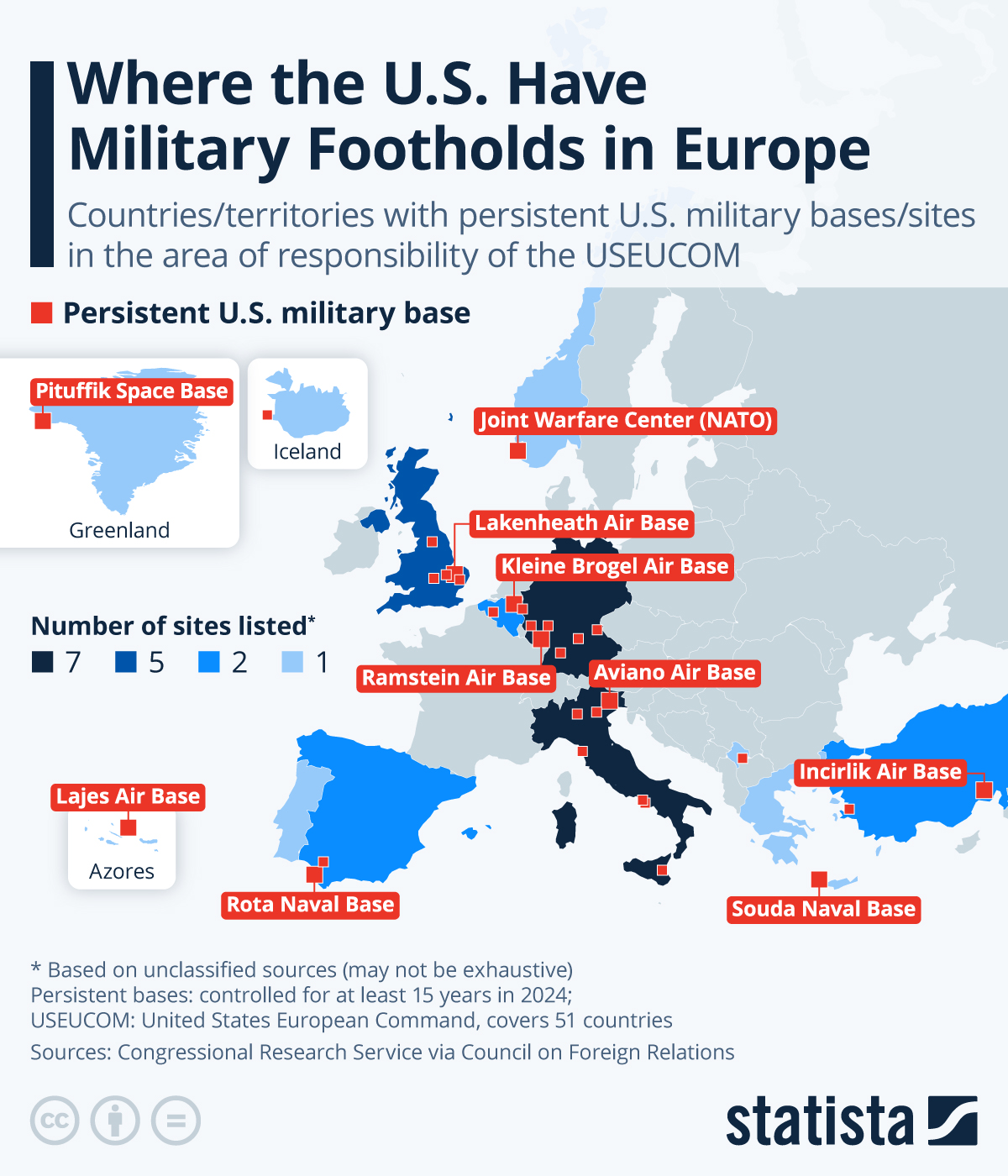
A Pentagon review of U.S. troop deployments across Europe will produce at least four sets of options for Defense Secretary Hegseth by November 6, according to a Terms of Reference document Reuters reviewed, well ahead of the review's formal December completion deadline. The stakes are real, roughly 80,000 U.S. forces currently stationed across Europe, and NATO allies are genuinely worried this six-month review, announced in June, will produce large-scale cuts specifically targeting countries Trump believes failed to adequately support the U.S.-Israeli war against Iran. A senior Pentagon official's own on-record framing left little ambiguity about the review's actual orientation, "there's clearly at least some demand signal to have options that would show us downgrading our force levels in Europe," even while describing the broader process as spanning "a spectrum of options from where we are to wherever" the review ultimately leads.
That punitive framing, cutting troop presence specifically as consequence for insufficient Iran-war support, connects directly to the transactional alliance-management pattern this blog has now documented across two separate theaters this summer. This blog's coverage of Trump's South Korea exercise cutback established the same underlying logic applied to the Pacific, a reduction justified partly by Seoul's own "no thanks" on Iran-related cooperation. This blog's separate coverage of the U.S.-Ukraine intelligence-sharing surge documented the inverse application of the identical principle, access and cooperation expanding specifically because Ukraine was "winning" and delivering visible results, with a Western intelligence official's own blunt assessment that "Trump doesn't like losers" driving the underlying calculus. A European troop review explicitly weighing cuts against countries judged insufficiently supportive of the Iran conflict is the third confirmed instance of this exact pattern this blog has now tracked, alliance management increasingly organized around performance and loyalty signals tied to specific, often unrelated conflicts, rather than treaty commitments or standing strategic assessment.
The Colby dimension deserves particular attention given this blog's earlier coverage of his role in the Canada AWACS tariff dispute, where this blog documented Pentagon policy chief Elbridge Colby publicly pushing back on South Korea's own proposed NATO defense-industrial ties, insisting no alternative supplier base could match American systems "in quantity or quality." Colby's own scheduled September 18 decision briefing with the top U.S. general in Europe, ahead of NATO ambassador consultations in Brussels this same week, places him at the center of yet a third major alliance-management decision this blog has now tracked in a single summer, Canada's AWACS purchase, and now the broader European troop posture review. That's a genuinely consistent pattern worth naming, one senior policy official's institutional fingerprints appearing across multiple, seemingly unrelated allied-relationship disputes this blog has covered independently.
The timing lands directly on top of the Baltic and Kaliningrad signaling this blog has documented extensively this month, the EA-37B's border flight, Russia's Kuril live-fire drills, and the escalating British-Russian rhetoric around Ukraine drone strikes and Poseidon threats. A genuine reduction in American troop presence across Europe, if this review ultimately produces one, would land at almost exactly the moment this blog's own coverage has established Russian signaling activity intensifying across multiple European theaters simultaneously, a timing overlap NATO allies' own stated anxiety about this review appears to already anticipate. Whether that overlap reflects deliberate strategic calculation or simply two independent processes running on unrelated timelines is a question this reporting doesn't resolve, but the juxtaposition itself is the kind of detail this blog's summer of Baltic coverage suggests European planners are watching closely regardless of Washington's own stated intent.
None of this confirms large-scale cuts are actually coming, the Pentagon official's own framing explicitly describes a genuine spectrum of options rather than a predetermined outcome, and this blog's summer of coverage on the gap between announced reviews and actual policy outcomes, the AUKUS Pillar I production shortfall chief among them, counsels real caution before assuming November's options briefing translates directly into December's final decision. But a review explicitly weighing punitive troop reductions against underperforming allies, run by the same policy official this blog has already documented applying comparable leverage against Canada, arriving during a month of intensified Russian signaling this blog has tracked in unusual detail, is a genuinely significant story worth watching closely as it moves toward its stated deadlines.

No comments:
Post a Comment