
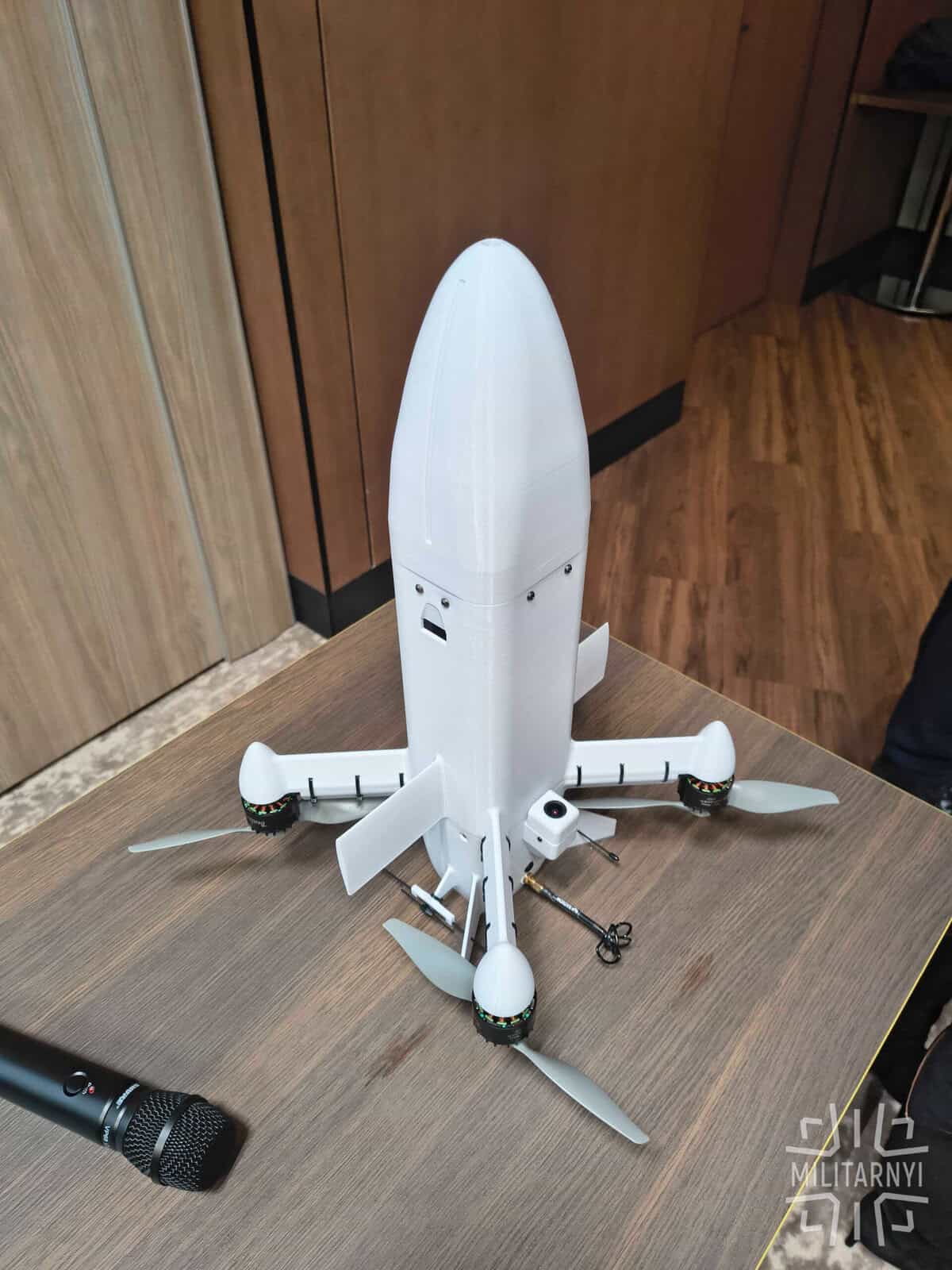
Japan's Acquisition, Technology and Logistics Agency signed a mass-production contract with Terra Drone Corporation for its Terra B1 rocket-launched interceptor drone on August 25, selecting it as the sole winner among four competing models after trials the Japan Maritime Self-Defense Force conducted between July 15 and August 6. The timeline here is genuinely remarkable by this blog's own standards for comparable programs this summer: ATLA moved from opening the tender in late May to a signed mass-production contract in roughly three months, a pace multiple outlets covering this story explicitly flagged as unprecedented for Japan's traditionally slow-moving defense procurement system, with deliveries expected as early as September 2026.
Terra B1's own lineage connects directly to this blog's Ukraine coverage throughout the summer. It's the Japan-made counterpart to Terra A1, a rocket-type interceptor Terra Drone already fielded on Ukrainian battlefields through Kyiv-based partner Amazing Drones, and CEO Toru Tokushige's own framing captures the same underlying doctrine this blog has now documented across Turkey's TUFAN, Germany's Cobra 600, and the Dutch Navy's Hornet B2 all summer, combat lessons from Ukraine's own low-cost interceptor campaign against Shahed-type drones being formalized and industrialized by a fourth distinct country's defense sector within a matter of months. Terra Drone's stated 3D-printing production method is itself a deliberate strategic choice, Tokushige told Defense News it will "simplify and shorten" design and prototyping specifically to let the interceptor adapt to evolving threats without delaying deployment, the same iterative, field-informed development philosophy this blog's South Korea PKX-B coverage identified as a genuinely disciplined contrast to the multi-year Western frigate delays documented elsewhere this summer.
The threat category Terra B1 addresses connects directly to the interceptor-scarcity throughline this blog has tracked obsessively since Lt. Gen. Rafferty's SMD Symposium disclosures, and one detail buried in this blog's research is worth surfacing explicitly: Japan's own push toward interceptor drones accelerated specifically after reports surfaced that American Tomahawk missile orders could face delays given U.S. stockpiles straining under the Iran war, this blog's own extensively documented crisis. That's a direct, causal link between the American munitions shortage this blog has covered across PAC-3, SM-3, Tomahawk, and GMLRS, and an allied nation's own procurement acceleration, Tokyo apparently concluding it cannot assume American supply will remain reliably available and building domestic low-cost interceptor capacity as a direct hedge.
The skeptical counterpoint worth taking seriously, and one this blog's own summer of execution-risk coverage would recognize immediately, comes from Asia Times' own reporting on this exact announcement: strategists Alex Bristow and Rintaro Inoue argue Japan's modest physical size and dense population genuinely constrain large-scale testing of military drones and missiles domestically, a structural limitation Australia's vast, sparsely populated territories don't share. That's a genuinely different execution risk than the production-capacity and supply-chain problems this blog has documented through GMLRS's rocket-motor crunch or the failed 155mm shell facility, a geographic constraint no amount of funding or 3D-printing innovation can fully engineer around. Whether Japan's rapid procurement timeline can actually scale to the "massive UAV fleet" ambitions this blog's research surfaced, installations planned near radar sites, bases, and vessels by 2027, remains a genuinely open question this specific milestone doesn't resolve.
The 38-company applicant pool ATLA drew for this tender, narrowed to four finalists and then a single winner, is itself worth noting against this blog's coverage of Helsing's Rakuten-brokered entry into Japan's defense market and the broader Japanese defense-industrial opening this blog has tracked through the April 2026 export liberalization. A domestic tender attracting nearly forty competing companies suggests Japan's rapidly growing defense budget and newly opened procurement environment are generating genuine private-sector interest at a scale this blog's earlier coverage of Japan's historically closed, conglomerate-dominated defense-industrial structure wouldn't have predicted even two years ago, a structural shift this specific Terra B1 announcement is one concrete data point within rather than the whole story on its own.

No comments:
Post a Comment