
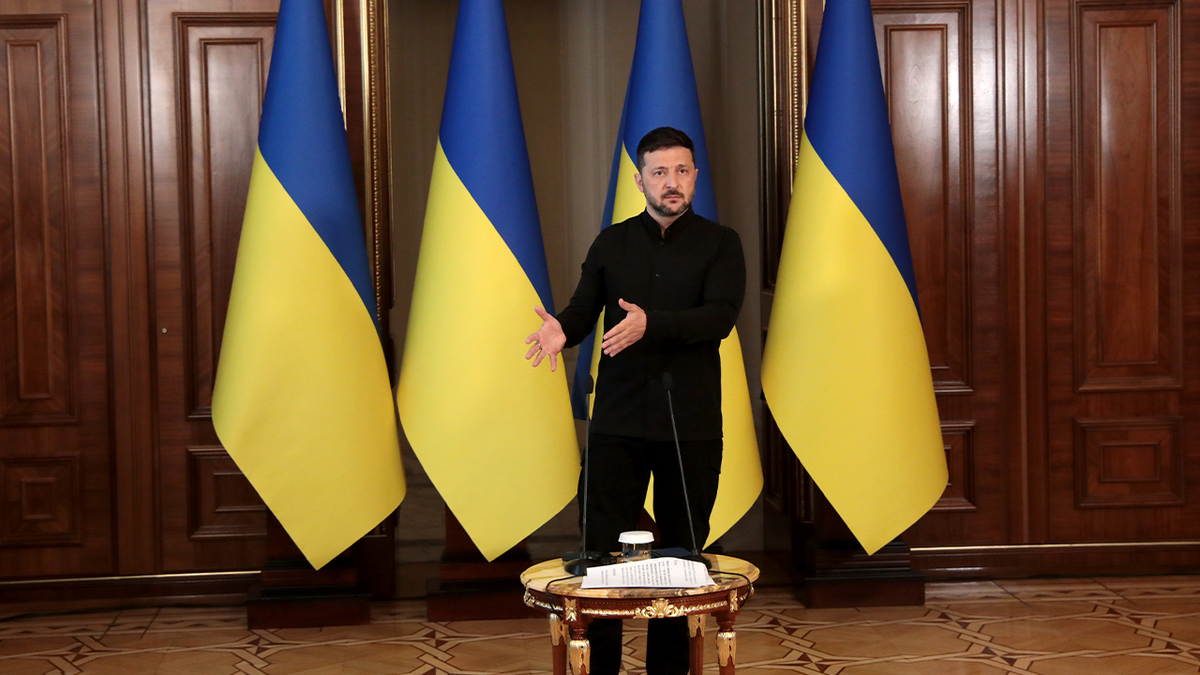
Mykhailo Fedorov, Ukraine's reformist former defense minister fired last month after a tenure of just six months, told Reuters this week that Ukraine is "gradually, slowly losing" the war, warning the country has a window of only a few months to make key decisions before that trajectory becomes harder to reverse. Fedorov's core critique isn't about battlefield courage or resolve, it's institutional: Ukraine lacks any coherent overall vision for how to win, remains hampered by ingrained corruption and patronage networks, and is operating, in his own estimate, at "5% effectiveness" relative to its actual capacity. President Zelenskyy's office pushed back directly, noting Fedorov was considerably more positive about the war's conduct while still in office and suggesting only his personal status, not the underlying situation, has changed since his dismissal, a dispute this blog should treat as exactly what it is, a genuine, unresolved political disagreement between two people with real incentives to characterize the war's trajectory differently.
What's independently verifiable, regardless of which side of that political dispute is right, is the specific technical picture Fedorov describes, and this blog's own summer of coverage supports nearly every element of it. His framing that Russia is "hammering Ukrainian factories and warehouses with dozens of ballistic missiles a month" which Ukraine is "mostly unable to take down as interceptors run low" is precisely the crisis this blog documented through Zelenskyy's own "I have 1%" interceptor framing and the 200-missile salvo warning, both independently confirmed through CSIS stockpile tracking this blog has cited repeatedly. Fedorov's parallel description of Ukraine's own deep-strike campaign, hitting Russian military factories and causing serious oil refinery damage and nationwide fuel shortages, matches this blog's coverage of the ArcelorMittal steel plant strike and the broader "shoot the archer, not the arrow" doctrine this blog documented through Fire Point's accelerated FP-7 ballistic missile program just one day earlier.
Fedorov's own role in that strike campaign is a detail worth connecting directly: he claims to have been a driving force behind the drone campaign targeting Russian fuel and logistics in occupied southern Ukraine, and says front-loading spending for that campaign into the first half of 2026 is now the center of a separate dispute with Zelenskyy over a reported $27 billion budget hole Fedorov says he can't account for. That's a genuinely important detail this blog's coverage of Ukraine's interceptor and munitions strategy should register, the same aggressive strike posture this blog has covered approvingly as a rational response to interceptor scarcity may be creating real fiscal strain that a donor-dependent Ukraine has no immediately obvious way to resolve, a tradeoff this blog's prior coverage of the strategy's logic didn't fully account for.
The technology vision Fedorov lays out, autonomous AI-guided drones, cheap interceptor missiles, and indigenous ballistic missile capability integrated under a single coherent strategy rather than developed in isolation, reads as a direct articulation of exactly the disconnected-but-parallel programs this blog has documented individually this summer without necessarily framing them as a unified doctrine. Fedorov's critique, that "technologies exist already which could completely stop the Russians" but Ukraine's "absence of vision" prevents applying them coherently, is a genuinely serious institutional criticism from someone who held the relevant cabinet position until six weeks ago, and it's worth taking seriously as informed insider assessment even as this blog notes Fedorov has an obvious personal interest in portraying his own tenure and priorities as the coherent vision that was subsequently lost.
The election-call dimension is the most politically fraught part of this story and deserves the most careful, evenhanded treatment. Fedorov's demand for wartime elections, the first such call from a major Ukrainian political figure, has been met with genuine public skepticism, an end-of-July poll found 82% of Ukrainians still believe Ukraine will win, hardly the sentiment of a population eager to disrupt wartime governance through an election. Zelenskyy's suggestion that Fedorov may be acting under outside influence, which Fedorov denies, is a serious allegation this blog has no independent basis to evaluate either way, and readers should treat it as an unresolved accusation rather than an established fact in either direction. What is clear is that Ukraine's own senior political figures are now publicly disagreeing, in specific and substantive terms, about whether the war is being managed effectively, a genuinely significant development this blog's largely military-technical coverage this summer hasn't previously captured, and one worth watching regardless of which side of the Fedorov-Zelenskyy dispute eventually proves closer to accurate.

No comments:
Post a Comment