
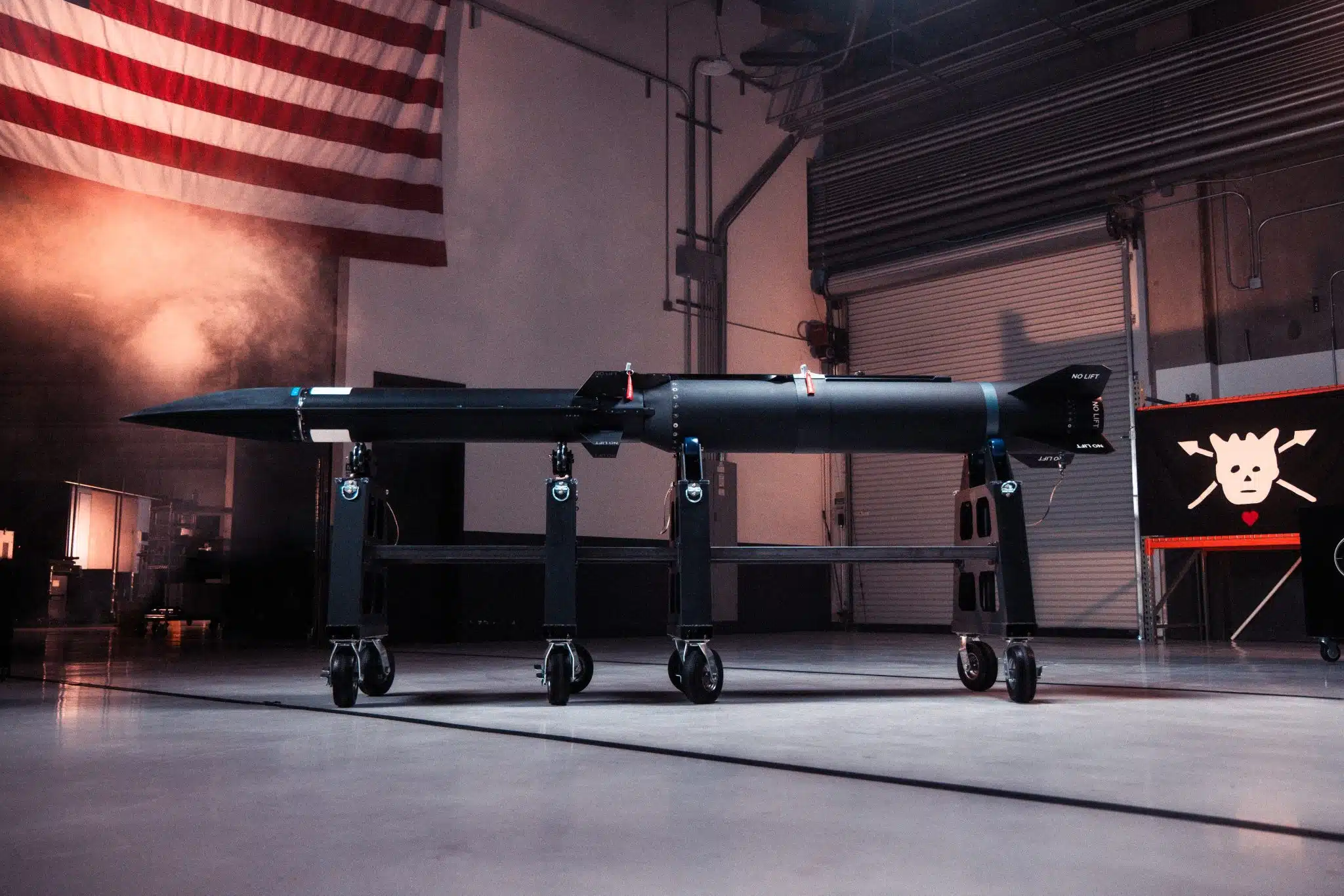
The U.S. Navy awarded California startup Castelion an $89.9 million firm-fixed-price order to advance its Blackbeard hypersonic strike weapon toward Early Operational Capability by 2028, funding 50 EOC-configuration weapons and the program's transition to a full Navy Program of Record. Blackbeard is a compact, long-range hypersonic weapon exceeding Mach 5 with an operational strike range up to 500 nautical miles, and Naval News's own framing of its design philosophy is the real story here: engineered from inception for industrial-rate output and commercial unit cost rather than as a low-volume demonstration program, targeting production costs under $500,000 per round, trading heavy warhead payload specifically for that affordability.
That price point deserves to be read directly against the AIM-424 Malice this blog covered days earlier, itself a genuinely significant American entry into the long-range strike race with a disclosed engagement envelope beyond 250 nautical miles. Blackbeard extends the same underlying strategic logic considerably further: where AIM-424 competes on raw range against China's PL-15, Blackbeard competes on cost and production volume in the hypersonic category specifically, a weapons class this blog's coverage of China's GPS-independent hypersonic guidance research and the Golden Dome tracking challenge has already established as one of the hardest and most expensive threats in modern warfare to defend against. A hypersonic weapon priced under $500,000 per round is a genuinely different proposition than the exquisite, multi-million-dollar hypersonic programs this category has typically produced, and if Castelion's cost target holds at scale, it would represent hypersonic strike capability finally crossing into the same magazine-depth-over-per-unit-sophistication logic this blog has tracked through APKWS-II, the Dutch Hornet B2 interceptor, and Turkey's TUFAN kamikaze USV all summer.
The Super Hornet integration detail is where this program's actual strategic significance sits, and it connects directly to the carrier-strike-group vulnerability this blog has documented extensively through the Pacific carrier gap and USS Lincoln's extended deployment coverage. Giving carrier air wings a rapid-response, standoff hypersonic capability specifically built to penetrate anti-access/area-denial bubbles addresses a real and growing gap this blog's coverage of China's own missile forces, the DF-21D and DF-26 "carrier killer" systems referenced throughout this blog's Pacific coverage, has established as a central strategic concern. A carrier fleet already stretched thin by the operational tempo crisis this blog documented through the Military Times investigation gains real additional relevance from every carrier-launched aircraft in its air wing if that aircraft can strike from well outside a contested A2/AD envelope rather than needing to close within range of increasingly sophisticated Chinese anti-ship missile coverage.
The Defense Exportability Features funding embedded in this contract is a genuinely notable structural choice worth setting against this blog's coverage of the NSPO SeaSparrow multinational consortium and the broader allied-interoperability throughline this summer. Building export-ready design modifications into a hypersonic weapon from this early a stage suggests the Navy is deliberately avoiding the kind of years-long retrofit process this blog's coverage of comparable American weapons systems has documented as a genuine friction point for allied buyers, treating exportability as a core design requirement rather than an afterthought, a lesson this blog's coverage of Poland's four-nation Piorun consortium and Raytheon's SPY-6 global push suggests the broader American defense-industrial base has been slowly absorbing this year.
Castelion's own positioning as a defense startup explicitly built around "rapid, affordable, and scalable production," rather than a legacy prime contractor's incremental upgrade to an existing program, fits the broader pattern this blog has tracked through Zone 5's combat-proven Rusty Dagger cruise missile and CENTCOM's LUCAS drone program, newer, leaner companies increasingly winning contracts specifically because their production philosophy is built around volume and cost from day one rather than retrofitted onto an existing exquisite-hardware business model. Whether Blackbeard actually hits its 2028 Early Operational Capability target and its sub-$500,000 unit-cost goal at genuine production scale remains a real question this blog's summer of coverage on execution risk across GMLRS, AHEL, and the 155mm shell components facility would counsel real caution about assuming automatically. But the underlying bet, that hypersonic strike capability needs to become cheap and plentiful rather than remaining rare and exquisite, is a coherent extension of the single strategic insight this blog has now traced across nearly every major weapons category this year.

No comments:
Post a Comment