
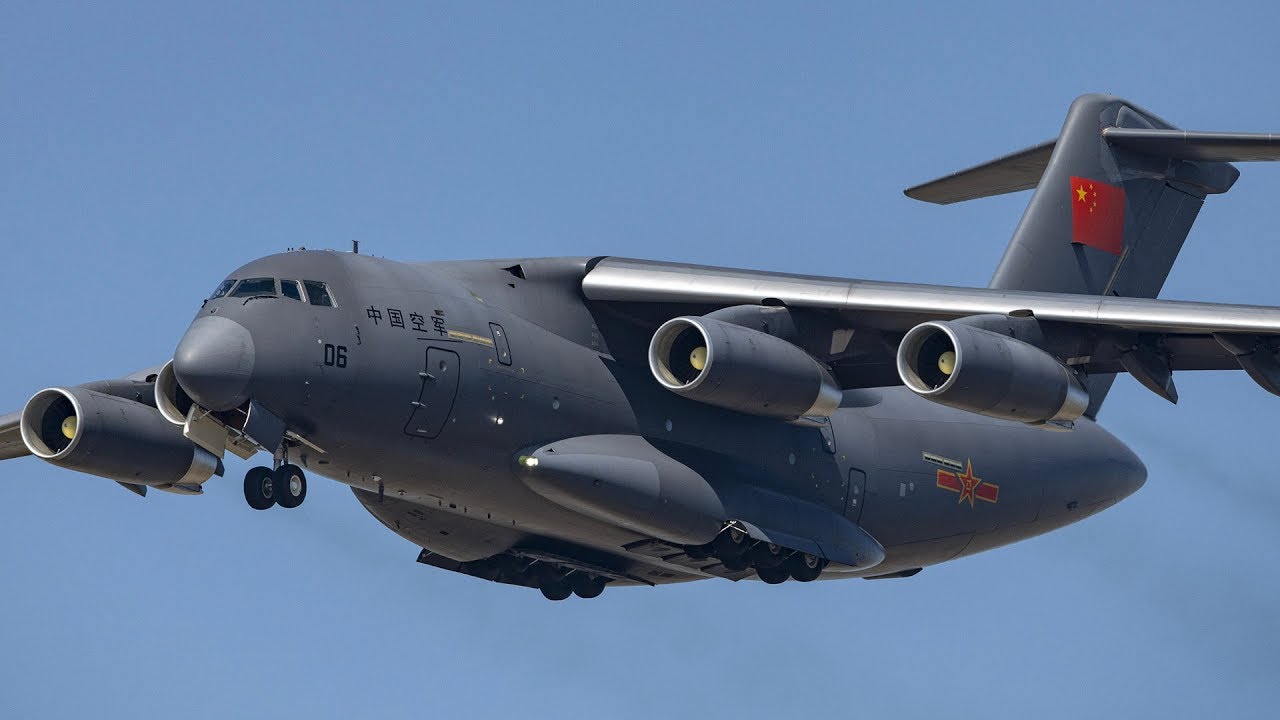
A PLA-produced documentary aired by Chinese state media this month revealed the Y-20B heavy transport can switch between transport and aerial refueling functions, with a pilot featured in the program stating the airframe can also take on bomber, early warning, and electronic warfare roles. That confirms in state media what open-source trackers have documented incrementally for years, the Y-20 family, entering PLAAF service in 2016 as China's first indigenous heavy strategic transport, has since spawned the YY-20 dedicated tanker variant already refueling J-20 stealth fighters, and is now the confirmed basis for China's developing KJ-3000 airborne early warning and control system still working toward operational service.
The genuinely significant detail here isn't any single variant, it's the deliberate multi-role modularity built into one airframe from the start, and that connects directly to a design philosophy this blog has now documented as a consistent theme across multiple American and allied programs this summer. This blog's coverage of the E-2D Hawkeye Block II modernization praised its Open Mission Systems architecture specifically for decoupling software from fixed hardware configurations, allowing future capability upgrades without a ground-up redesign, and this blog's more recent coverage of Raytheon's SPY-6 radar global push highlighted the same "combat management system agnostic" design philosophy as a genuinely encouraging pattern against the hardware-locked struggles this blog documented through EMALS and Kennedy's Advanced Weapons Elevators. The Y-20B represents China pursuing the identical underlying insight at the airframe level rather than just the software or sensor level, one production line generating transport, tanker, AEW&C, bomber, and electronic warfare variants from a shared base, rather than developing five separate dedicated aircraft types.
Defence Security Asia's own analysis of this modularity gets to the strategic question that matters most, and it's not whether every proposed Y-20B configuration actually becomes operational, it's whether this approach lets China generate mission capacity faster and sustain combat power farther from continental bases than a fleet of dedicated single-role aircraft would allow. That framing connects directly to this blog's coverage of the KJ-500 and the AIM-174B Gunslinger this blog covered just days earlier, which established that American long-range missile programs increasingly prioritize destroying exactly this category of high-value support aircraft, AWACS, tankers, and airborne command platforms, over dogfighting individual fighters. If China's KJ-3000 shares a common airframe, engine, and much of its underlying architecture with an already-mass-produced transport and tanker line, the production and sustainment economics shift meaningfully in Beijing's favor, a shot-down or damaged KJ-3000 draws on the same parts, maintenance expertise, and manufacturing capacity already supporting the far larger Y-20 transport fleet, rather than requiring an entirely separate, lower-volume specialized production chain.
That efficiency cuts in an uncomfortable direction for the AIM-174B's own strategic logic this blog documented, though, and it's worth stating that tension honestly rather than glossing over it. A missile built specifically to threaten scarce, hard-to-replace AWACS and tanker aircraft is a considerably less decisive strategic weapon against an adversary whose equivalent aircraft draw from a shared, high-volume production line rather than a dedicated, low-rate one. This blog's coverage of America's own C-130J and KC-46A production timelines, and the broader shipbuilding-capacity gap this blog has documented extensively through the Finland Model and Navy industrial base office coverage, suggests the U.S. and its allies currently lean toward the opposite model, purpose-built platforms produced at comparatively modest scale, precisely the model China's Y-20B family modularity is designed to outproduce and outreplace.
None of this confirms the KJ-3000 or any other Y-20B special-mission variant is actually approaching operational maturity on any specific timeline, Defence Security Asia's own analysis is appropriately careful to frame this as a capability trajectory rather than a settled fact, and this blog's summer of documented skepticism toward Chinese capability claims, the JY-27V's real combat failure, the AI infrared seeker's quietly discounted accuracy figure, counsels the same caution here. But the underlying industrial logic, one adaptable, mass-produced airframe generating an entire family of high-value mission aircraft, is a genuinely different and arguably more sustainable production philosophy than the fragmented, program-by-program approach this blog has documented straining American shipbuilding and munitions output all summer, and it's worth taking seriously as a structural advantage independent of whether any single variant currently in development actually reaches the battlefield on schedule.

No comments:
Post a Comment