A United States Marine Corps F-35B Lightning II stealth fighter crashed near Marine Corps Air Station (MCAS) Miramar in San Diego, California, resulting in the total destruction of the multi-million-dollar aircraft. Assigned to Marine Aircraft Group 11 under the 3rd Marine Aircraft Wing, the single-engine short-takeoff and vertical-landing (STOVL) jet went down on the flight line shortly before 10:00 a.m. local time, sparking a localized vegetation fire that sent thick plumes of black smoke billowing over the interstate.
The sole pilot onboard successfully ejected moments before impact and was subsequently transported to a local medical facility in stable condition with non-life-threatening injuries. Military authorities officially classified the incident as a "Class A mishap"—the U.S. armed forces' most severe designation, applied when an aircraft is completely destroyed, results in a fatality or permanent disability, or incurs property damage exceeding $2.5 million. With an estimated unit cost of roughly $109 million, the sudden hull loss represents a significant asset blow to the active fleet.
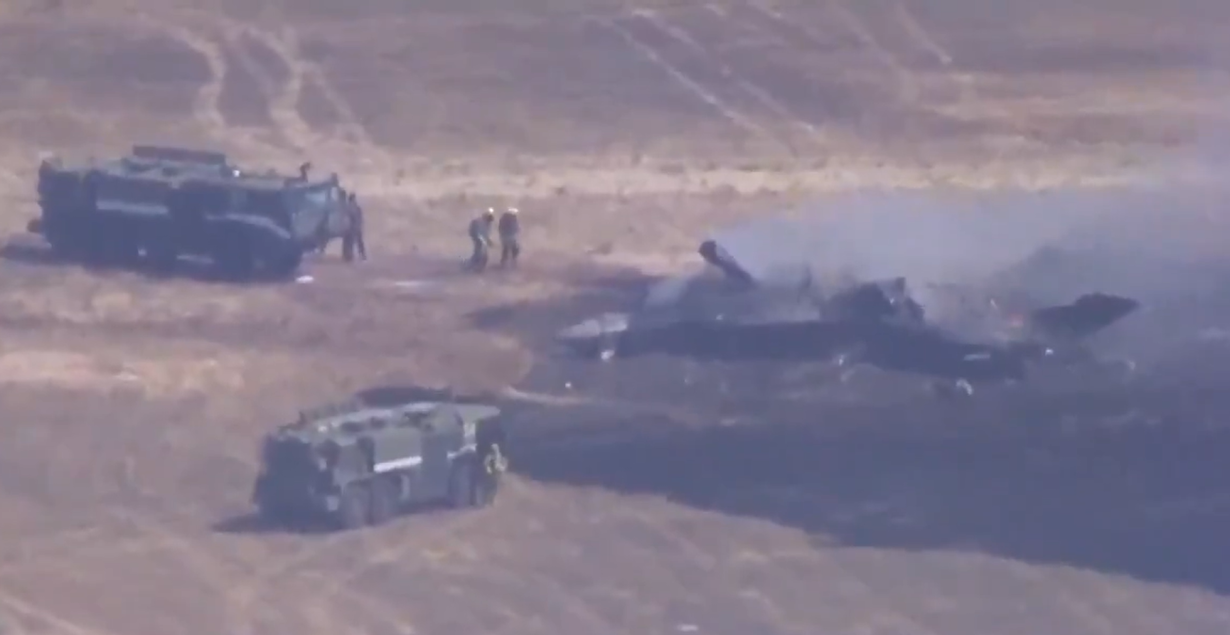
MCAS Miramar holds legendary status in aviation history as the original home of the U.S. Navy's elite "Top Gun" fighter weapon school before its relocation to Nevada in the 1990s, and it currently serves as a vital West Coast hub for advanced tactical aviation. Visual media captured by local news helicopters showed the scorched wreckage split into major sections amid a blackened dirt field adjacent to the runway, while emergency crews and military personnel flooded the site to apply flame retardant and secure the perimeter.
The unexpected accident immediately refocuses attention on the broader operational safety, maintenance demands, and systemic sustainment costs associated with the Pentagon's vast global F-35 enterprise. Because the F-35B relies on a complex, single-engine lift-fan architecture to execute its signature hover capabilities, unexpected mechanical or flight-control failures during low-altitude maneuvers leave crews with minimal recovery windows outside of immediate ejection.
A formal safety board has taken jurisdiction over the crash site and launched a rigorous inquiry to dissect flight data recorders, maintenance logs, and wreckage components. While the official investigation is expected to take months to determine an exact root cause, the incident underscores the inherent risks and relentless operational tempo managed by frontline tactical aviation wings in high-intensity peacetime training environments.


No comments:
Post a Comment