
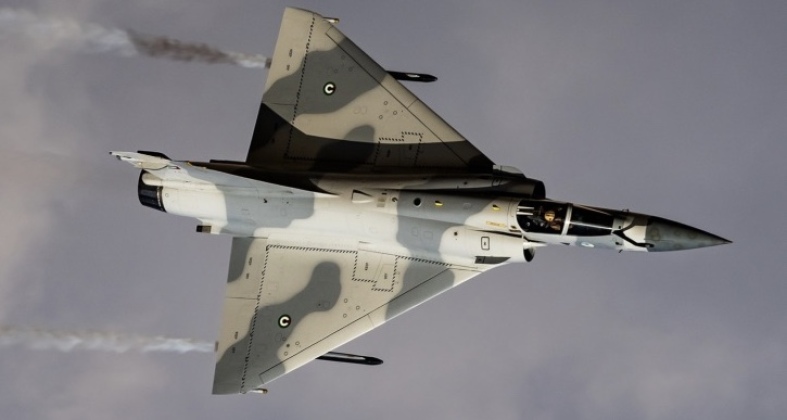
The United Arab Emirates has officially unveiled a significant new strike capability for its Dassault Mirage 2000-9 fighter fleet, highlighted by the integration of the domestically developed Desert Sting precision-guided munition family.
The Desert Sting program represents one of the UAE’s most ambitious indigenous guided-weapon initiatives, designed to convert conventional gravity bombs into high-accuracy precision munitions via modular guidance kits.
Military analysts note that while the integration of local precision weapons provides valuable operational flexibility, the utility of legacy single-engine platforms like the Mirage 2000 in high-threat environments remains constrained. Facing dense, sophisticated Iranian air defense networks, penetration missions carry severe risks, even for advanced stealth aircraft.
Despite these structural limitations, the public display of the upgraded Mirage 2000 strike configuration underscores Abu Dhabi’s broader push toward defense industrial self-reliance. By pairing mature airframes with cost-effective domestic munitions, the UAE aims to sustain a credible conventional deterrent and reduce its absolute reliance on foreign supply chains during prolonged regional contingencies.

No comments:
Post a Comment