United States President Donald Trump has cast significant doubt on whether Washington will ultimately permit Ukraine to manufacture MIM-104 Patriot missile interceptors domestically. Despite earlier political agreements and pledges regarding production licenses discussed on the sidelines of the NATO summit in Ankara, recent statements reflect mounting hesitation over transferring sensitive military technology into an active combat zone. Industry officials and defense analysts have repeatedly emphasized that the industrial, technical, and security barriers involved make localized manufacturing extremely improbable in the near term.
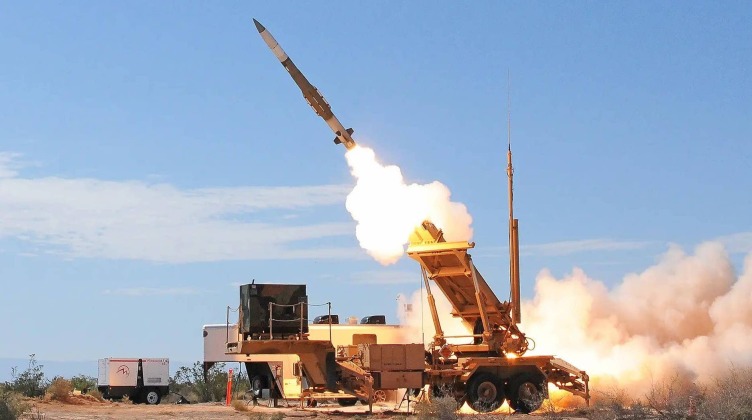
The hurdles stem primarily from the extreme complexity of the Patriot system itself. Interceptors like the PAC-3 rely on intricate radar seekers, advanced guidance electronics, specialized rocket motors, and sophisticated software that depend on tightly integrated international supply chains. Manufacturing these components requires specialized industrial facilities that do not currently exist within Ukraine. Furthermore, major American defense contractors—such as Boeing, which builds crucial elements for the missile's guidance systems—remain deeply reluctant to authorize the export or external production of their most sensitive technology.
Compounding these technological roadblocks are severe security considerations. Any high-tech facility dedicated to producing advanced air defense interceptors inside Ukraine would immediately become a top-priority target for long-range Russian precision strikes. Because of these persistent dangers, defense experts suggest that if licensed production moves forward at all, it will likely be established within a stable European NATO member state—such as Germany—with manufacturing or final assembly shifting into Ukraine only after active hostilities conclude.
The debate over domestic manufacturing unfolds against a backdrop of acute global supply shortages. Staggering expenditure rates during recent conflicts in the Middle East and Eastern Europe have heavily drained Western arsenals, leaving production lines struggling to keep pace with demand. With the U.S. Army and allied nations grappling with depleted stockpiles, the friction over technology transfer highlights the immense difficulties of scaling the production of exquisite, low-density munitions during a prolonged war of attrition.
Ultimately, the prospect of a self-sustaining Ukrainian Patriot manufacturing base remains hindered by both geopolitical caution and industrial realities. As Washington and its allies weigh the risks of intellectual property exposure and frontline vulnerability, Kyiv continues to rely entirely on constrained external supply pipelines to replenish its dwindling air defense shields. Navigating these strategic bottlenecks will remain a critical challenge for sustaining European missile defense architectures in high-intensity operational environments.


No comments:
Post a Comment