
The Commander of U.S. European Command (EUCOM), General Alexus Grynkewich, has formally notified senior defense leadership in writing that the U.S. Navy faces critical resource constraints and acute interceptor shortages that threaten its ability to maintain ongoing air and missile defense support for Israel.
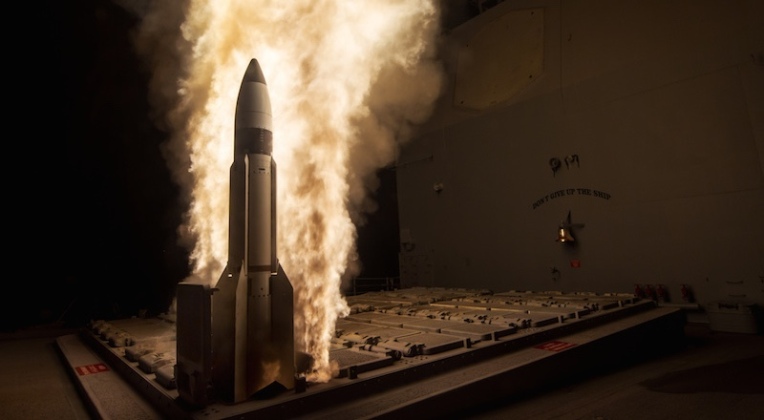
For months, U.S. Navy destroyers equipped with the Aegis Combat System and armed with Standard Missile-3 (SM-3) and Standard Missile-6 (SM-6) interceptors have served as an essential layer of Israel's integrated air defense architecture.
According to internal Pentagon assessments, the prolonged conflict has rapidly hollowed out core strategic inventories. During early phases of regional hostilities, U.S. forces expended massive portions of their defensive reserves, including over a hundred SM-3 and SM-6 rounds alongside more than half of the U.S. Army's available interceptors for the ground-based THAAD system.
The crisis is further compounded by competing global responsibilities and a tight fleet-wide inventory of Arleigh Burke-class destroyers.
Ultimately, this unfolding inventory crisis underscores the unsustainable economic and logistical realities of countering massed missile saturation with exquisite, low-density interceptors. As defense leaders and congressional committees evaluate long-term solutions—ranging from accelerated Arleigh Burke hull procurement to expanded production contracts for advanced SM variants—the military balance in the Middle East faces a pivotal bottleneck. Balancing immediate allied commitments against global strategic reserve thresholds will remain one of the Pentagon's most critical challenges in the near term.

No comments:
Post a Comment