
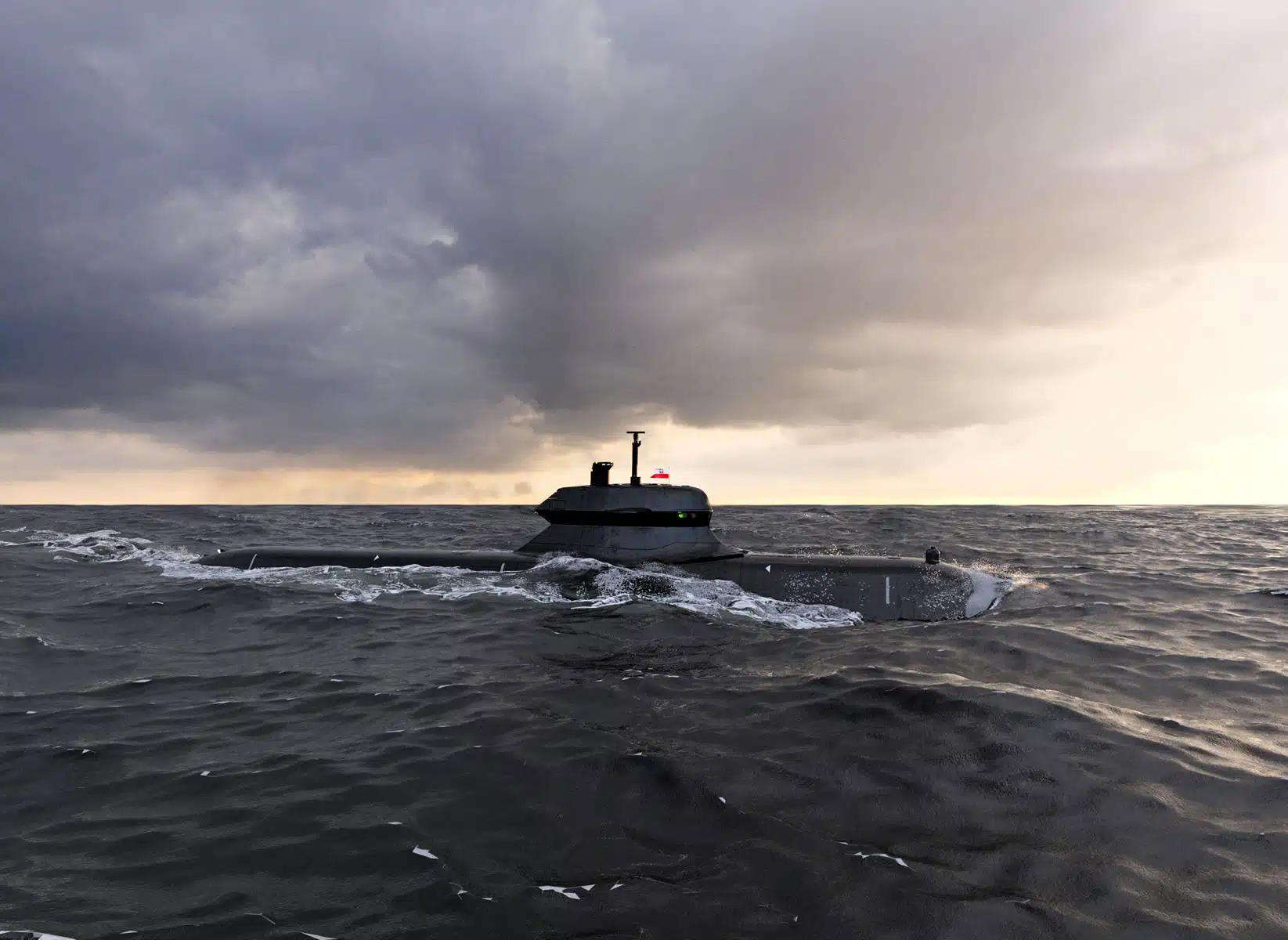
The Polish Armaments Agency has officially signed a monumental contract with Swedish defense contractor Saab valued at approximately SEK 47 billion (approx. €4.23 billion) for the production and delivery of three A26-type (Blekinge-class) submarines. Concluding the long-running "Orka" modernization program, the agreement marks a major strategic expansion of Poland's undersea warfare capabilities. Designed explicitly for the demanding, acoustically complex environment of the Baltic Sea, the advanced stealth platforms will significantly bolster NATO's northern flank against regional security threats.
Under the baseline industrial schedule, submarine deliveries will span a multi-year manufacturing window, beginning with the first hull in 2031 and concluding with the final vessel in 2038. This careful pacing allows Polish shipyards and naval infrastructure ample time to prepare for the integration of next-generation submarine technologies. The advanced AIP (Air-Independent Propulsion) systems featured on the A26 will grant the vessels extended submerged endurance, making them exceptionally difficult to detect in shallow, heavily monitored European waters.
To bridge the critical operational capability gap left by Poland's aging Soviet-era Kilo-class submarine, the Orzel, the agreement includes a separate government-to-government arrangement for the interim lease of the Swedish Navy’s A17-class submarine, HMS Södermanland. Under this interim plan, Polish submariners are scheduled to begin intensive training and operational deployment cycles in the Baltic Sea immediately. This transitional measure ensures that crews maintain vital underwater warfare proficiencies while the newly ordered hulls are actively under construction in Karlskrona.
The comprehensive contract package also outlines extensive weapon systems and industrial cooperation frameworks. Saab has confirmed that the submarines will arrive equipped with a robust weapons package featuring advanced light and heavy torpedoes, alongside specialized contract provisions to integrate an undisclosed submarine-launched cruise missile system. Furthermore, the accord involves substantial technology transfer and industrial localization, with Sweden investing heavily to establish localized maintenance, repair, and overhaul (MRO) facilities within Polish shipyards to ensure long-term national fleet autonomy.
Defense analysts have widely praised the agreement as a watershed moment for European defense cooperation and regional deterrence. By aligning Polish and Swedish naval operations under shared platforms and tactical doctrines, NATO significantly tightens its control over strategic maritime chokepoints in Northern Europe. As preliminary engineering and steel-cutting phases prepare to begin, the historic acquisition underscores Poland's broader commitment to modernizing its armed forces with world-class, interoperable military hardware.

No comments:
Post a Comment