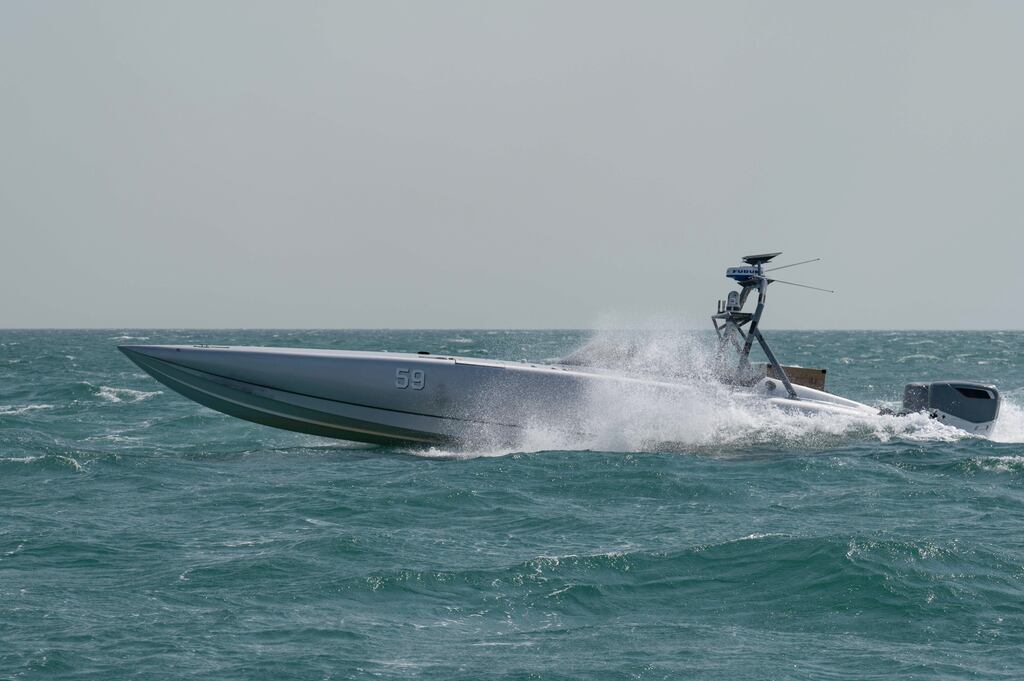
Spurred by evolving asymmetric threats in contested maritime environments like the Persian Gulf, the Pentagon has issued an aggressive new call for advanced unmanned surface vessels (USVs) capable of carrying and launching aerial attack drones. Managed through the Defense Innovation Unit (DIU), the initiative—designated the Suitable Warfighting Adaptive Payloads (SWAP-USV) project—seeks to rapidly integrate market-ready robot boats with multiple mature aerial drones. The primary goal is to find cost-effective solutions that can detect, track, and neutralize hostile targets without relying exclusively on multi-million-dollar traditional warships.
The official solicitation outlines a multi-phase prize challenge backed by $100 million in total prize funding, with subsequent eligibility for multi-million-dollar procurement contracts. The Pentagon is looking for versatile USV platforms capable of supporting a mix of recoverable and one-way attack drones. Together, these integrated aerial components must be capable of delivering a combined kinetic payload of at least two kilograms while executing diverse missions such as intelligence, surveillance, reconnaissance (ISR), electronic warfare, and precision strikes against stationary or moving targets.
To match the rapid pace of modern technological warfare, the initiative relies on an accelerated timeline. Sprint 1 calls for initial in-water testing by the fall of 2026, with an ambitious target of deploying operational systems to the field within 120 days of selection. Subsequent phases, spanning into 2027, will focus on expanding payloads, upgrading autonomy software, and integrating multi-vendor systems. Furthermore, the military has specified that the craft must be mobile enough to fit inside standard shipping containers, road trailers, or tactical transport aircraft like the C-17 and C-130.
The urgent push for drone-launching surface craft follows recent combat milestones, including the U.S. Navy's first combat employment of kamikaze surface drones by CENTCOM forces in the Middle East. By combining autonomous maritime mobility with aerial strike capabilities, the Pentagon aims to drastically tilt the cost-exchange ratio in asymmetric naval conflicts. As defense manufacturers scramble to meet the tight August response deadline, the SWAP-USV project highlights the military's deepening commitment to scaling autonomous, multi-domain swarm capabilities across global operational theaters.


No comments:
Post a Comment