Recent defense analysis and intelligence evaluations are highlighting the growing tactical threat posed by Iran’s Kheibar Shekan medium-range ballistic missile. Functioning as a primary workhorse within the Islamic Revolutionary Guard Corps (IRGC) arsenal, the solid-fuel system has increasingly challenged sophisticated U.S. and allied air defense networks across the Middle East. Military experts note that the weapon combines low production costs with high tactical mobility, creating a severe economic and operational asymmetry for Western defense planners.
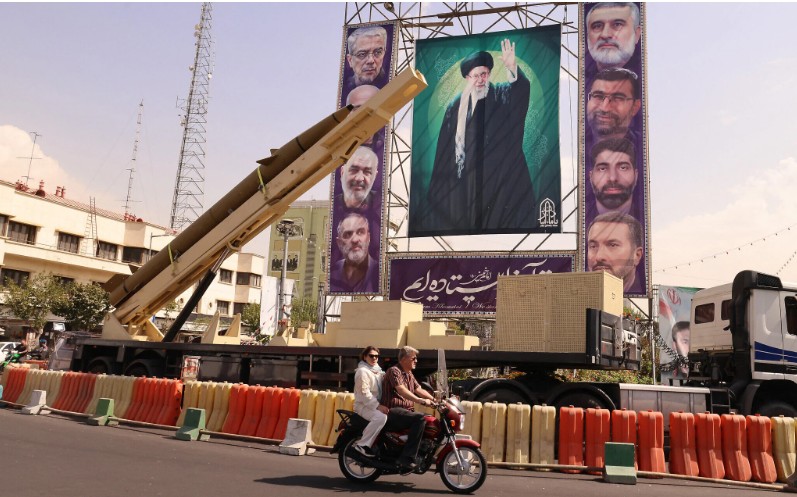
Unlike older generations of Iranian ballistic missiles that relied on liquid fuel—requiring lengthy, highly visible pre-launch preparations—the Kheibar Shekan utilizes a composite solid-fuel propulsion system. This capability allows the missiles to remain pre-fueled and rapidly deployed from commercial-style truck chassis or concealed mobile launchers. By firing and relocating quickly, launch crews can effectively evade preemptive targeting by allied warplanes seeking to neutralize fixed or slow-to-prepare missile sites.
The missile's operational effectiveness is further amplified by its advanced flight and terminal-phase maneuverability. Traveling at extreme speeds approaching Mach numbers of roughly 10,000 kilometers per hour, specific variants incorporate specialized steering mechanisms or small auxiliary thrusters within the nose section to execute sharp course corrections just before impact. When paired with varied flight profiles and complex trajectories, these features are deliberately designed to confuse radar tracking and saturate traditional interceptor grids.
Furthermore, Iran has increasingly synchronized Kheibar Shekan strikes with waves of high-speed one-way attack drones and secondary projectiles. These coordinated swarm tactics are specifically tailored to overwhelm regional early-warning systems, degrade critical radar infrastructure, and target housing or support hubs at coalition military installations. While U.S. and allied systems successfully intercept a high percentage of incoming threats, the ability of even a fraction of the missiles to penetrate defenses has raised urgent tactical concerns.
At the heart of the strategic challenge is a stark cost-exchange imbalance. While precise figures for the Kheibar Shekan remain difficult to independently verify, analysts emphasize that it is exponentially cheaper to produce than the premium-tier American and Western interceptors—such as Patriot or related systems—required to shoot them down, which can range from $2 million to upwards of $15 million per unit. As Tehran continues to adapt its tactics and leverage underground manufacturing and storage networks, military officials underscore that countering low-cost, highly mobile ballistic threats will remain a defining priority for future force protection in the region.


No comments:
Post a Comment