
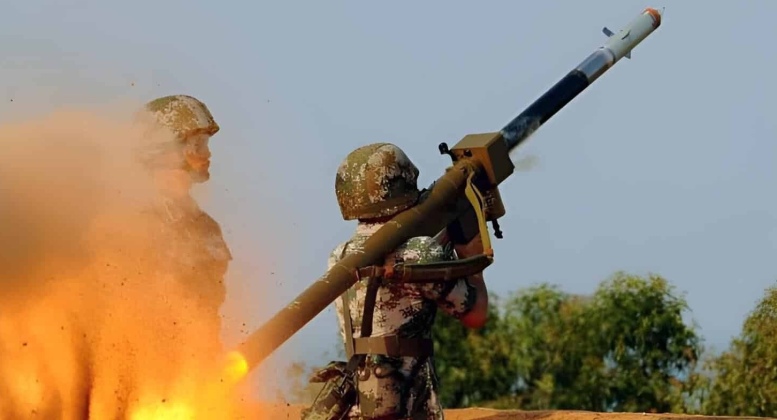
Intelligence reports indicate that Iran is preparing to receive a major shipment of up to 400 advanced Chinese man-portable air defense systems (MANPADS).
The prospective delivery highlights the continuous evolution of Iran's layered defensive architecture, which has increasingly relied on sophisticated indigenous and foreign-sourced systems. Newer iterations like the Chinese QW-12 incorporate advanced dual-band infrared seekers engineered specifically to distinguish true targets from sophisticated decoy flares and electronic countermeasures.
This upcoming Chinese transfer complements other heavy air defense acquisitions pursued by Tehran, including major recent agreements for high-end Russian short-range systems like the 9K333 Verba.
The strategic reinforcement comes on the heels of notable operational friction experienced by U.S. and allied air forces during recent heightened campaigns in the Middle East. Previous engagements have underscored the unexpected resilience of local air defenses, prompting Washington to increasingly rely on specialized "Wild Weasel" suppression missions and long-range stand-off munitions.
Ultimately, the expanding defensive network underscores how external partnerships continue to shape the tactical balance of power in the region. As Tehran works to plug perceived vulnerabilities in its lower-tier radar and missile coverage, the cost and risk profile for penetrating hostile airspace escalates sharply. For defense planners in Washington, navigating these dense, multi-layered air defense grids remains a primary hurdle in maintaining freedom of maneuver across the Middle Eastern theater.

No comments:
Post a Comment