
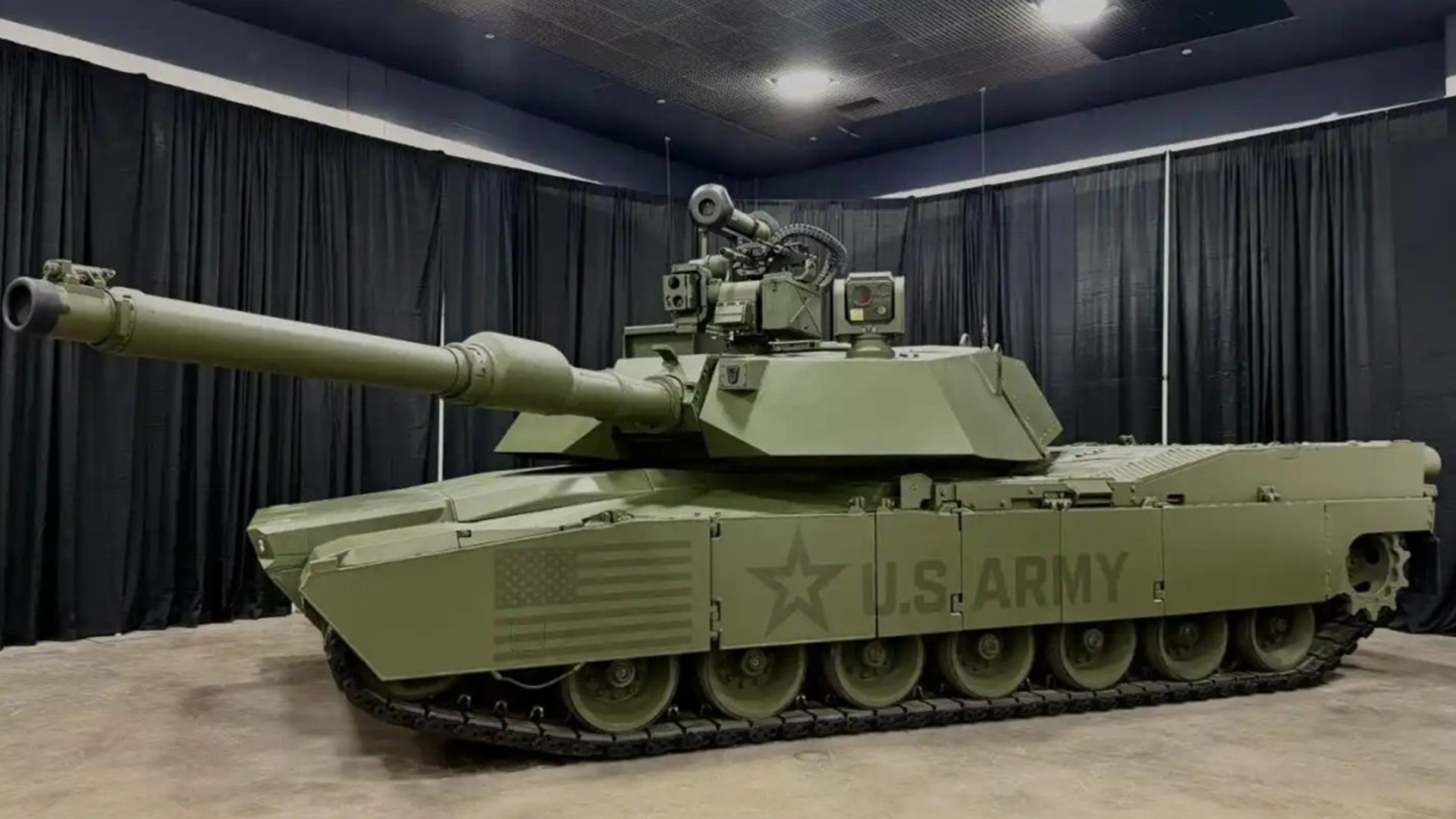
By early June 2025, Ukraine had lost 27 of the 31 Abrams tanks the United States had sent it. Eighty-seven percent, destroyed or captured, on a battlefield where cheap drones, thermobaric top-attack munitions, and mines have made the tank's traditional armor scheme look increasingly beside the point. That's the number sitting behind the U.S. Army's decision to hand its next-generation M1E3 Abrams prototype to the 1st Cavalry Division for testing this week, and it's worth keeping in view, because the Army's own public messaging tends to lead with "most revolutionary tank in 50 years" rather than "the current one kept dying."
The Army made the call to abandon incremental Abrams upgrades back in 2023, and the timing lines up: that's roughly when the pattern of Western tank losses in Ukraine, Abrams and Leopard 2A6 alike, had become impossible to wave off as bad luck or poor employment. Rather than bolt more armor onto a design that first entered service in 1980, the Army went back to the drawing board. The M1E3 is expected to drop from roughly 80 tons down to about 60, a weight cut that would have been unthinkable for a tank whose entire reputation was built on brute survivability through mass. To make up the difference, it leans harder on active protection systems designed to intercept incoming threats before they hit the hull at all, plus a hybrid powerplant reportedly targeting 40 percent better fuel efficiency than the current gas-turbine engine's notoriously poor consumption.
What's genuinely striking is how closely that design logic tracks China's Type 100, a tank Beijing confirmed entered service back in September. Lighter than its predecessors at around 40 tons, leaning on active protection rather than passive armor mass, running a hybrid drivetrain, the Type 100 and the M1E3 are converging on the same basic bet from opposite sides of the Pacific: that the era of winning through sheer armor thickness is over, and the tank that survives modern anti-tank weapons is the one that stops them before impact rather than absorbing the hit. Whether that's Beijing influencing Washington's design choices or both militaries independently reaching the same conclusion after watching Ukraine, the result is a rare moment where American and Chinese armor doctrine are visibly moving in lockstep.
Handing the prototype to the 1st Cavalry Division specifically matters beyond symbolism. It's one of the Army's storied armored formations, and testing a tank this early with an actual operational unit, rather than keeping it confined to a proving ground, is meant to surface the unglamorous problems that don't show up in engineering reviews: how it handles for a real crew, what breaks under sustained field use, whether the promised fuel savings hold up outside a lab. The Army is targeting a pre-prototype completion by the end of this year, an aggressive schedule for a tank this different from anything currently in the fleet.
None of this guarantees the M1E3 avoids the fate that forced this redesign in the first place. Active protection systems have to actually work against the specific mix of drones, loitering munitions, and top-attack weapons that did the damage in Ukraine, and a lighter hull built around intercepting threats rather than absorbing them is a fundamentally different bet than anything the Abrams program has made in 45 years of service. The Army is confident enough in that bet to hand it to a real division for testing. Whether it holds up is a question only years of trials, and eventually a real battlefield, can actually answer.

No comments:
Post a Comment