
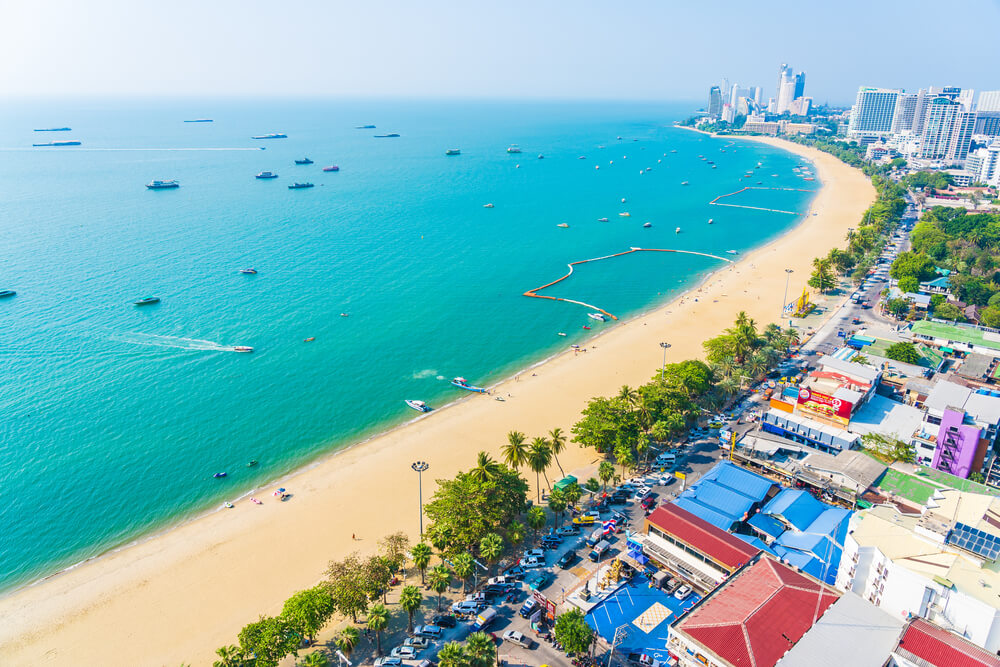
Pattaya hasn't had a good year. Lisa Hamilton, who heads the city's nightlife business association, told reporters this week that 2026 has been the weakest she's seen in more than two decades running operations there. So when word came that USS Abraham Lincoln would dock at nearby Laem Chabang Port starting September 2, with nearly 5,000 sailors and Marines aboard getting shore leave after more than 270 consecutive days at sea, the city's tourism sector treated it as something close to a lifeline. Each service member could plausibly spend $30 to $91 a day ashore, according to Pattaya's mayor, and with more than 300,000 hotel rooms sitting in a market that's had a rough year, that math matters to a lot of local businesses.
It's also, by every account from Thai officials themselves, a genuinely complicated welcome to prepare for. Pattaya's own police chief was blunt about the challenge: "We are doing our best, but it is difficult." Prostitution is illegal in Thailand, but visibly present across parts of Bangkok and Pattaya regardless, and the city has spent the days before Lincoln's arrival running raids that detained 40 to 50 people on suspicion of prostitution-related offenses, on top of stepped-up patrols planned for the beachfront and nightlife districts once the ship actually docks. A Bangkok University tourism scholar put the underlying concern plainly to Reuters: a sudden influx of thousands of customers "may increase the likelihood of sexual exploitation and the spread of sexually transmitted diseases." Roughly 600 officials are being mobilized for security and support around the visit, according to the regional governor.
This is a genuinely old pattern for this specific city, not a new problem the Navy invented. Pattaya's transformation from fishing village into a major tourism hub traces directly back to American service members seeking rest during the Vietnam War, and the Pentagon-Pattaya relationship the current port call continues is a tradition running more than 50 years. Thai officials met with Navy representatives ahead of the visit specifically to set behavioral expectations for the crew, and the warning attached to those rules was explicit: anyone who breaks Thai law, including its notably strict lèse-majesté statute carrying penalties up to 15 years for insulting the monarchy, faces prosecution under Thai jurisdiction, not just Navy discipline.
The deployment behind this visit is its own separate story worth remembering as context. This blog has already covered Lincoln's extended time at sea in detail, the mental health concerns, the reported attempts to go overboard, and Adm. Cooper's own confirmation that the strike group dropped 1.5 million pounds of ordnance on Iran across more than 10,000 sorties during Operation Epic Fury. A crew coming off a deployment that long and that intense is, by any reasonable measure, due genuine rest, and Pattaya's own tourism sector isn't wrong that this visit represents real economic opportunity for a city having a difficult year.
What's genuinely uncertain is how much of that opportunity actually lands where the city hopes it will. Thanet Supornsahasrungsi, who heads the regional tourism federation, flagged the honest complication: some sailors and Marines may simply travel to Bangkok instead of staying in Pattaya, meaning the city's own hospitality sector may not capture nearly as much of the visit's spending as its excitement suggests. Between that uncertainty and the law-enforcement strain the visit is already generating before a single sailor has come ashore, Pattaya's welcome carries about as much anxiety as hope.

No comments:
Post a Comment