
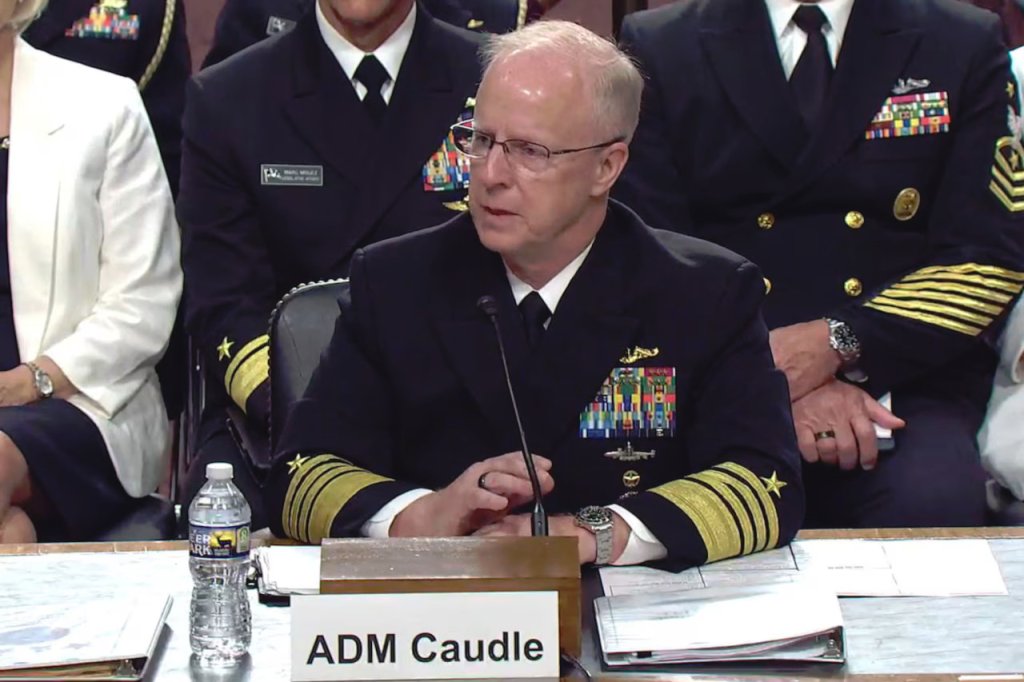
Chief of Naval Operations Adm. Daryl Caudle told reporters in Norfolk this week that the Navy is fundamentally reworking how it stocks ships, delivers supplies, and schedules port calls, specifically citing new plans to add port stops in Africa and India, after USS Abraham Lincoln's roughly 250 days without a single port visit during its punishing deployment. What makes this genuinely newsworthy against this blog's own coverage of the story is what Caudle actually confirmed rather than merely acknowledged existed: sailors and families reported severe shortages of soap and toothpaste, and Navy officials told reporters hygiene products had to take a backseat to food in the resupply priority line as the deployment dragged on. Caudle's own words were a meaningful shift from Secretary Hegseth's earlier public dismissal of shipboard-condition reports as "completely misrepresented," instead calling it "a fair critique that there were some puts and takes at the beginning of Epic Fury until we got resupply dialed in."
This blog's earlier coverage of Lincoln's Thailand port call treated the underlying dispute over shipboard conditions as genuinely unresolved, Hegseth's public denial sitting uncomfortably next to family reports of sailors attempting to go overboard. This latest reporting doesn't fully resolve that dispute either, Caudle stopped short of confirming every individual photograph and account, but it does represent the Navy's most senior uniformed officer publicly validating the substance of what sailors and families had been describing for weeks, hygiene shortages, resupply prioritization failures, "the kind of ship store items" that matter considerably during months without liberty ashore. That's a meaningfully different institutional posture than outright denial, even if it stops short of a full public accounting.
The Bahrain detail connects directly to this blog's own extensive coverage of Iran war-related infrastructure damage this summer. This reporting confirms Naval Support Activity Bahrain, the Navy's main Middle East supply hub, was destroyed during the conflict, a logistics failure this blog's coverage of the broader Navy tempo investigation already referenced in passing but hadn't fully connected to Lincoln's specific resupply crisis. A carrier strike group operating without its primary regional supply hub, forced to rely on the 2,000-plus-mile detour to Diego Garcia this blog's earlier tempo-crisis coverage documented, isn't simply experiencing bad luck or poor planning, it's operating inside a genuinely degraded logistics architecture that this blog has now traced through multiple separate reporting threads to the same underlying cause.
The African and Indian port-stop expansion Caudle announced deserves to be read against this blog's broader Indo-Pacific and Africa coverage this summer. This blog's reporting on Russia's Sahel air bridge and Portugal's Gulf of Guinea drone trials already established West and Central African waters as an active zone of great-power maritime competition, and a U.S. carrier strike group beginning to route through African ports for logistics and crew relief purposes adds a new American presence dimension to exactly the contested space this blog has already documented Russia's Africa Corps and China's 48th Maritime Task Force actively competing for. Whether that's the Navy's explicit intent or simply a practical response to Bahrain's loss and Lincoln's crew-welfare crisis, the effect is the same, American naval presence expanding into African ports at the same moment this blog's other coverage has documented rival powers building out their own regional access agreements.
None of this fully closes the accountability question this blog's earlier coverage left open, whether Lincoln's crisis reflects a systemic fleet-tempo problem or a uniquely mismanaged single deployment remains genuinely contested, and Caudle's own careful hedging, confirming the hygiene shortages while declining to validate every individual account, suggests the Navy is still managing this story's political fallout as much as its underlying logistics failure. But a four-star admiral publicly using the phrase "fair critique" about conditions his own defense secretary previously dismissed is a genuine shift in institutional posture, and it's worth reading as this blog's ongoing Navy coverage continues, the accountability gap between what happened aboard Lincoln and what the Pentagon initially admitted has narrowed considerably, even if it hasn't fully closed.

No comments:
Post a Comment