
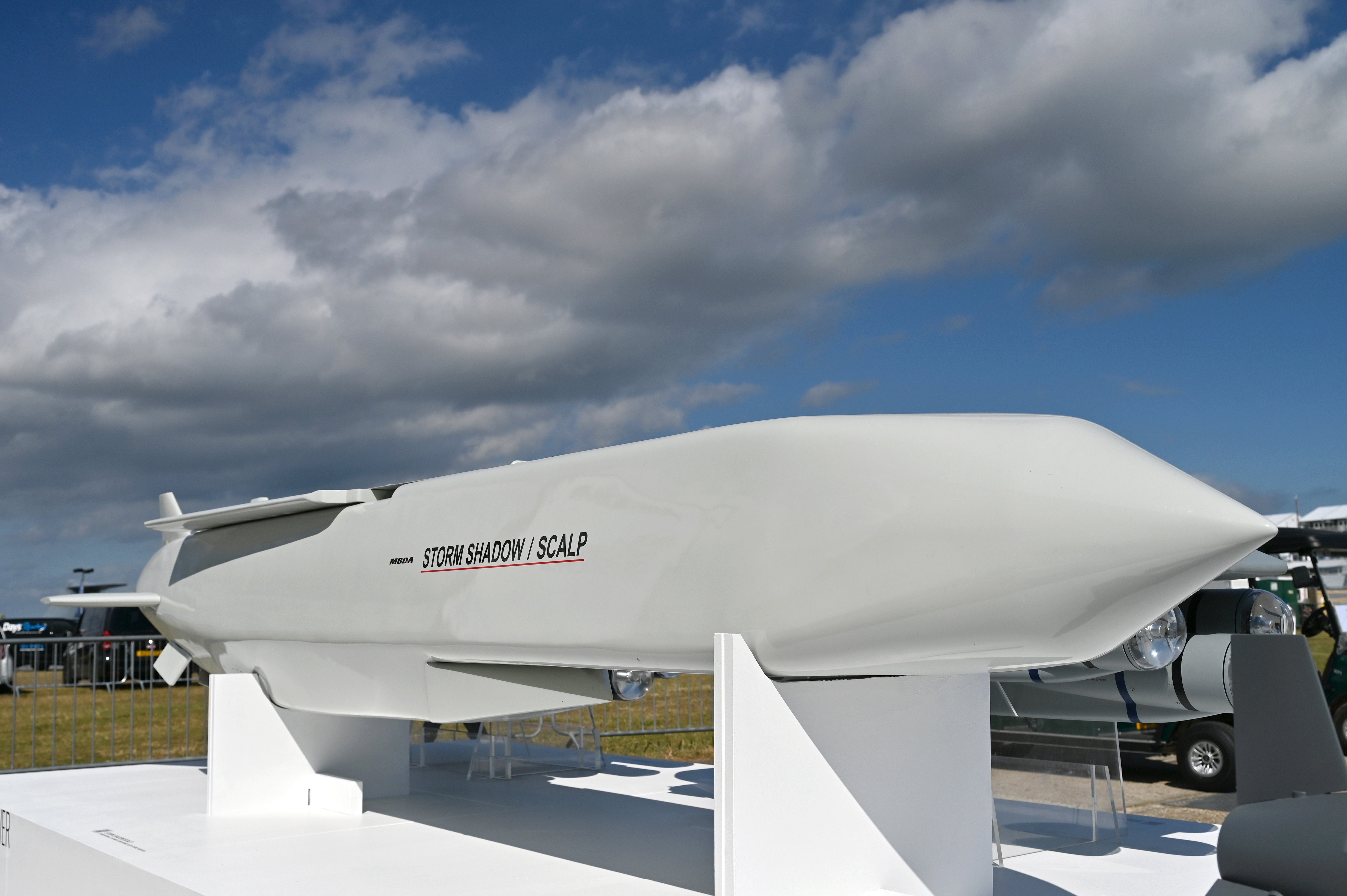
This blog's coverage of Andy Burnham's first foreign trip as UK prime minister already documented the headline decision, authorizing MBDA to release classified information on British-made SCALP components to Ukraine. The fuller technical picture emerging since confirms both the genuine significance of that move and the real execution gap standing between authorization and actual missiles rolling off a Ukrainian production line. France had already granted Ukraine a production license for the Franco-British weapon back in July, but because SCALP incorporates both French and British-origin technology dating to a 1990s joint program tracing back to the earlier Apache missile, Paris alone couldn't legally transfer the complete technical package. Burnham's decision was the missing legal and industrial piece, not a standalone announcement.
What multiple outlets covering this story converge on, and what this blog's earlier coverage didn't yet have detail on, is exactly how difficult the remaining path to actual Ukrainian production really is. CNN's own reporting states plainly it could take several years to scale up production even with the technology transfer complete, and Defense News's own analysis is specific about why: Ukraine lacks the specialized, high-precision manufacturing equipment at scale needed to build a weapon this sophisticated, a 1,300-kilogram missile powered by a Microturbo TRI 60-30 engine, using GPS, TERPROM terrain-referenced navigation, and imaging-infrared seekers alongside a 450-kilogram BROACH warhead. Army Recognition's own reporting adds that establishing manufacture by the stated end-of-2026 target requires localizing airframe construction while implementing "complex calibration and certification processes for foreign-sourced guidance, propulsion, and fuze subsystems," a genuinely demanding technical bar for a defense-industrial base that, per this blog's own extensive coverage this summer, is simultaneously under sustained Russian attack.
That production timeline connects directly to the "extraterritorial MIC" offshoring pattern this blog has now documented across multiple posts, Germany's and Finland's onshoring of Ukrainian drone manufacturers, and the ArcelorMittal steel plant strike that this blog's coverage of Russia's campaign against Ukraine's defense industry already established as a deliberate effort to degrade domestic production capacity specifically. A SCALP production line requiring precision manufacturing equipment Ukraine doesn't currently possess is exactly the kind of capability gap this blog's coverage suggested NATO-territory production offers a genuine hedge against, and UNITED24's own reporting confirms the two governments are indeed planning a jointly established line rather than a purely Ukrainian domestic one, France and Ukraine working "to establish local assembly lines for the weapon inside Ukraine," language that leaves open whether some or all of the actual precision manufacturing ultimately happens on safer French soil rather than inside Ukraine itself.
Russia's response is the piece of this story that most directly extends this blog's earlier coverage. Kremlin spokesperson Dmitry Peskov accused Britain of direct participation in the war, "pouring oil on the fire," following a formal warning from the Russian embassy in London the same week this blog's Poseidon coverage documented Kremlin propagandist Vladimir Solovyov calling for British arms factories to be struck with Russia's nuclear-powered underwater drone. That's now two distinct, escalating Russian responses to British involvement in Ukraine's strike capability within roughly a week of each other, a state media call for a specific nuclear-adjacent weapon and a formal diplomatic accusation of direct war participation, reinforcing this blog's earlier assessment that former Air Marshal Greg Bagwell's warning about British factories becoming legitimate targets was prescient rather than alarmist.
The mission-specific value SCALP would add to Ukraine's strike portfolio is worth noting against the FP-7 ballistic missile program this blog covered just one day earlier. CNN's own reporting distinguishes SCALP's role clearly: striking buried, hardened targets like command bunkers, a harder mission for the lighter drones Ukraine has relied on for softer targets like refineries and warehouses. That's a genuine capability gap in Ukraine's current "shoot the archer" strategy this blog has documented extensively, hardened underground command and launch infrastructure resists the kind of strikes drones and even ballistic missiles like FP-7 are optimized for, and MBDA restarting SCALP production lines dormant for fifteen years to meet current demand, per multiple outlets' reporting, underscores just how much this specific munition category has moved from a niche capability to a central pillar of the broader Western-supplied strike campaign this blog has tracked all summer.

No comments:
Post a Comment