
Naval News's own deep-dive into the U.S. Navy's Liberator program describes a covert, bottom-mounted seabed weapon concept, effectively a smart, deployable mine capable of lying dormant on the ocean floor in contested chokepoints before activating against a passing warship, a considerably different capability category than the mobile UUVs and torpedoes this blog has covered extensively this summer. Rather than actively hunting or patrolling, Liberator's entire value proposition rests on pre-positioning, seeding contested waters, the South China Sea approaches and Taiwan Strait chief among the plausible locations this blog's own Indo-Pacific coverage has repeatedly identified as strategically decisive terrain, with weapons that simply wait, invisible and unpowered until triggered, for exactly the kind of Chinese naval transit a contingency would require.
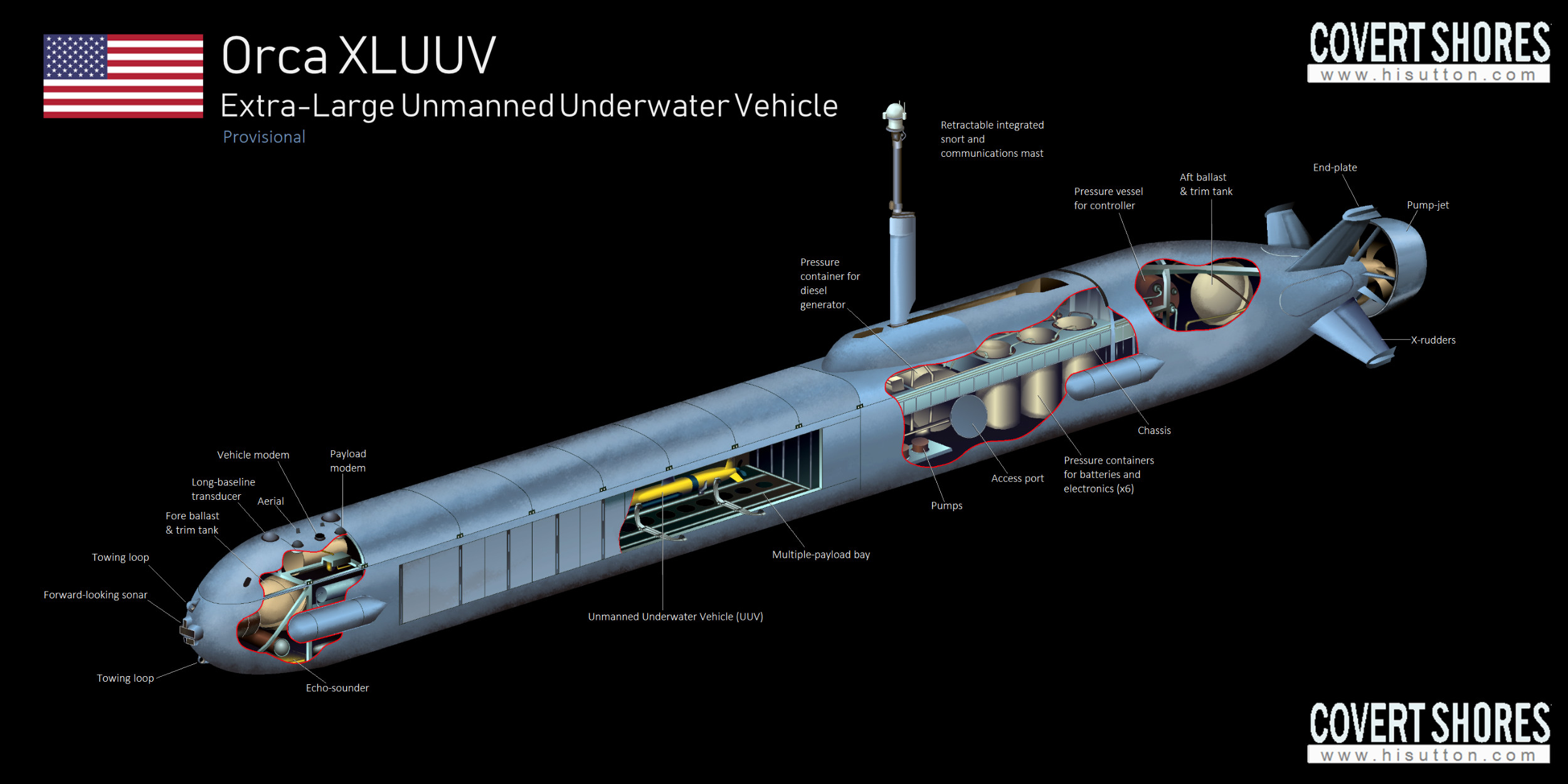
This is the third distinct undersea capability this blog has now documented the Navy pursuing simultaneously this year, and reading all three together reveals a considerably more coherent strategy than any single program announcement suggested on its own. This blog's coverage of the Orca XLUUV's 1,000-nautical-mile Pacific transit established the mobile, long-range reconnaissance-and-strike leg of this picture, while acknowledging China's own more diversified UUV program may already hold a real edge in that specific category. This blog's separate coverage of the proposed UUV-based submarine resupply concept from RIMPAC 2026 established the logistics leg, letting submarines restock without surfacing in contested waters. Liberator adds a third, genuinely different leg entirely, static area-denial infrastructure that doesn't need to move, hunt, or resupply anything, simply persist on the seabed until an adversary vessel crosses its trigger zone.
That static, pre-positioned model connects directly to the Silent Anvil glide torpedo this blog covered days earlier, where the Navy explicitly justified extending air-launched anti-submarine reach by citing China's expanding and increasingly sophisticated submarine fleet. Liberator represents the sea-floor equivalent of the same underlying strategic logic Silent Anvil applies from the air, denying an adversary safe transit through a specific, geographically fixed chokepoint rather than trying to intercept every individual vessel across an entire operating theater. Both programs share the same core insight this blog has traced through nearly every major weapons category this summer, concentrating defensive effort at predictable, narrow points, chokepoints, transit lanes, launch corridors, is a more achievable and cost-effective strategy than attempting comprehensive coverage across an entire contested region.
The covert, low-signature design philosophy Naval News's reporting emphasizes also fits the broader detection-and-concealment throughline this blog has documented across Japan's submarine-hypersonic program and the AIM-424/AIM-174B missile family's emphasis on standoff range over stealth. Where those other programs pursue survivability through either concealment or distance, Liberator pursues it through patience and positioning, a weapon that doesn't need to hide from active search because it was never moving or emitting in the first place, sitting dormant until the moment of engagement removes most of the detection vulnerabilities this blog's coverage of Chinese anti-submarine aircraft like the Y-9FQ has documented as an increasingly serious threat to more conventional mobile undersea assets.
None of this confirms Liberator has moved past the conceptual or early-development stage Naval News's own reporting describes, and this blog's summer of documented execution risk across comparably ambitious American undersea programs, the Orca's own budget and schedule overruns among them, counsels real caution before assuming this specific system reaches operational deployment on any predictable timeline. But the strategic logic underlying it, adding a genuinely passive, low-cost, geographically concentrated area-denial layer to complement the mobile UUV and resupply capabilities this blog has already documented, suggests the Navy's undersea Pacific strategy is being assembled as a genuinely layered system rather than a single silver-bullet program, mirroring the same multi-tier approach this blog identified across the J-16 and Su-35 "missile truck" doctrines on the surface and in the air.

No comments:
Post a Comment