
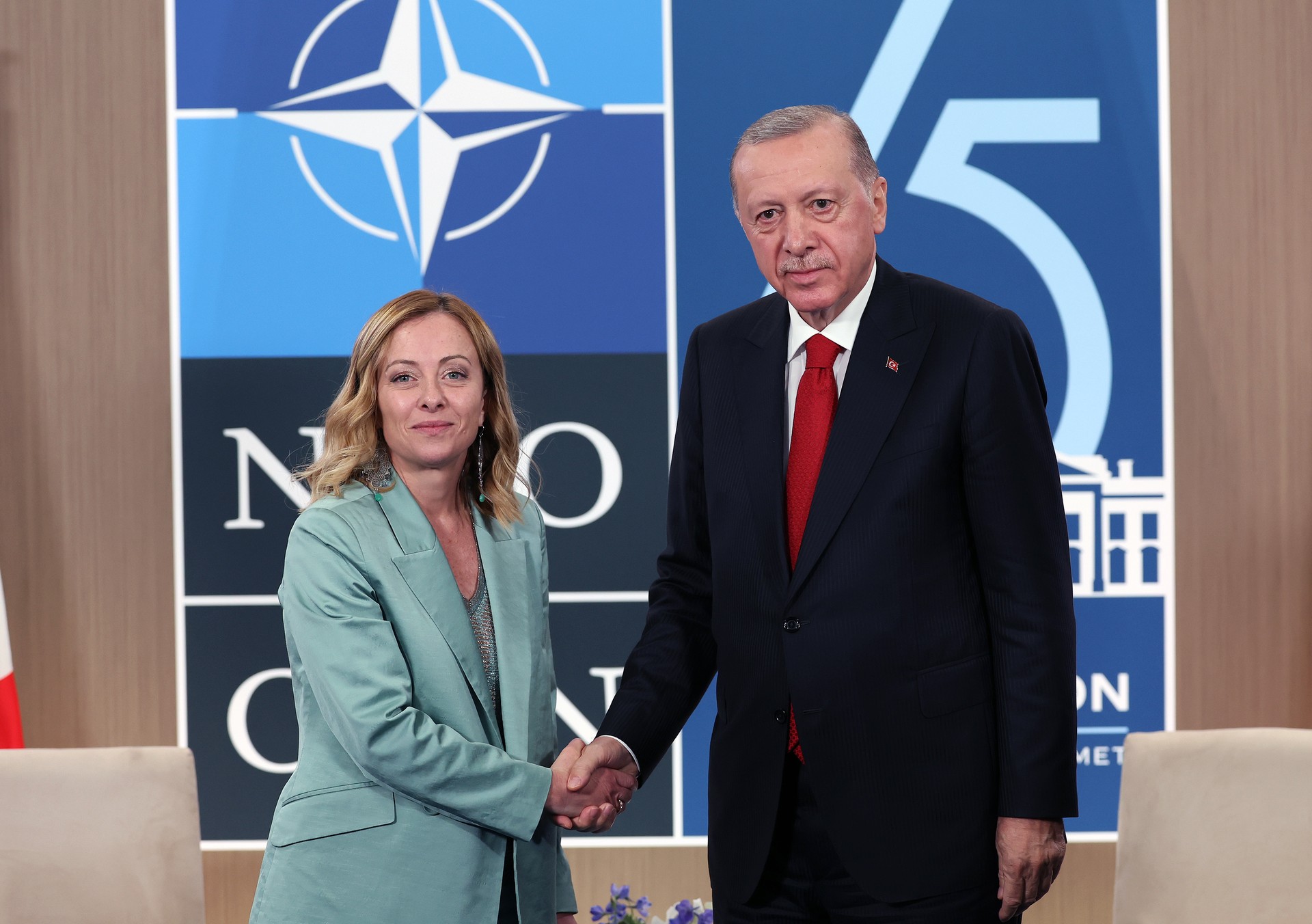
Italy has requested €8 billion in low-cost loans from the EU's SAFE defense funding program, according to Defense News, a genuine climbdown from the €14.9 billion Rome had originally been allocated and had, as recently as two days before this reporting, told the European Commission it intended to draw "a vast majority" of. Foreign Minister Antonio Tajani's own framing, reported separately, put the final adjusted figure closer to €8.9 billion. The retreat caps a months-long domestic political fight: Prime Minister Giorgia Meloni's coalition partner, the League party, has pushed for prioritizing public spending over defense procurement, and Meloni herself spent months signaling Italy might decline the loans entirely, at one point suggesting Italy would forgo as much as €27 billion in combined SAFE and NEC scheme funding if Brussels wouldn't let Rome redirect some of that flexibility toward energy costs instead.
This blog's earlier coverage of Poland's four-nation Piorun MANPADS consortium already established SAFE as the financing mechanism underpinning a genuinely significant slice of Europe's current rearmament wave, and this Italy story adds a useful corrective to how uniformly that earlier coverage treated the program's momentum. The Grosswald tracker's own country-by-country accounting, current as of August 18, shows Poland, Romania, France, Portugal, Czechia, Greece, and Estonia have all already signed full loan agreements, while Italy's own request has been visibly shrinking on paper for months and Hungary's €16.2 billion allocation sits frozen inside a separate domestic political dispute. That's a considerably more uneven picture of European defense-financing unity than a program headline of "€150 billion in low-cost loans" implies on its own, and it's worth reading Italy's retreat as confirmation that SAFE's actual uptake depends heavily on each individual government's domestic political coalition, not simply on the financing terms Brussels is offering.
The specific programs affected connect directly to this blog's own coverage of European armored-vehicle and frigate procurement this summer. Italy's original €14.9 billion plan was earmarked substantially for a €23 billion Leonardo-Rheinmetall deal covering 1,050 Lynx armored vehicles and 272 Panther tanks, and Defense Minister Guido Crosetto had already signaled an 18 percent cost cut to that program back in July, suggesting delays or reduced order numbers even before this week's formal loan-scaling-back. That's the same kind of program-scale reduction this blog documented through Australia's Hunter-class frigate cut from nine ships to six, a pattern of European and allied defense programs shrinking in scope even as headline rearmament rhetoric remains ambitious, worth flagging as a recurring feature of this summer's procurement coverage rather than a one-off.
The industrial-rules detail worth connecting to this blog's coverage of South Korea's potential role easing Europe's interceptor shortage deserves real emphasis here. SAFE's own framework allows up to 35 percent of procurement from non-EU suppliers, according to Decode39's reporting, but this blog's earlier coverage of the Cheongung-II pitch already established a stricter 65 percent EU-content requirement functionally excluding South Korean systems from SAFE-funded interceptor purchases specifically. Grosswald's own tracking shows the same €150 billion pool simultaneously funding a "sovereign-industry strategy," Poland routing its full €43.7 billion into domestic plants, and a "buy-fastest strategy," Romania sending its largest single tranche, €5.7 billion, directly to Rheinmetall, a foreign prime contractor. That tension, sovereignty versus speed, protectionism versus proven capability, runs through nearly every SAFE-funded procurement decision this blog has now covered, and Italy's own retreat adds a third variable entirely, pure domestic budget politics overriding either consideration.
None of this confirms Italy's rearmament ambitions are genuinely collapsing, €8-9 billion remains a substantial commitment by any normal standard, and Tajani's own framing suggests this is a scaled adjustment rather than an abandonment. But reading this alongside this blog's broader European defense-financing coverage this summer, the Piorun consortium, the SAFE-funded Cheongung-II exclusion, Poland's shipbuilding success against Germany's and Australia's frigate struggles, the consistent theme is that Europe's rearmament wave, however real and well-funded on paper, keeps running into the same underlying friction this blog has documented across nearly every individual country's story, domestic politics, industrial protectionism, and execution capacity all pulling against the speed and scale the underlying strategic threat this blog's Baltic and Kaliningrad coverage has documented would otherwise seem to demand.

No comments:
Post a Comment