
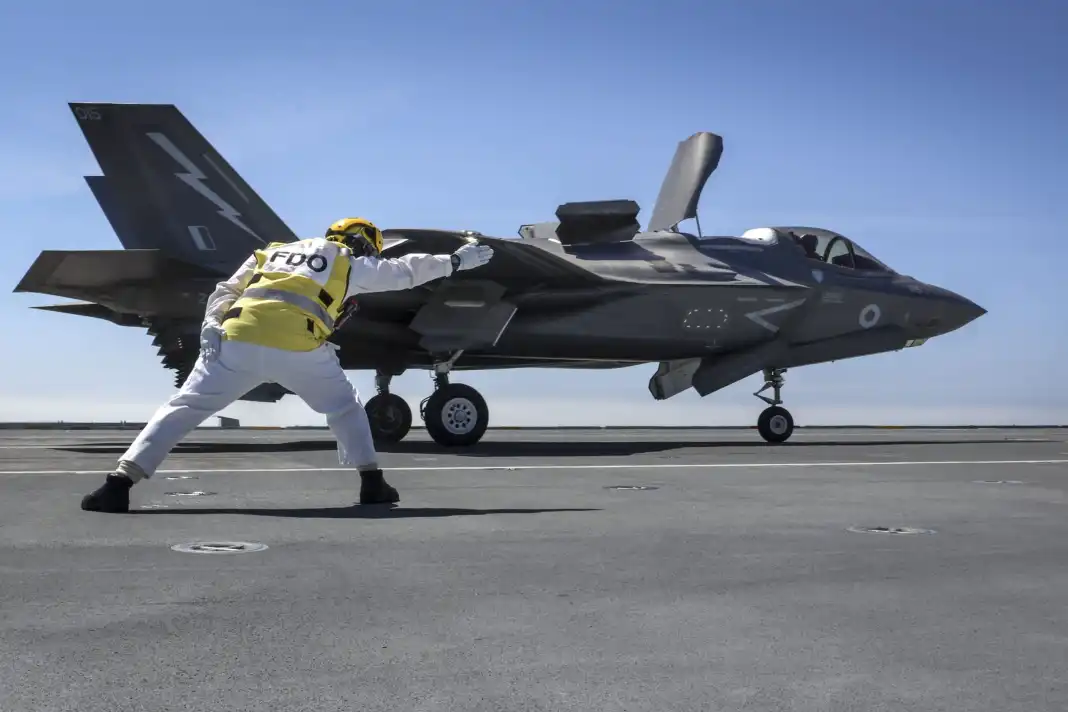
A comprehensive strategic analysis published by Naval News (authored by defense analyst Jorge Estévez-Bujez) has examined the mounting structural and operational crisis facing the Spanish Navy’s fixed-wing aviation arm. Titled Spain’s Naval Aviation Crossroads: The F-35B, the Harrier, and a Capability Gap, the report details how political friction, industrial constraints, and procurement deadlocks have left Madrid struggling to find a viable successor to its aging AV-8B Harrier II fleet.
At the center of the operational dilemma is the strategic utility of the Spanish Navy’s flagship amphibious assault ship, the Juan Carlos I (L-61).
While military planners have long viewed the stealthy F-35B Lightning II as the natural, plug-and-play successor to seamlessly fill the hangar bays of the Juan Carlos I, broader geopolitical and budgetary frictions have stalled any acquisition. Madrid's complex defense relationship with Washington, alongside domestic political pushback and a heavy budgetary commitment toward sovereign European industrial programs like the Eurofighter, has kept the F-35 off the table.
The decision to squeeze nearly another decade out of the legacy Harriers introduces severe operational risks. By 2032, the airframes will approach 45 years of service, operating without modern stealth characteristics, advanced sensor fusion, or the survivability required to operate within heavily contested, modern electronic warfare environments.
Ultimately, the analysis underscores a critical inflection point for Spanish naval strategy. If Madrid fails to secure a modern STOVL replacement or pivot toward an alternative carrier-aviation roadmap—such as future uncrewed combat air systems or heavy conventional carrier studies—the eventual retirement of the Harrier threatens to wipe out decades of accumulated deck culture, pilot expertise, and tactical doctrine.

No comments:
Post a Comment