
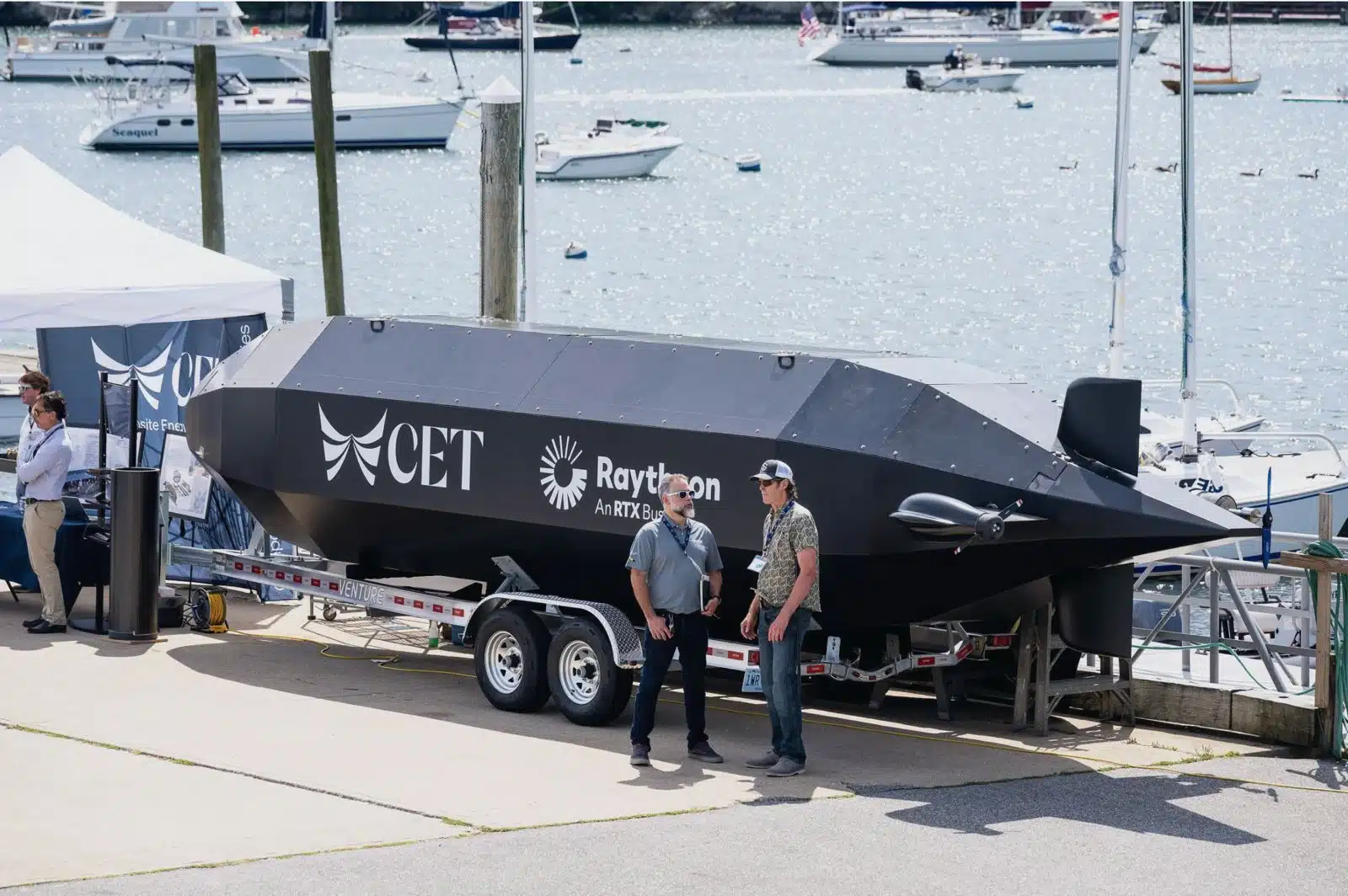
A high-impact defense report published by Naval News (authored by naval defense journalist Tayfun Ozberk) details a successful joint demonstration by Raytheon (an RTX business) and Composite Energy Technologies (CET) involving the Hadalus uncrewed undersea vehicle (UUV).
The Hadalus platform is an imposing 34-foot long-endurance UUV featuring a six-foot cross-section and an impressive operational range exceeding 2,000 nautical miles.
The rapid development timeline highlights a shifting defense industrial paradigm. Moving from a conceptual sketch to a fully functional water-tested prototype in less than 18 months, the joint engineering teams integrated advanced onboard sonars, electronic sensor packages, and proprietary launch architectures.
The tactical implications of the Hadalus demonstration are profound for future undersea warfare. By proving that a large-displacement UUV can execute submerged launches and conduct prolonged missions autonomously, the platform lays the groundwork for single uncrewed systems to execute complete end-to-end mission cycles—encompassing target detection, reacquisition, and engagement functions without exposing surface ships or manned submarines to hostile anti-access/area-denial (A2/AD) networks.
Ultimately, the successful demonstration underscores the U.S. Navy's accelerated push toward acquiring low-cost, high-attrition-resilient autonomous systems. As Raytheon and CET look toward scaled production cycles, the Hadalus program provides a blueprint for leveraging commercial composite innovations to rapidly field affordable, long-range force multipliers capable of operating deep inside contested maritime theaters.

No comments:
Post a Comment