
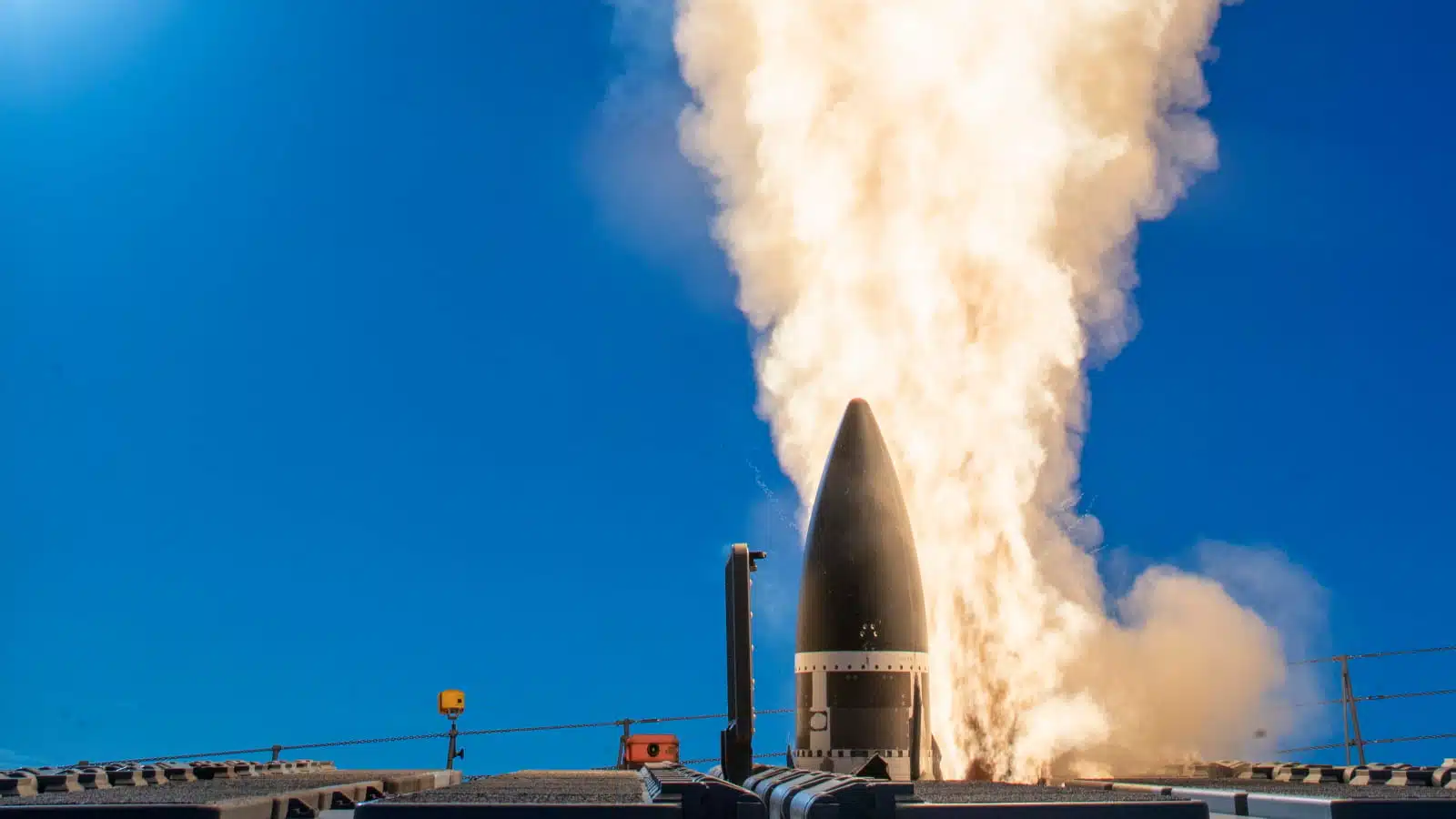
A high-priority defense announcement published by Naval News (reporting on corporate disclosures from RTX) details a major $745 million contract awarded to Raytheon by the U.S. Missile Defense Agency (MDA).
The SM-3 Block IIA program represents a premier cooperative technical achievement jointly engineered by Raytheon and Japanese defense industrial partners.
The urgency behind the production contract is heavily underscored by the combat validation the weapon received during high-intensity regional engagements, marking its transition from theoretical capability to proven combat asset. To meet accelerating global demand and replenish depleted stockpiles, RTX has aggressively scaled its manufacturing footprint.
Execution of the multi-year contract will be split between Raytheon’s primary hubs in Tucson, Arizona, and Huntsville, Alabama, with initial funding allocations drawing jointly from U.S. defense appropriations and Japanese Foreign Military Sales (FMS) mechanisms.
Ultimately, the infusion of capital into the SM-3 Block IIA ecosystem ensures that naval surface combatants will retain a reliable, upper-tier exoatmospheric defense layer against complex ballistic threats. By deepening industrial cooperation between Washington and Tokyo while concurrently modernizing domestic manufacturing lines, the initiative solidifies a cornerstone capability for multi-layered missile defense networks safeguarding allied forces worldwide.

No comments:
Post a Comment