
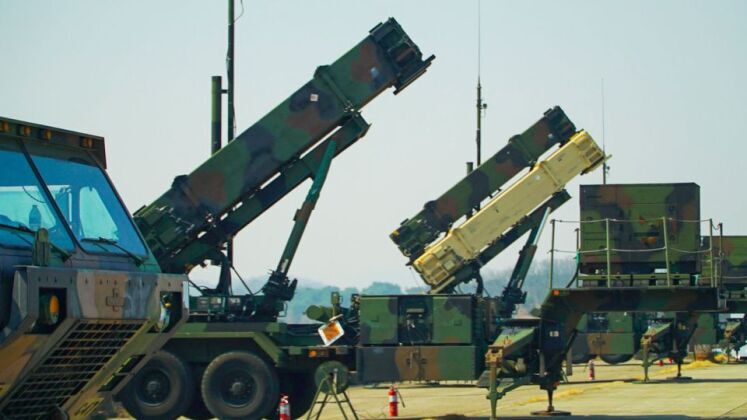
A strategic defense assessment published by Military Watch Magazine examines the compounding geopolitical and military fallout resulting from the U.S.-led war effort against Iran. According to the report, intense high-volume engagements in the Middle East have severely depleted American stockpiles of advanced precision-guided munitions and air defense interceptors, forcing Washington to pull critical hardware out of East Asia and fundamentally straining its alliance with Seoul.
The core driver behind the crisis stems from the staggering consumption rates of premier missile defense assets. U.S. forces have reportedly expended over half of their total Patriot interceptors and the vast majority of their high-altitude THAAD inventory during regional hostilities.
This sudden drawdown—executed largely without prior consultation with local authorities—has caused deep alarm within South Korean defense and political circles.
Compounding the security anxiety is a shifting regional diplomatic balance. While decades of bilateral alignment saw Seoul make major financial concessions and host thousands of U.S. service members—famously described by U.S. leadership as a vital "dagger in the heart of Asia" targeting adversary projection—the perceived prioritization of Middle Eastern commitments over East Asian deterrence has accelerated calls for strategic autonomy. Analysts note that South Korea is increasingly pivoting toward a more measured, neutral geopolitical posture to safeguard its robust economic and trade ties with Beijing.
Ultimately, the crisis highlights the punishing opportunity costs of protracted trans-regional conflicts on global superpower commitments. As Washington struggles to maintain multi-theater deterrence amidst chronic munitions shortfalls, the unforced friction in East Asia threatens to permanently erode long-standing alliance structures, paving the way for a more fractured and independent security architecture across the Indo-Pacific.

No comments:
Post a Comment