
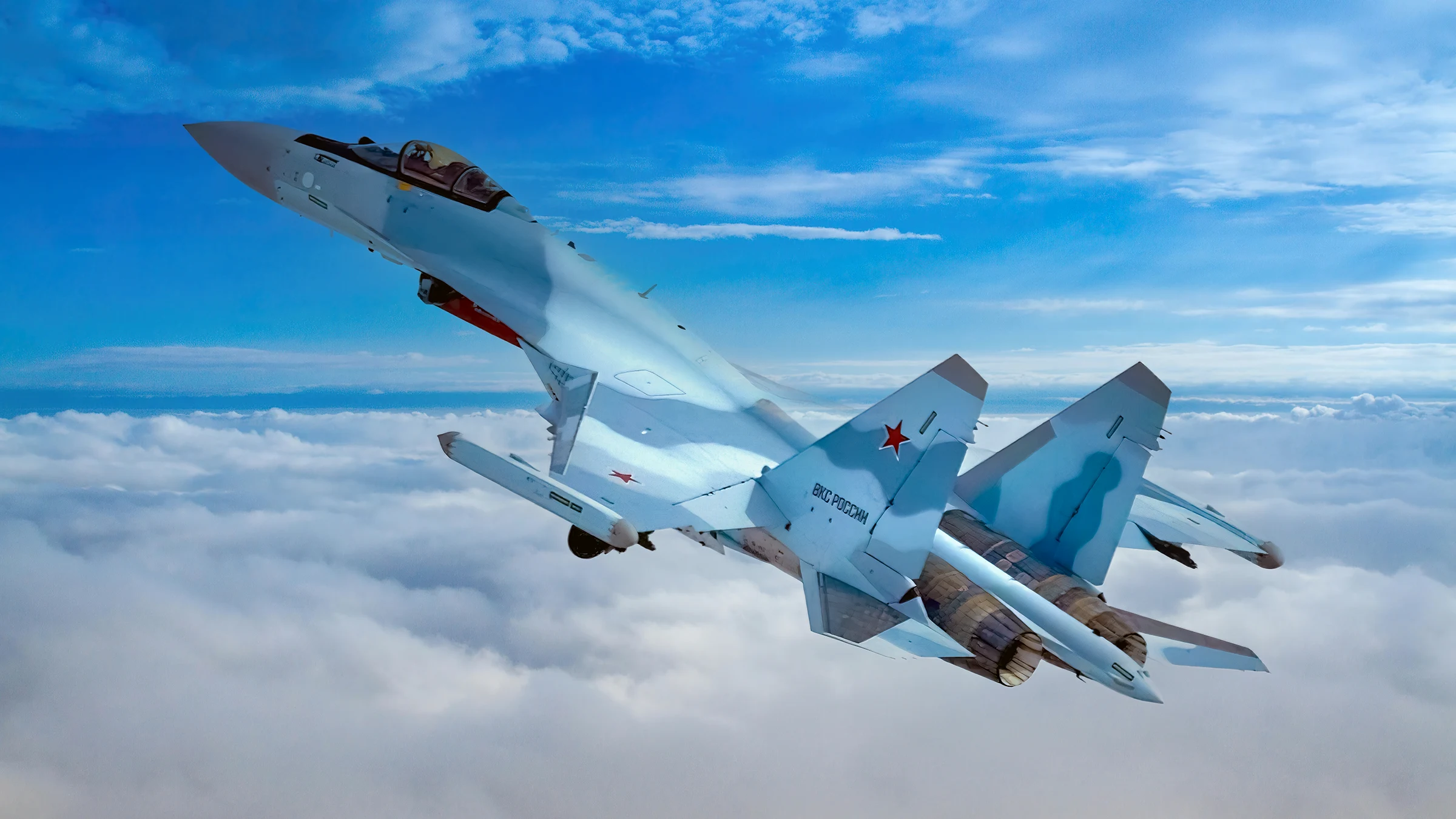
Russian Su-35S fighters have been documented flying with Kh-31PM anti-radiation missiles specifically tasked with locating and destroying the radar emitters that guide Ukraine's air-defense systems, including, according to Bulgarian Military's reporting on a June 2025 strike, missiles launched to search for and target a Patriot battery's radar signature over Kyiv itself. The Kh-31PM is a Mach 3, ramjet-powered missile with a passive seeker that homes on radar emissions rather than requiring visual target acquisition, giving it an engagement envelope Army Recognition's own technical analysis puts at roughly 250-300 kilometers under favorable launch conditions, a considerable upgrade over the baseline Kh-31P's 110-kilometer range. Its tactic is straightforward and doctrinally established, force a radar to either stay on and risk destruction or shut down and blind the defense network it supports, either outcome opening a window for follow-on strike packages.
This connects directly to the same J-16 "missile truck" doctrine this blog covered days earlier, and the parallel is worth drawing explicitly. Defence Security Asia's own reporting on a recent Su-35S "beast mode" loadout documented an aircraft carrying R-74M short-range missiles, R-37M long-range interceptors, K-77M medium-range weapons, and a Kh-31PM anti-radiation missile simultaneously, the same multi-role, magazine-depth philosophy this blog identified in China's eight-PL-15 J-16 configuration, just adapted for a different specific mission mix, air superiority and radar suppression combined on one airframe rather than pure air-to-air saturation. Both platforms represent the same underlying doctrinal insight this blog has now documented independently across two different air forces: a single multirole fighter carrying a genuinely diverse weapons mix can simultaneously threaten multiple target categories, reducing how many dedicated aircraft an adversary's air-defense network has to track and counter.
The Patriot-hunting application specifically is where this story connects most directly to the interceptor crisis this blog has tracked all summer. This blog's coverage of Zelenskyy's "I have 1%" warning and the broader CSIS-documented Patriot and THAAD stockpile collapse established the scarcity side of Ukraine's air-defense problem, simply not having enough interceptors. The Kh-31PM campaign against Patriot radar emitters is the parallel, and in some ways more insidious, threat: even a fully stocked Patriot battery is useless if its own radar has to stay dark to avoid detection, or if the radar itself gets destroyed before it can guide a single interceptor. A missile purpose-built to hunt exactly the sensor infrastructure keeping Ukraine's dwindling interceptor supply operationally relevant compounds the scarcity problem this blog has already documented rather than representing an entirely separate threat category.
Boris Obnosov's own 2023 claim to TASS, that Russia's Kh-31P family outperforms the Patriot system "in duels," deserves the same skepticism this blog has applied consistently to state-sourced capability claims all summer, the Su-57's disputed AEW&C kill, the JY-27V's actual combat failure in Venezuela, and the unverified Brazilian mercenary casualty figure covered just days ago. A missile manufacturer's chief executive asserting his own product beats a rival system in an unspecified "duel" is marketing language dressed as a technical assessment, not independently verified combat data, and this blog's own pattern of treating such claims with structural caution applies here with equal force. What is independently verifiable, and doesn't require trusting Obnosov's framing, is the doctrinal fact of the campaign itself, multiple documented sorties, multiple platforms, a consistent and expanding mission profile against Ukrainian radar infrastructure specifically.
The tactical limitation worth noting, per earlier Military Watch reporting on this same missile family, is that anti-radiation weapons like the Kh-31PM are specifically ill-suited against infrared-guided, lower-tier systems like MANPADS, meaning this campaign addresses Ukraine's higher-end, radar-guided defenses without doing anything to reduce the more basic infrared threats that have historically posed the primary danger to Russian aircraft operating at lower altitudes. That's a meaningful caveat: the Kh-31PM campaign narrows Ukraine's higher-tier defensive options without eliminating Ukrainian air defense as a whole, a partial rather than total degradation that still compounds, rather than solves on its own, the broader interceptor-scarcity crisis this blog has spent the summer documenting from the supply side.

No comments:
Post a Comment