
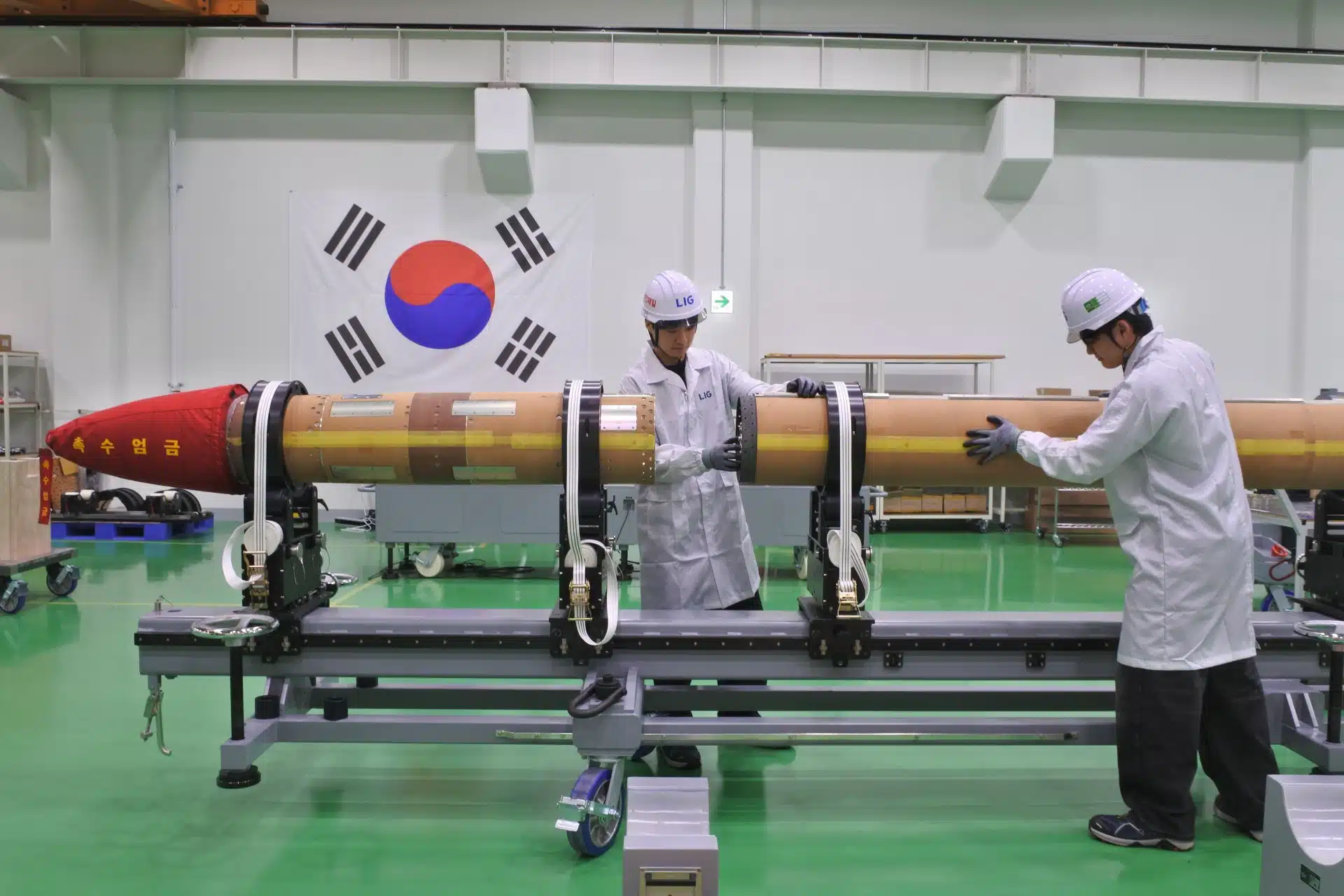
South Korea’s indigenous defense capabilities have reached a major new milestone as the nation aggressively pursues complete military-industrial self-reliance. LIG Defense & Aerospace (formerly known as LIG Nex1) has officially commenced the physical assembly of prototype missiles for the Republic of Korea Navy's highly anticipated Ship-to-Air Missile-II (KSAM-II) program.
Designed to serve as an advanced, home-grown replacement for imported foreign systems—such as the American-built SM-2—aboard future surface combatants like the Korean Next-Generation Destroyer (KDDX), this development marks a crucial leap forward in Seoul’s quest for total naval defense autonomy.
The Strategic Imperative for Sovereign Air Defense
Derived from advanced domestic surface-to-air technology lineage—including tech leveraging elements from land-based systems—the KSAM-II program is engineered to provide the ROK Navy with elite long-range fleet air defense capabilities. As regional security dynamics in the Indo-Pacific grow increasingly complex and unpredictable, relying on foreign supply chains and international export approvals for primary shipboard interception systems has become a strategic vulnerability.
By developing the KSAM-II entirely natively under a multi-hundred-billion-won roadmap, Seoul ensures absolute control over several critical operational pillars:
Production Tempos and Stockpile Depth: Eliminating foreign export restrictions, legislative bottlenecks, or third-party transfer blocks during critical peninsular contingencies.
Maintenance and Lifecycle Support: Streamlining software updates, diagnostic repairs, and localized servicing directly through domestic defense facilities like the newly inaugurated Gumi complex.
Seamless Platform Integration: Tailoring the missile's modular architecture specifically to integrate with Korean Vertical Launching Systems (KVLS) and indigenous combat management systems aboard upcoming frontline destroyers and frigates.
Engineering Excellence and the Path to Fleet Integration
With prototype assembly lines fully active following the completion of dedicated manufacturing infrastructure, the KSAM-II program is rapidly transitioning from blueprint theory to physical hardware testing. The interceptor is configured with sophisticated modular sections, housing advanced seeker electronics forward, high-energy propulsion centrally, and a specialized booster section aft designed for vertical cell ejection.
As these initial flight-test missiles move toward upcoming trials, successful validation will cement South Korea’s status as a premier global developer and exporter of high-end naval ordnance. For the ROK Navy, the successful realization of the KSAM-II means future surface combatants will sail equipped with an uncompromising, domestically secured shield—guaranteeing operational independence and robust deterrence across the Korean theater and international waters alike.

No comments:
Post a Comment