
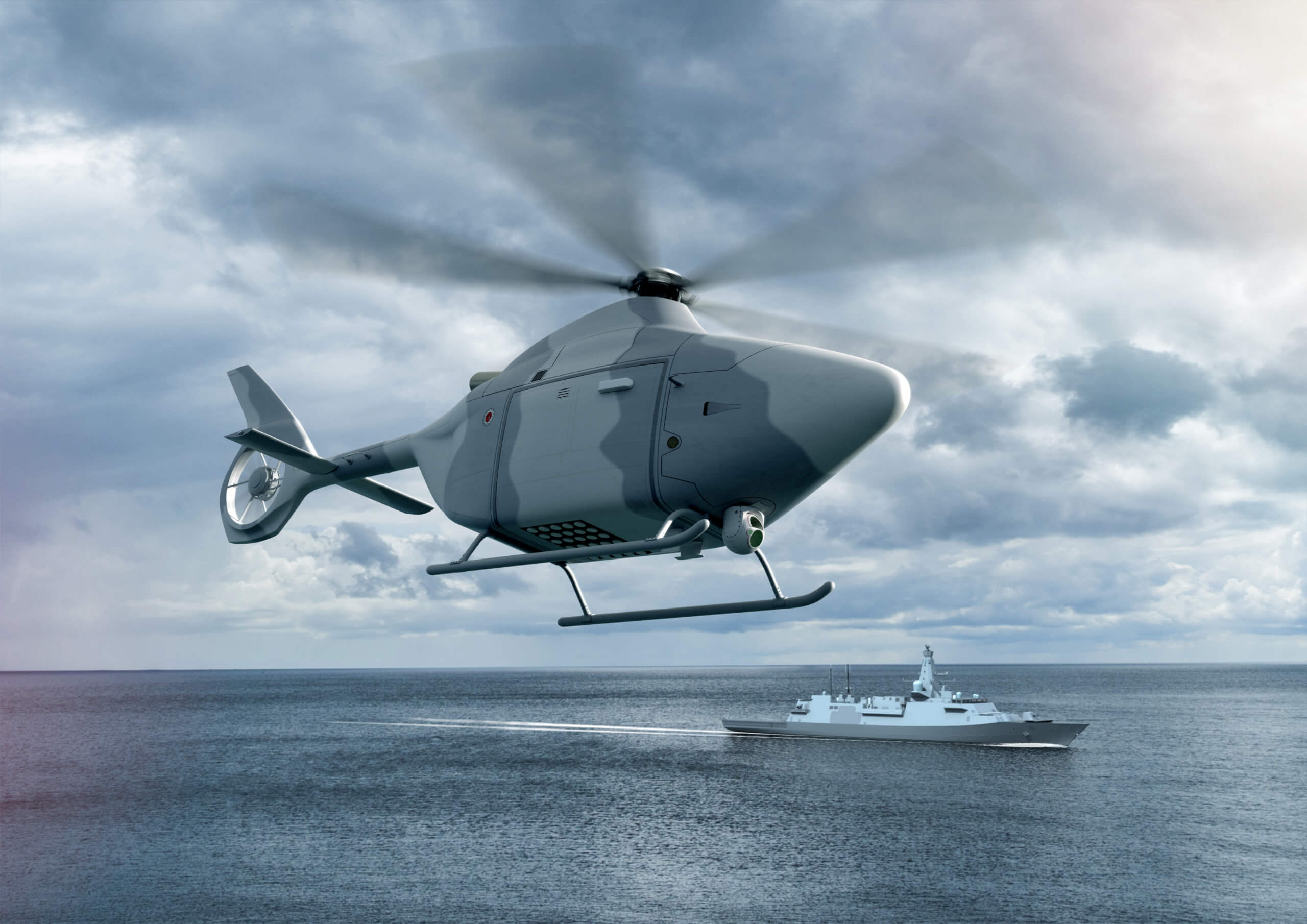
Leonardo has confirmed that funding for its innovative Proteus uncrewed helicopter demonstrator has been officially renewed to carry through to mid-2027, maintaining momentum on a key UK autonomous military aviation project, as reported by Kai Greet for The Aviationist. Speaking during a media briefing at the Farnborough International Airshow, Leonardo Helicopters UK Managing Director Nigel Colman verified the milestone, securing the future of the technology demonstrator following earlier discussions regarding potential funding adjustments under evolving national defense investment frameworks.
The Proteus programme represents a vital step forward in advancing autonomous rotary-wing capabilities for modern armed forces. Designed and constructed by Leonardo at its Yeovil facility in close collaboration with the Royal Navy and the UK Ministry of Defence’s Defence Equipment and Support (DE&S) Future Capability Innovation team, the platform is engineered to explore how uncrewed systems can support complex maritime operations. While the initial airframe, serial number LH001, has completed its maiden flight at Predannack Airfield in Cornwall, the extended development phase will allow engineers to expand flight test envelopes and refine autonomous flight control software.
Integrating uncrewed rotary-wing platforms into naval and joint-service doctrine presents unique technological challenges, particularly regarding high-end tasks like anti-submarine warfare and over-the-horizon targeting. Operating effectively alongside crewed assets in high-threat environments requires resilient communications, advanced tactical autonomy, and seamless sensor integration. The continued funding injection ensures that the project team can rigorously test these systems, bridging the gap between experimental prototyping and operational integration.
Following its public showcase in the flesh at the Farnborough International Airshow, the Proteus demonstrator has drawn significant interest from international defense analysts tracking the rapid evolution of uncrewed military aviation. As Western air arms increasingly pivot toward mixed fleets combining crewed aircraft with autonomous wingmen and cargo platforms, technology demonstrators provide the empirical data necessary to shape future procurement strategies. The extended runway through 2027 gives Leonardo ample time to validate key structural and software adjustments.
Ultimately, the continuation of the Proteus project underscores Britain's commitment to staying at the forefront of uncrewed aerospace innovation. By fostering close public-private collaboration between defense contractors and military innovation teams, the UK is laying the groundwork for next-generation rotary capabilities. As flight testing resumes and engineers analyze performance metrics, the programme will continue to serve as a cornerstone for future uncrewed naval aviation doctrine.

No comments:
Post a Comment