
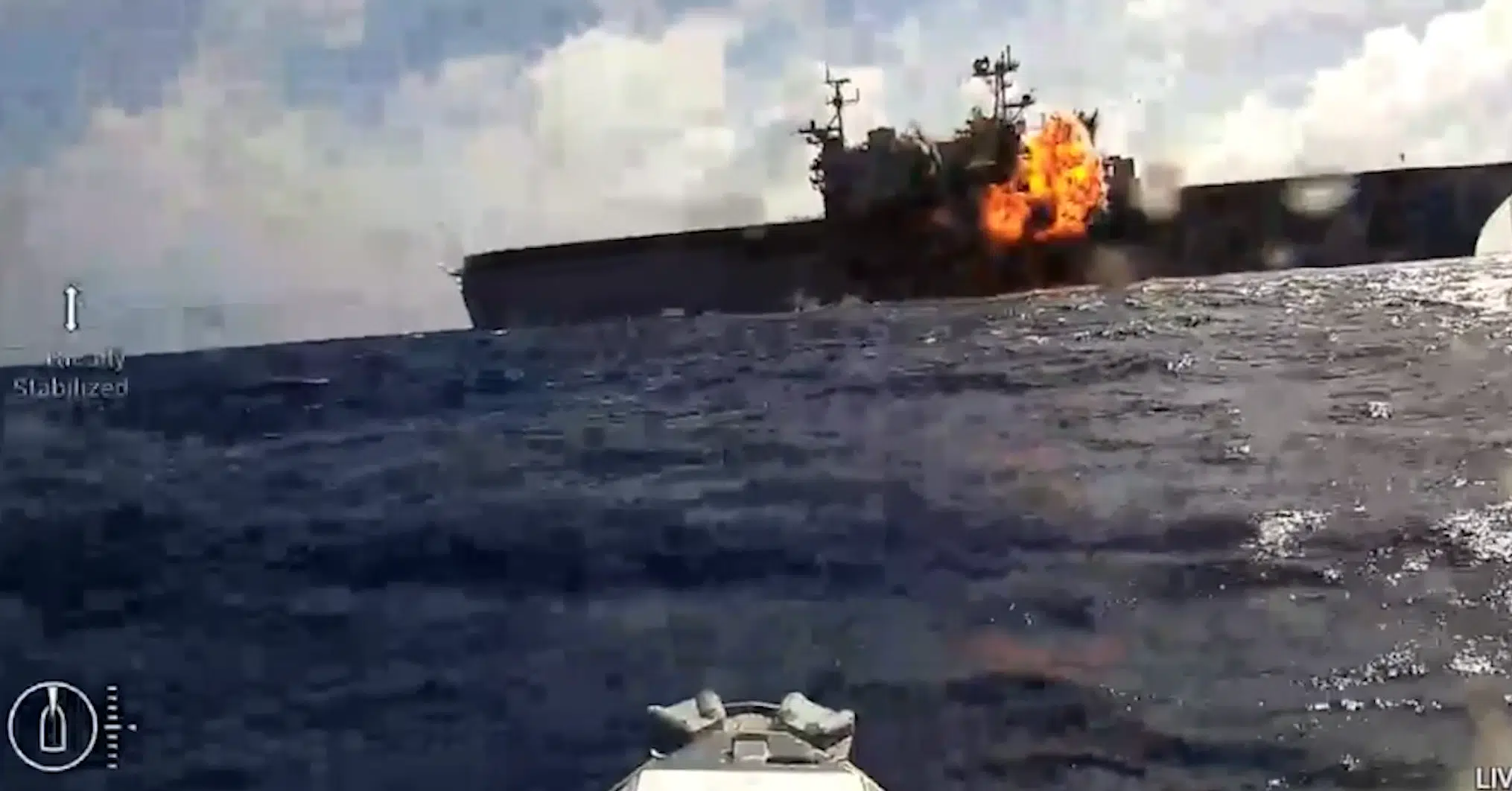
Adapting the hard-earned lessons of modern maritime conflict for the Indo-Pacific theater, the U.S. Navy has successfully deployed one-way attack surface drones during a high-profile sinking exercise off the coast of Hawaii, as detailed in reporting by Carter Johnston for Naval News. Operating as part of the biennial Rim of the Pacific (RIMPAC) 2026 exercises, the uncrewed kamikaze vessels closed in on the hulk of the decommissioned amphibious assault ship USS Peleliu before detonating at the waterline.
This live-fire demonstration marks a significant milestone in the Pentagon's ongoing efforts to rapidly prototype, test, and field scalable autonomous strike platforms across the fleet. Sailing past impact craters left earlier by Harpoon, Spike, and Long-Range Anti-Ship Missiles, the low-profile attack drones showcased how asymmetric capabilities proven in European waters can be integrated into high-end naval operations. Military planners noted that incorporating these low-cost, high-leverage systems provides a vital mechanism for increasing magazine depth and operational flexibility against heavily defended surface combatants.
The deployment during RIMPAC—which functions as a critical Operational Test event—also serves to signal allied capabilities and deterrence to potential adversaries across the Pacific. By closely studying operational feedback from Ukrainian uncrewed strikes against Russian naval forces in the Black Sea, U.S. defense components are actively revising their own doctrine for distributed maritime operations. Industry partnerships with autonomous systems developers are further accelerating the transition of these technologies from experimental concepts into deployable frontline assets.
Beyond surface strike drones, the broader RIMPAC exercise has highlighted an unprecedented influx of unmanned capabilities, ranging from counter-UAS surface vessels to advanced autonomous underwater platforms operating alongside nuclear attack submarines. These developments underline a profound shift in naval strategy, wherein traditional capital ships are increasingly supported by networked swarms of intelligent systems designed to perform persistent surveillance, tactical sensing, and precision terminal attacks.
Ultimately, the successful integration of kamikaze sea drones into a major Pacific SINKEX underscores the rapid convergence of global naval warfare trends. As asymmetric tactics reshape traditional notions of command of the sea, major naval powers are compelled to embrace low-cost autonomy to ensure future combat survivability. The debut of these capabilities during RIMPAC 2026 confirms that uncrewed surface warfare has firmly established its place at the core of modern multi-domain defense planning.

No comments:
Post a Comment